





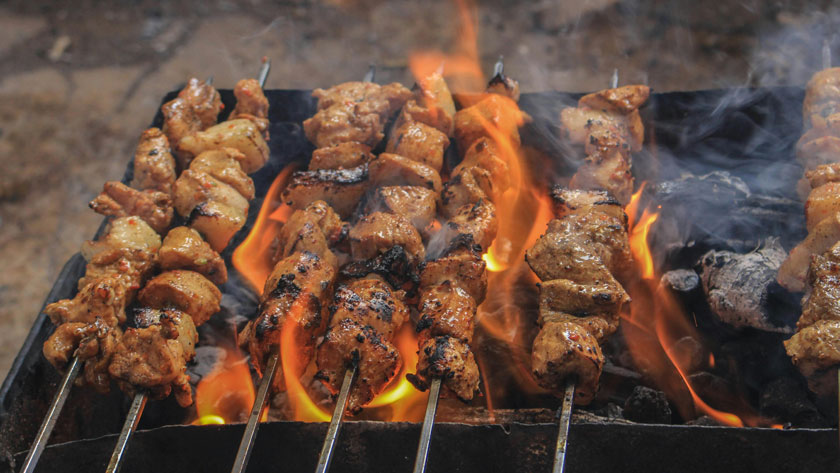

Introduction: The Heart of Brazilian Cuisine
Brazilian barbecue, or Churrasco, is not merely a cooking technique—it is a culinary ritual, an important cultural tradition, and a social experience that has been passed down through generations. While grilling meat is popular in many parts of the world, no other tradition holds the same level of reverence and celebration as Brazil’s barbecue. From its origins in the Southern gaucho culture to its present-day status as a national pastime, Churrasco embodies more than just a way of preparing meat—it is a statement of Brazilian pride, hospitality, and passion for food.
This article will explore the history and evolution of Brazilian barbecue, delving into the cooking techniques, meat cuts, and the social aspects that make it one of the most distinctive and beloved culinary traditions in the world. We will examine the different styles of Churrasco, its role in Brazilian culture, and how it continues to influence both traditional and contemporary grilling practices.
Part 1: The History and Evolution of Brazilian Barbecue
1.1 The Origins of Churrasco
The roots of Churrasco can be traced back to Brazil’s southernmost regions, particularly Rio Grande do Sul, where the practice of grilling meat over an open flame originated with the gauchos—Brazilian cowhands and herders. These early cattle ranchers would grill large cuts of beef over open pits or on spit-roasts, a technique that would eventually become the foundation of Brazil’s iconic barbecue culture.
The gauchos were known for their deep connection to cattle farming, and meat consumption was central to their diet. As they migrated northward, the practice of grilling meat spread, ultimately becoming a part of the broader Brazilian culinary landscape. In the 19th century, when Brazilian immigration patterns began to include people from various European countries, the churrasco tradition was further refined and diversified, incorporating techniques from Italian, German, and Portuguese immigrants.
1.2 Churrasco and Its Role in Brazilian Culture
Churrasco is more than just a way to prepare meat—it is a central component of Brazilian culture. From family gatherings to festivals, weddings, and national holidays, barbecue is a crucial element of Brazil’s social fabric. The Churrascaria, or Brazilian steakhouse, is a staple of the country’s dining scene, where diners enjoy endless skewers of meat served tableside by skilled chefs known as passadores. This social tradition has helped make Churrasco synonymous with community, hospitality, and celebration.
In Brazil, grilling meat is not just about eating—it’s about creating an experience that brings people together. The communal aspect of sharing a meal prepared over an open flame fosters a sense of camaraderie and joy, which has helped elevate Churrasco to a cultural icon.
Part 2: Techniques and Tools of Brazilian Barbecue
2.1 The Grill: A Key Element in Churrasco
The grill is perhaps the most important piece of equipment in Brazilian barbecue. While many methods of grilling involve using a conventional gas or charcoal grill, Churrasco is often cooked on a traditional open flame or rotisserie spit. The churrasqueira, or barbecue pit, is typically constructed from brick or stone, with the meat being cooked over charcoal or wood for hours.
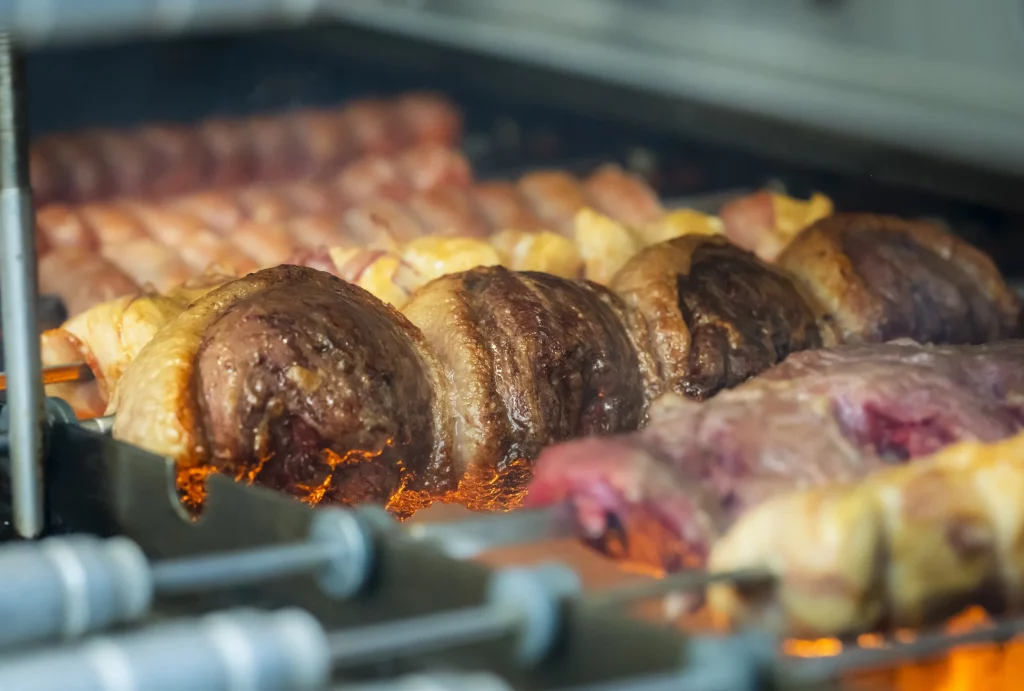
One of the most iconic aspects of Brazilian grilling is the use of skewers—known as espeto—which hold the meat while it is roasted over the fire. The skewers are often made from metal or wood and can be rotated for even cooking. In high-end Churrascarias, these skewers are brought directly to the table by passadores, who carve slices of meat for the diners as they wish.
2.2 Meat Selection: The Cuts of Churrasco
A key feature of Brazilian barbecue is its focus on high-quality meats. Various cuts of beef, pork, chicken, and lamb are used, each prepared with its own specific technique to bring out the best flavor. The most popular cuts include:
- Picanha: Known as the crown jewel of Brazilian barbecue, this cut of beef comes from the top sirloin cap. It is typically seasoned with sea salt and roasted on the skewer until the outside is crisp and caramelized, while the inside remains tender and juicy.
- Fraldinha: This flank steak is another favorite, known for its rich marbling and tenderness when grilled properly.
- Costela de Boi: Beef ribs are slow-cooked over the fire, often taking several hours to become tender and flavorful.
- Linguiça: Brazilian sausages, typically made from pork, are grilled to perfection, offering a smoky, spicy flavor.
- Coração de Frango: Chicken hearts are a popular offering in Brazilian barbecues, often marinated and skewered for grilling.
While beef is the most commonly used meat in Brazilian churrasco, pork, chicken, and lamb also feature prominently. In fact, many Churrascarias offer a variety of meats, rotating skewers continuously to provide guests with an endless selection of freshly grilled options.
2.3 Seasoning and Sauces
Brazilian barbecue relies on the natural flavor of the meat, with minimal seasoning used. Sea salt is often the primary seasoning, allowing the meat to retain its natural juices and flavor. However, some churrasco chefs incorporate additional spices and marinades, especially for certain cuts of meat.
A classic accompaniment to Churrasco is farofa, a toasted cassava flour mixture that adds a crunchy texture and earthy flavor to the meal. Other typical side dishes include vinaigrette, a tomato-onion salsa, rice, and beans. Chimichurri, an herb-based sauce, is often served alongside grilled meats, especially for pork and chicken.
Part 3: The Social and Cultural Significance of Churrasco
3.1 Churrasco as a Social Event
In Brazil, barbecue is a social affair. Whether it’s a casual weekend gathering with friends and family or a grand celebration, the Churrasco provides a platform for people to come together, share stories, and enjoy good company. The barbecue itself is a form of hospitality, where the host takes pride in offering an array of meats and ensuring that each guest is treated with warmth and generosity.
During a traditional Churrasco, the process of grilling and serving meat is often just as important as the eating itself. The passadores play a key role in this, moving from table to table and offering diners freshly cut slices of meat. The communal nature of the meal is a reflection of Brazil’s values of community, sharing, and enjoyment.
3.2 The Role of Churrascarias
While outdoor backyard barbecues are a common part of Brazilian life, Churrascarias (Brazilian steakhouses) are iconic in the culinary landscape of the country. These steakhouses specialize in serving rodízio-style (all-you-can-eat) Churrasco, where diners can sample a wide variety of meats brought to their table on skewers. In addition to meats, Churrascarias often offer a wide array of salads, side dishes, and desserts.
The rodízio system allows guests to sample endless varieties of meat, each cooked to perfection and served as long as they wish. The experience of eating at a Churrascaria is designed to be relaxed and unhurried, encouraging conversation and enjoyment.
Part 4: Brazilian Barbecue in the Modern World
4.1 The Global Spread of Churrasco
As Brazilian culture continues to influence the world, Churrasco has gained international popularity. The Churrascaria concept has spread across South America, the United States, Europe, and Asia, with restaurants dedicated to serving authentic Brazilian barbecue. Many chefs around the world are now embracing Churrasco techniques, utilizing local meats and grilling styles to recreate the distinct flavors of Brazil.
In addition, Brazilian immigrants have brought their barbecue traditions with them, contributing to the globalization of Churrasco. International food festivals, Brazilian-themed restaurants, and home grilling enthusiasts all celebrate this unique cooking method, ensuring that Churrasco remains a beloved culinary tradition worldwide.
4.2 Fusion and Modern Variations
Though traditional Churrasco focuses heavily on meat, modern adaptations have begun to incorporate more plant-based options. Vegetarian skewers made with grilled vegetables, tofu, and plant-based proteins have made their way onto the menus of Churrascarias, offering a more inclusive experience for diners with dietary preferences or restrictions.
Additionally, fusion cuisine has introduced new flavors and techniques into Churrasco, such as Brazilian BBQ tacos, picanha burgers, and even Churrasco-style sushi. These creative twists allow Churrasco to evolve while maintaining its roots in traditional grilling methods.
Conclusion: A Tradition That Transcends Borders
Brazilian barbecue, with its rich history, unique techniques, and cultural significance, is much more than a way of cooking meat. It is a celebration of life, a ritual that brings people together, and a showcase of Brazil’s passion for good food. Whether enjoyed in a humble backyard or a sophisticated Churrascaria, Churrasco continues to be a beloved and iconic part of Brazilian identity.
As it spreads across the globe, Churrasco invites everyone to experience the joy of grilled meats, the warmth of shared meals, and the excitement of a true Brazilian feast.