






Introduction
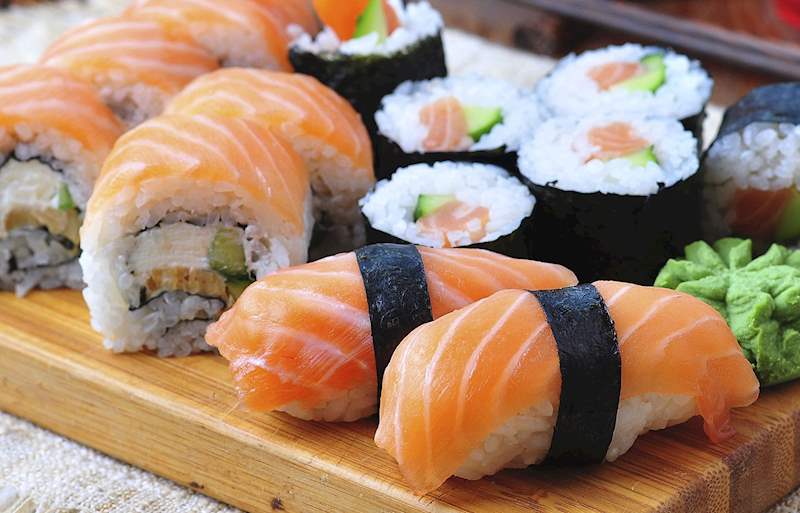
Sushi, once a localized culinary tradition rooted in Japanese history and environment, has become one of the most recognizable and influential foods in the global culinary landscape. From high-end omakase counters in New York and Paris to supermarket sushi boxes in London, São Paulo, and Singapore, sushi has transcended national borders, social classes, and cultural boundaries. Its journey from a regional preservation technique to a global symbol of sophistication, health, and modern dining reflects broader patterns of globalization, cultural exchange, and adaptation.
The globalization of sushi is not merely a story about food popularity. It is a complex narrative involving migration, economic transformation, media representation, technological innovation, and shifting ideas about authenticity and identity. Sushi’s global success raises important questions: How does a deeply traditional food adapt to new cultural contexts? What is gained and lost when a cuisine becomes global? And how do local societies reinterpret foreign foods to suit their own tastes, values, and economic realities?
This article explores sushi’s transformation from a Japanese culinary practice into a global phenomenon. It examines sushi’s historical origins, its cultural meanings within Japan, the mechanisms through which it spread internationally, and the ways it has been adapted, reimagined, and contested around the world. By viewing sushi as both a food and a cultural medium, we can better understand how globalization reshapes culinary traditions while simultaneously giving them new life.
1. The Origins of Sushi: From Preservation to Cuisine
1.1 Early Forms of Sushi
The origins of sushi predate modern Japan. Early forms of fermented fish and rice preservation appeared in Southeast Asia and later spread to the Japanese archipelago. This method, known as narezushi, involved packing fish in fermented rice to preserve it for long periods. The rice was discarded, and only the fish was consumed.
Over time, Japanese cooks refined this technique, shortening fermentation periods and eventually eating the rice along with the fish. By the Edo period (1603–1868), sushi had evolved into hayazushi, or “fast sushi,” made with vinegared rice instead of fermentation. This shift marked sushi’s transformation from preservation method to cuisine.
1.2 Edo-Style Sushi and Urban Life
The sushi most recognizable today—nigiri sushi—emerged in Edo (modern-day Tokyo) in the early 19th century. It was a form of street food designed for busy urban residents. Hand-pressed rice topped with fresh fish could be prepared quickly and eaten on the go.
This association with speed, freshness, and urban modernity laid the groundwork for sushi’s later global appeal. Even in its early form, sushi balanced tradition with practicality, a quality that would prove essential to its international success.
2. Sushi as Cultural Expression in Japan
2.1 Aesthetic Philosophy and Craftsmanship
In Japan, sushi is more than a combination of rice and fish; it is an expression of aesthetic philosophy. Simplicity, balance, seasonality, and respect for ingredients are central values. The sushi chef (itamae) undergoes years of training to master rice preparation, knife skills, fish selection, and customer interaction.
The minimalism of sushi reflects broader Japanese cultural ideals, such as wabi-sabi (appreciation of imperfection and transience) and shun (seasonal peak). These values shape how sushi is made, served, and experienced.
2.2 Social Meaning and Dining Rituals
Sushi also carries social meaning within Japan. Traditional sushi bars emphasize intimacy and trust between chef and customer. The act of eating sushi involves etiquette, timing, and communication, reinforcing social relationships and cultural norms.
Understanding these cultural dimensions is essential to understanding what changes—and what remains—when sushi travels abroad.
3. Early International Exposure
3.1 Japanese Migration and Overseas Communities
Sushi’s international journey began with Japanese migration in the late 19th and early 20th centuries. Japanese communities in Hawaii, California, Brazil, and Peru introduced elements of Japanese cuisine to local populations. However, sushi remained relatively obscure outside these communities for decades.
Early overseas Japanese restaurants often focused on cooked dishes, as raw fish consumption faced cultural resistance and logistical challenges. Sushi’s global breakthrough would come later, under different conditions.
3.2 Postwar Japan and Cultural Export
After World War II, Japan’s economic recovery and growing global presence contributed to increased interest in Japanese culture. Business exchanges, tourism, and cultural diplomacy exposed foreign audiences to Japanese food traditions.
Sushi began to appear in international cities as a symbol of Japanese modernity, craftsmanship, and refinement. Its association with an economically successful and technologically advanced Japan enhanced its cultural appeal.
4. Sushi in the United States: A Turning Point
4.1 California Rolls and Culinary Adaptation
The United States played a pivotal role in sushi’s globalization. In the 1960s and 1970s, sushi entered American dining culture through Japanese restaurants in Los Angeles and New York. To appeal to American tastes, chefs developed new forms of sushi using familiar ingredients.
The California roll, made with avocado, crab (or imitation crab), and cucumber, became a breakthrough innovation. By hiding raw fish inside the roll and using creamy textures, it reduced cultural barriers and introduced sushi to a broader audience.
4.2 Sushi as Lifestyle and Status Symbol
In the 1980s and 1990s, sushi gained popularity among urban professionals, celebrities, and health-conscious consumers. It came to symbolize sophistication, cosmopolitanism, and wellness.
This transformation marked a shift in sushi’s meaning. No longer just ethnic food, sushi became a lifestyle choice, reflecting changing attitudes toward globalization, health, and cultural openness.
5. Global Adaptations and Regional Variations
5.1 Europe: From Exotic to Everyday
In Europe, sushi initially carried an exotic image. Early sushi restaurants emphasized elegance and novelty. Over time, sushi became more accessible, appearing in casual restaurants, supermarkets, and take-away formats.
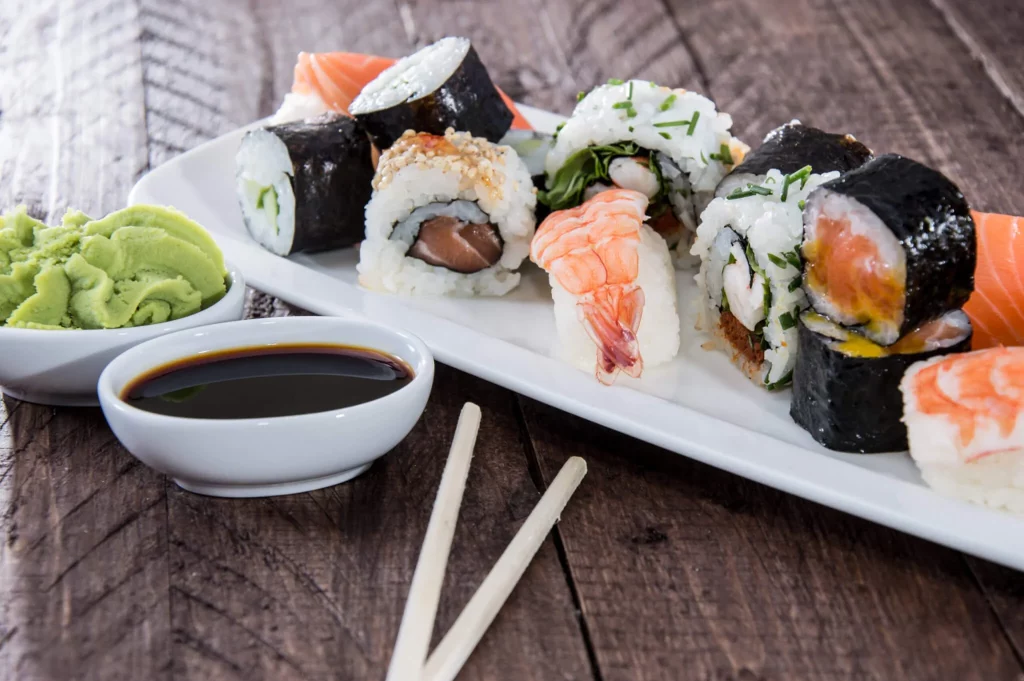
European adaptations often incorporate local ingredients such as smoked salmon, cream cheese, and regional vegetables. While these variations differ from traditional Japanese sushi, they demonstrate how sushi adapts to local culinary cultures.
5.2 Latin America: Fusion and Innovation
In Latin America, sushi has blended with local flavors to create distinctive fusion styles. In countries like Peru and Brazil, sushi incorporates tropical fruits, spicy sauces, and local seafood.
The influence of Nikkei cuisine—a fusion of Japanese and Peruvian traditions—illustrates how sushi can evolve through long-term cultural interaction rather than superficial adaptation.
5.3 Asia Beyond Japan
In other parts of Asia, sushi competes and coexists with strong local food traditions. In South Korea, China, and Southeast Asia, sushi has been localized through ingredient substitution, pricing strategies, and hybrid dishes.
These adaptations reflect regional food preferences and demonstrate sushi’s flexibility as a culinary form.
6. Industrialization and Mass Consumption
6.1 Supermarket Sushi and Convenience Culture
One of the most significant developments in sushi’s globalization is its industrialization. Sushi is now produced on a large scale for supermarkets, convenience stores, and airline catering.
This mass production has made sushi affordable and widely available, but it has also raised concerns about quality, authenticity, and sustainability. The shift from artisanal craft to industrial product represents a major transformation in sushi’s cultural meaning.
6.2 Technology and Cold Chain Logistics
Advances in refrigeration, transportation, and food safety regulations have enabled the global distribution of raw fish. Tuna caught in one ocean can be served as sushi thousands of kilometers away within days.
These technological systems underpin sushi’s globalization, connecting distant ecosystems and markets while also creating environmental and ethical challenges.
7. Authenticity and Cultural Debate
7.1 What Is “Real” Sushi?
As sushi diversified globally, debates about authenticity intensified. Purists argue that only traditional Japanese sushi methods should be considered authentic, while others view adaptation as a natural part of cultural exchange.
These debates reveal deeper questions about who has authority over cultural traditions. Is authenticity defined by origin, technique, intention, or context? Sushi’s global evolution suggests that authenticity is not fixed, but negotiated.
7.2 Cultural Appropriation vs. Cultural Exchange
Sushi’s popularity has also sparked discussions about cultural appropriation. When sushi is detached from its cultural context and marketed purely as a trend, some argue that it loses meaning and disrespects its origins.
However, many scholars and chefs emphasize that cultural exchange through food is inevitable and often positive, provided it involves respect, acknowledgment, and dialogue.
8. Sustainability and Ethical Challenges
8.1 Overfishing and Environmental Impact
The global demand for sushi, particularly tuna, has contributed to overfishing and environmental strain. Bluefin tuna populations, for example, have faced severe decline due to high market demand.
These challenges have prompted discussions about responsible sourcing, seasonal consumption, and alternative ingredients. Sustainability has become a critical issue in sushi’s global future.
8.2 Innovation and Responsibility
In response, chefs and organizations are exploring sustainable seafood options, plant-based sushi, and traditional practices that emphasize balance and restraint. These efforts align with the original Japanese philosophy of respecting nature’s limits.
Sushi thus becomes a platform for addressing global environmental concerns through culinary innovation.
9. Sushi in the Digital and Media Age
9.1 Visual Culture and Social Media
Sushi’s visual appeal has contributed significantly to its global success. Its clean lines, vibrant colors, and artistic presentation make it ideal for digital sharing.
Social media platforms amplify trends, turning sushi into a visual and cultural symbol that transcends taste alone. This visibility influences how sushi is perceived, consumed, and reinvented.
9.2 Education and Global Awareness
Digital media also facilitates education. Online videos, documentaries, and articles allow global audiences to learn about sushi’s history, techniques, and cultural significance.
This increased awareness encourages more informed consumption and fosters respect for sushi’s origins even as it continues to evolve.
10. Sushi as a Medium of Cultural Exchange
Sushi’s globalization illustrates how food functions as a cultural language. Through sushi, people encounter Japanese ideas about seasonality, aesthetics, and craftsmanship, even when adapted to local contexts.
At the same time, sushi absorbs local influences, becoming a mirror of global diversity. Each regional variation tells a story about migration, adaptation, and identity.
Conclusion
The globalization of sushi is a story of transformation without disappearance. From its origins as a practical preservation method to its status as a global culinary icon, sushi has continuously adapted to new environments while retaining core principles of balance, respect for ingredients, and craftsmanship.
As sushi crossed borders, it became a medium of cultural exchange—introducing Japanese values to the world while absorbing local tastes and meanings. This process has generated innovation, debate, and reflection, revealing both the possibilities and challenges of culinary globalization.
Ultimately, sushi’s global journey demonstrates that tradition and change are not opposites. When a food travels, it does not simply lose authenticity; it gains new contexts and interpretations. Sushi’s enduring global presence suggests that cultural traditions survive not by remaining static, but by evolving thoughtfully—one carefully prepared bite at a time.