






Introduction
Moroccan cuisine is a rich tapestry woven with layers of history, culture, and tradition. Among its most iconic dishes is the tagine, a slow-cooked stew that is as complex in flavor as it is in its preparation. Named after the traditional earthenware pot in which it is cooked, the tagine has become synonymous with Moroccan cooking, representing the perfect blend of local ingredients, spices, and cooking techniques passed down through generations.
This article delves into the world of Moroccan tagine—exploring its historical roots, the culinary techniques behind its preparation, its key ingredients, and its cultural significance. Through this exploration, we will also discuss how the tagine has evolved from a simple, rustic dish into a globally recognized symbol of Moroccan gastronomy.
1. The Origins of Tagine: A Dish Steeped in History
1.1 Ancient Roots: The Evolution of Tagine
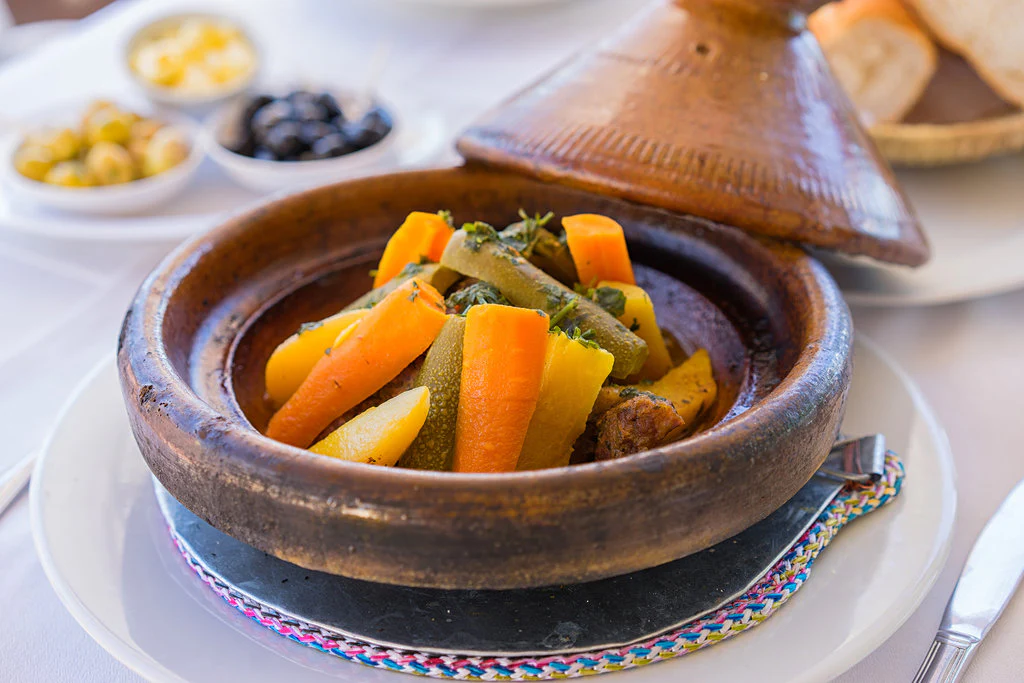
The origins of tagine trace back to the Berber people, the indigenous inhabitants of Morocco, who have been cooking food in the same method for thousands of years. The word “tagine” refers to both the cooking vessel and the dish itself. Traditionally, tagines were used for slow-cooking meats, vegetables, and spices in a cone-shaped earthenware pot that is designed to trap steam, ensuring tender results.
- Berber Influence: The Berbers introduced the method of slow cooking, where meats such as lamb, chicken, and beef were cooked with spices and vegetables, all simmered together for hours. The clay pot’s lid allowed the ingredients to steam in their own juices, making the food incredibly tender and flavorful.
- The Arrival of Spices: Over centuries, Morocco became a crossroads for different cultures, and spices began to play a crucial role in Moroccan cuisine. The Silk Road brought cinnamon, ginger, saffron, and cumin, enriching the flavors of Moroccan dishes, including the tagine.
1.2 The Significance of the Tagine Pot
The tagine pot itself is a key element in the dish’s preparation and presentation. The pot has a unique cone-shaped lid that allows steam to circulate and condense back into the food, keeping it moist and tender. The base of the pot is wide and shallow, which ensures that the ingredients cook evenly without burning.
- Material: Traditional tagines are made from clay, which is perfect for slow cooking. Modern versions may be made of ceramic, cast iron, or even enamel-coated steel.
- Cooking Process: The cone-shaped lid traps steam and moisture, ensuring that the food remains juicy and tender while maintaining the richness of the spices and flavors.
2. Key Ingredients in Moroccan Tagine
The beauty of tagine lies in its versatility, with many variations depending on regional preferences, available ingredients, and personal tastes. However, several ingredients consistently form the foundation of most tagine dishes.
2.1 Meats and Proteins
Tagines can feature a wide variety of meats, including lamb, chicken, beef, and even fish, with lamb being one of the most traditional choices due to its deep flavor and tenderness when slow-cooked.
- Lamb: Known for its rich, earthy flavor, lamb is often paired with prunes, apricots, or dates to create a perfect balance between sweet and savory.
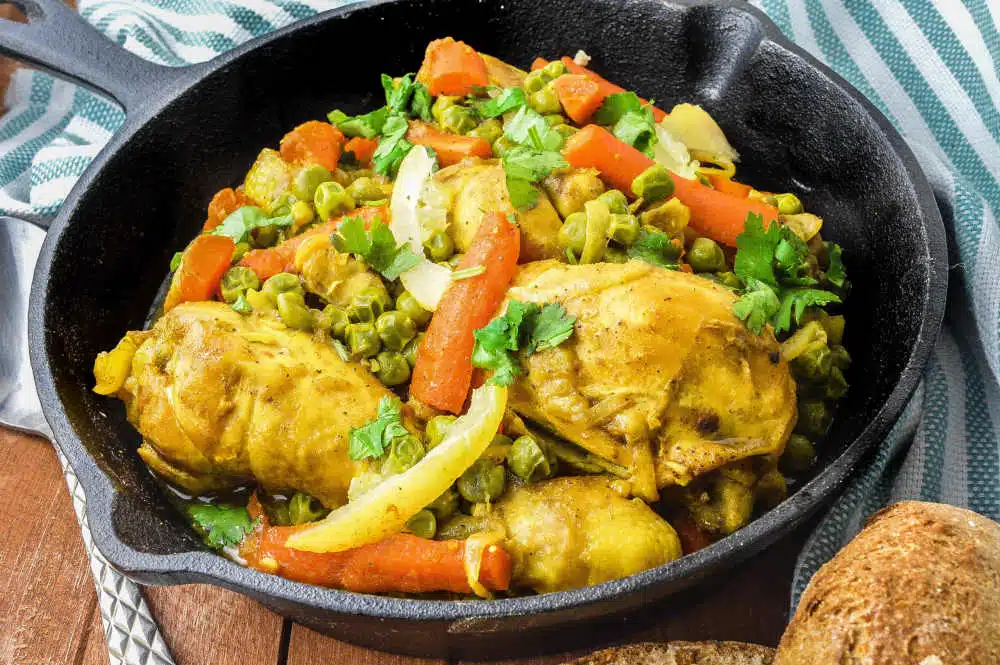
- Chicken: Another common protein, chicken tagines are often cooked with ingredients like olives, preserved lemons, and saffron. The tanginess of the preserved lemons and the saltiness of the olives complement the delicate flavor of the chicken.
- Beef: Less common but equally delicious, beef tagines are often made with root vegetables like carrots, parsnips, and potatoes, as well as robust spices.
- Fish: In coastal regions of Morocco, fish tagines are made using local seafood, such as sardines or cod, often seasoned with cumin, paprika, and coriander.
2.2 Vegetables and Fruits
The choice of vegetables and fruits in tagine is vast and offers a wonderful contrast of flavors and textures.
- Root Vegetables: Carrots, potatoes, turnips, and sweet potatoes are common additions, absorbing the spices and enriching the overall flavor.
- Fruits: Dried fruits such as apricots, dates, and prunes are often added to tagines, providing a touch of sweetness to balance the richness of the meat.
- Olives: Both green and black olives are staples in Moroccan tagines, contributing a salty, briny depth to the dish.
2.3 Spices and Seasonings
The spice profile of a tagine is what truly elevates it, creating layers of complexity and depth. The spices used in Moroccan cuisine are aromatic, vibrant, and often have warm, earthy notes.
- Ras el Hanout: This is the quintessential Moroccan spice blend, often described as a “top of the shop” mix, which can include up to 30 spices. Some common components of Ras el Hanout include cumin, coriander, turmeric, ginger, cinnamon, and cardamom.
- Saffron: Known for its golden color and delicate flavor, saffron is a prized ingredient in many Moroccan dishes, including tagine.
- Cinnamon: A key ingredient that adds a warm, sweet-spicy note to many tagines, particularly those with lamb or chicken.
- Cumin: Often used in combination with coriander, cumin provides an earthy, slightly smoky flavor to tagines.
- Turmeric: This bright yellow spice gives tagines a distinct golden hue and an earthy, slightly bitter flavor.
3. The Art of Preparing a Moroccan Tagine
3.1 Layering the Ingredients
The art of making tagine is about the careful layering of ingredients to achieve a harmonious balance of textures and flavors. A tagine is typically made by first browning the meat (if using) in oil or butter, then layering the vegetables, dried fruits, and spices on top.
- Searing the Meat: In traditional tagine recipes, the meat is first browned to develop rich flavor. This can be done in a separate pan before adding it to the tagine pot.
- Layering: Ingredients are carefully arranged in the tagine pot, with denser items like meat or root vegetables placed at the bottom and lighter vegetables and fruits placed on top.
- Slow Cooking: Once assembled, the tagine is covered and cooked slowly over low heat for several hours. The dish is not stirred during cooking, as the steam trapped inside the pot does all the work.
3.2 Cooking on the Stovetop or in the Oven
While traditionally tagines are cooked over an open flame or on a stovetop, many modern tagine pots are designed for use in the oven as well. Either method works well, but the key is to maintain a low and consistent heat.
- Stovetop Cooking: Cooking a tagine on the stovetop requires a low flame. The pot should not be overheated, as this can cause the clay to crack and the ingredients to burn.
- Oven Cooking: Many chefs now opt to cook their tagine dishes in the oven for even heat distribution. The oven should be preheated to a low temperature (around 300°F / 150°C), and the tagine is cooked uncovered for a short period, followed by a longer cooking time with the lid on.
4. The Cultural Significance of Tagine in Morocco
4.1 Tagine as a Symbol of Moroccan Hospitality
In Moroccan culture, food plays a central role in hospitality and family life. The tagine pot, often large and communal, is used to serve the entire family or group of guests, embodying the warmth of Moroccan tradition.
- Sharing a Meal: Meals are typically shared among family members, and eating from the same pot is seen as a sign of unity and togetherness.
- Ceremonial Dishes: Some tagine dishes are reserved for special occasions such as weddings, religious holidays, and celebrations. For example, the traditional lamb tagine with prunes is often served at Eid celebrations.
4.2 Tagine in Moroccan Markets
The preparation and sale of tagine dishes are often an integral part of Moroccan street food culture. In bustling markets like Marrakech’s Jemaa el-Fnaa, vendors serve freshly prepared tagine in individual portions, offering a quick and delicious meal to locals and tourists alike.
5. Variations of Tagine Across Morocco
5.1 Regional Variations of Tagine
While the tagine is universally recognized as a Moroccan dish, each region of Morocco has its own variations, influenced by local ingredients, traditions, and climate.
- Casablanca: Coastal cities like Casablanca often feature fish tagine, with sardines and seafood prepared with fresh herbs, spices, and tomatoes.
- Marrakech: Famous for its lamb and prune tagine, which perfectly balances sweet and savory flavors.
- Fes: Known for more intricate and aromatic versions, such as the chicken tagine with preserved lemons and olives.
Conclusion
The tagine is not just a dish—it is a symbol of Moroccan culture, tradition, and family life. Its centuries-old roots reflect the country’s rich history and the fusion of flavors from diverse civilizations. Through its slow-cooking technique and the harmony of spices, the tagine creates a unique culinary experience that is both comforting and sophisticated. Whether enjoyed in a bustling souk or in the warmth of a family home, tagine remains one of the most iconic and beloved dishes in Morocco.