





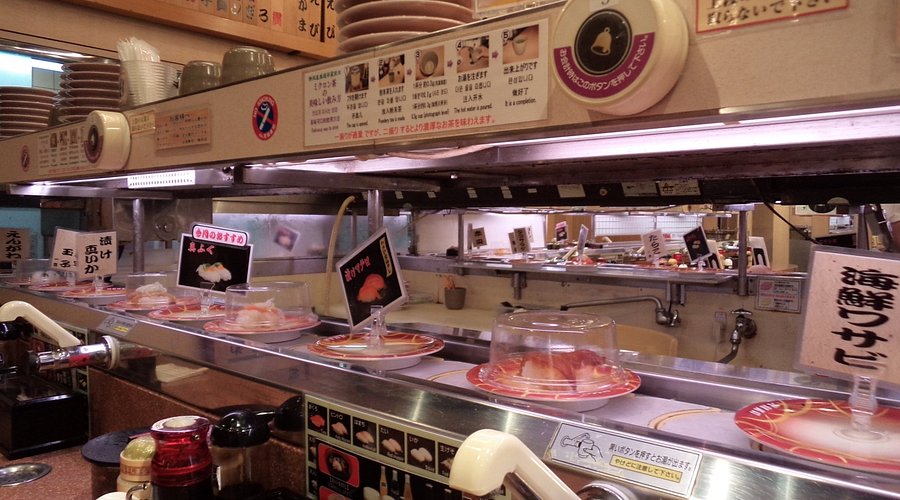

Sushi, long celebrated as a symbol of Japanese culinary artistry, traditionally required high levels of skill, fresh ingredients, and formal dining settings. However, Osaka, Japan’s vibrant food capital, transformed sushi into a more accessible, fast, and fun dining experience through the invention and popularization of kaiten-zushi, or conveyor belt sushi.
This article delves into the history, concept, logistics, ingredients, technology, regional specialties, dining culture, economic impact, health aspects, and global influence of Osaka’s conveyor belt sushi, offering a comprehensive understanding of why this innovative approach has revolutionized the sushi industry.
The Origins of Conveyor Belt Sushi
Conveyor belt sushi (kaiten-zushi) was invented to democratize sushi, making it accessible to a wider audience without compromising quality:
- Post-War Osaka: In the mid-20th century, sushi was still considered a luxury item, often reserved for special occasions.
- Invention: In 1958, Yoshiaki Shiraishi, a sushi restaurant owner in Osaka, invented the conveyor belt system to serve more customers efficiently and reduce labor-intensive table service.
- Concept: Plates of sushi move along a rotating belt, allowing customers to select dishes they want while maintaining freshness and quality.
- Impact: Kaiten-zushi became a cultural and economic phenomenon, making sushi affordable, quick, and approachable for locals and tourists alike.
This innovation bridged the gap between traditional high-end sushi and everyday dining, changing the perception of sushi in Japan and beyond.
Core Concept and Mechanics
The concept of conveyor belt sushi relies on simplicity, efficiency, and engagement:
The Conveyor System
- Rotating Belt: Plates of sushi continuously circulate around the dining area.
- Speed Control: Chefs control production pace to maintain freshness.
- Color-Coded Plates: Different plate colors indicate price points, simplifying billing.
Customer Interaction
- Self-Service Selection: Diners pick dishes they desire directly from the belt.
- Minimal Wait Time: Sushi is immediately available, reducing table turnover time.
- Visual Appeal: Customers see the variety of offerings, stimulating appetite and choice.
Technological Enhancements
- Modern kaiten-zushi incorporate digital ordering systems, refrigerated belts, and automated sushi delivery for efficiency and freshness.
This model combines speed, affordability, and entertainment, appealing to a wide demographic.
Ingredients and Quality
Despite the fast-paced service, Osaka’s conveyor belt sushi emphasizes ingredient quality and preparation standards:
Fish and Seafood
- Locally sourced fresh seafood: tuna, salmon, squid, shrimp, sea urchin, and seasonal fish.
- Flash-frozen techniques ensure consistency without compromising taste.
- Some restaurants highlight regional catches, reflecting Osaka’s coastal location.
Rice (Shari)
- Short-grain Japanese rice, seasoned with vinegar, sugar, and salt, provides the perfect balance of texture and flavor.
- Rice is prepared in batches to maintain freshness and temperature, critical for sushi quality.
Condiments and Garnishes
- Wasabi, pickled ginger, soy sauce, and shiso leaves complement the sushi.
- Innovative toppings such as mayonnaise-based sauces or torched fish add variety without overshadowing the base flavors.
Even in a casual kaiten-zushi setting, attention to freshness and seasoning remains paramount.
Sushi Types and Menu Variety
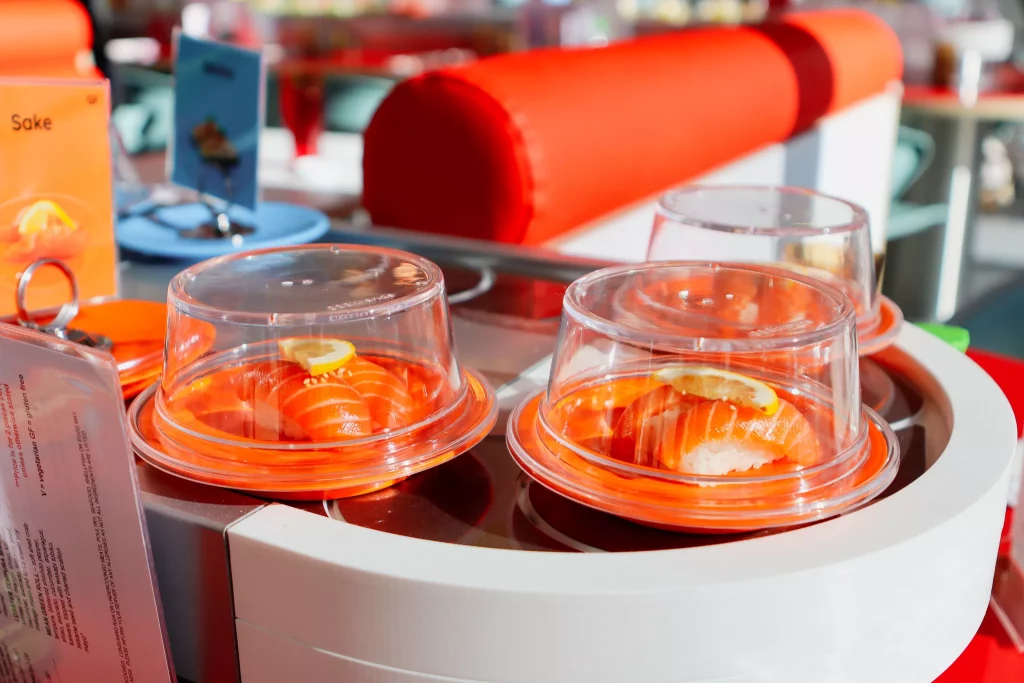
Osaka’s conveyor belt sushi offers a wide range of sushi and complementary dishes:
- Nigiri Sushi: Traditional bite-sized rice topped with fish or seafood.
- Gunkan (Battleship) Sushi: Nori-wrapped rice topped with soft or finely chopped ingredients like ikura or sea urchin.
- Rolls (Maki): Varieties include simple cucumber rolls, California rolls, and seasonal innovations.
- Specialty Plates: Tempura, grilled items, and desserts expand the dining experience.
- Vegetarian Options: Egg, avocado, pickled vegetables, and tofu sushi cater to diverse diets.
The menu reflects both traditional Japanese cuisine and modern consumer preferences, making it universally appealing.
Operational Techniques and Chef Skills
While customers experience speed and convenience, the chef’s skill remains central:
- Precision Cutting: Fish is sliced to the ideal thickness for balance and texture.
- Rice Handling: Sushi rice is shaped by hand with careful pressure to maintain integrity and bite-size consistency.
- Quality Control: Chefs ensure freshness, monitor belt rotation, and replace plates as needed.
- Presentation: Even in a fast-service context, sushi is arranged for visual appeal, emphasizing aesthetics alongside taste.
This system preserves the culinary standards of sushi while optimizing efficiency.
Dining Culture in Osaka
Kaiten-zushi has influenced social habits and dining culture:
- Casual and Accessible: Sushi is no longer a formal dining experience, appealing to families, students, and office workers.
- Interactive Experience: Customers enjoy choosing plates and observing sushi preparation.
- Speed and Efficiency: Ideal for lunch breaks and quick dinners without sacrificing quality.
- Price Transparency: Color-coded or labeled plates simplify the dining process, enhancing accessibility.
This approach has reshaped how Japanese people consume sushi, blending convenience with enjoyment.
Economic and Business Impact
The conveyor belt sushi model has transformed the sushi industry in Osaka and worldwide:
- Lower Labor Costs: Self-service reduces the need for waitstaff.
- High Turnover: Efficient seating and quick service allow for greater customer throughput.
- Scalability: The model enables expansion across Japan and internationally.
- Global Franchises: Major chains like Sushiro, Kura Sushi, and Genki Sushi have adapted this concept abroad.
Kaiten-zushi represents a successful fusion of culinary tradition and innovative business strategy.
Health and Nutritional Considerations
Despite its casual nature, conveyor belt sushi can be balanced and nutritious:
- Lean Proteins: Fish provides omega-3 fatty acids and essential amino acids.
- Controlled Portions: Small plates help diners moderate intake.
- Vegetable Inclusion: Pickled vegetables, seaweed, and vegetable sushi add fiber and micronutrients.
- Reduced Oil Cooking: Steamed, raw, or lightly grilled items dominate, maintaining low fat content.
Consumers can enjoy both taste and health benefits when selecting sushi thoughtfully.
Global Influence and Modern Adaptations
Kaiten-zushi has influenced fast-casual sushi dining worldwide:
- International Chains: Conveyor belt sushi is found in major cities across the United States, Europe, and Asia.
- Technological Integration: Automated sushi robots, RFID plate tracking, and digital ordering streamline operations.
- Fusion Offerings: Incorporation of non-traditional ingredients like cheese, avocado, and spicy sauces to appeal to international palates.
- Sustainable Practices: Global adaptations often focus on responsible sourcing of seafood and eco-friendly packaging.
This demonstrates the model’s adaptability and global relevance.
Challenges and Considerations
Despite its popularity, conveyor belt sushi faces challenges:
- Maintaining Freshness: Continuous rotation requires careful monitoring to prevent spoilage.
- Food Waste: Plates left uneaten or unused can contribute to waste if not managed efficiently.
- Balancing Quality and Price: Affordable pricing must not compromise ingredient quality.
- Competition: High-density urban areas demand innovation to stay attractive to consumers.
Addressing these challenges ensures long-term sustainability and customer satisfaction.
Tips for Experiencing Osaka Kaiten-Zushi
- Observe Plate Colors: Understand pricing and avoid overspending.
- Choose Freshly Placed Plates: Sushi is often replaced frequently; watch for new arrivals.
- Explore Variety: Sample traditional nigiri alongside creative rolls.
- Timing Matters: Visit during non-peak hours for a relaxed experience.
- Enjoy the Interaction: Watch chefs work, try seasonal specials, and appreciate the rhythm of the belt.
These practices enhance the dining experience while respecting the restaurant’s operational flow.
Conclusion
Osaka’s conveyor belt sushi represents a revolution in Japanese dining, bringing sushi to a wider audience through speed, affordability, and interactivity. By combining fresh, high-quality ingredients, skilled preparation, and innovative presentation, kaiten-zushi has maintained the essence of traditional sushi while making it accessible to everyday diners.
From bustling Osaka streets to international franchises, conveyor belt sushi exemplifies how culinary tradition and innovation can coexist, creating a dining experience that is efficient, enjoyable, and culturally meaningful. It is a testament to Osaka’s ingenuity, Japan’s respect for culinary artistry, and sushi’s enduring global appeal.