






Introduction
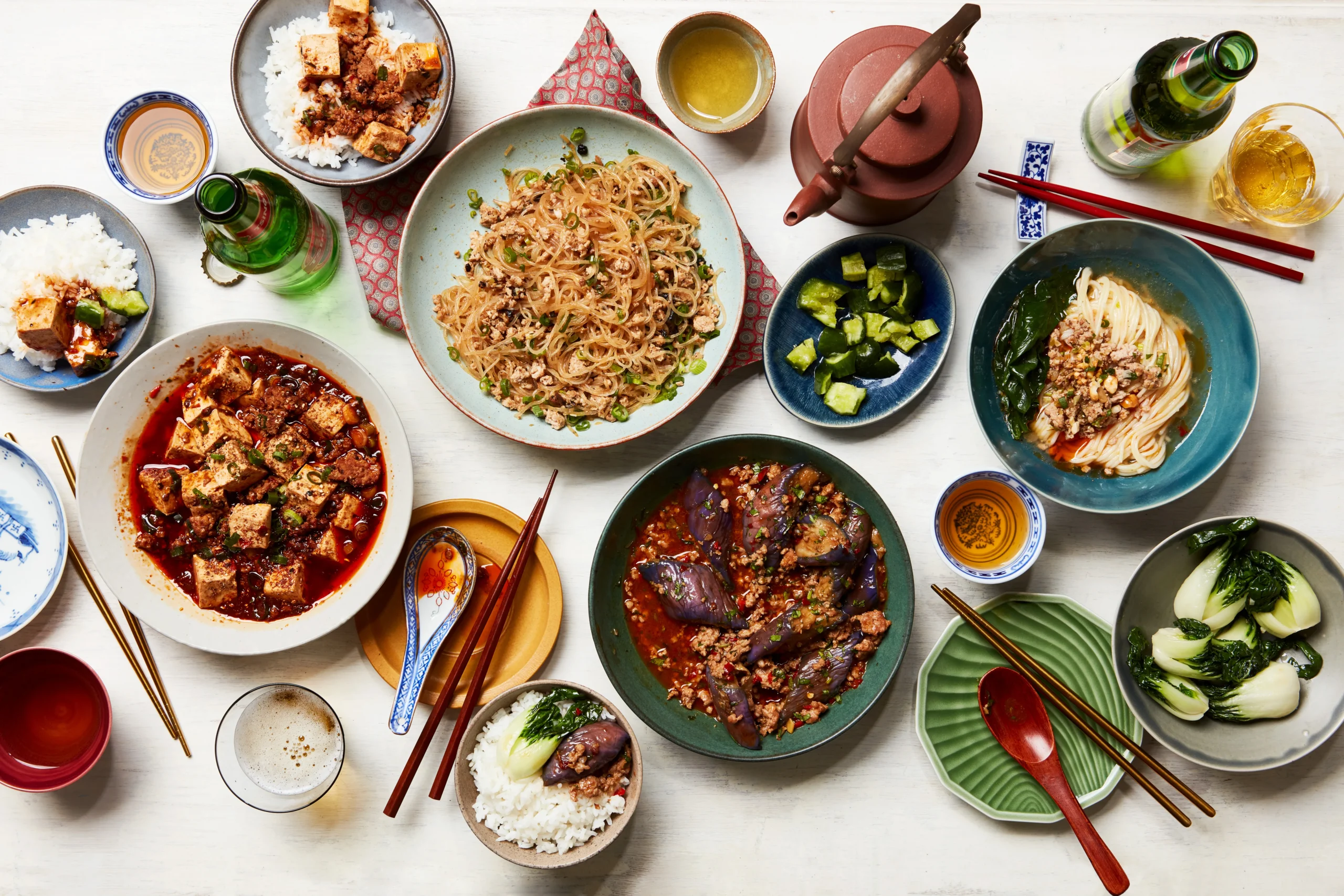
Chinese cuisine is one of the oldest, most complex, and most widely dispersed culinary traditions in human history. With roots stretching back thousands of years and a culinary philosophy shaped by geography, philosophy, medicine, and social structure, Chinese food has long been more than a means of sustenance. It is a cultural system that reflects ideas about harmony, balance, hierarchy, and community. As Chinese people migrated across continents and oceans, they carried this system with them—adapting it, reshaping it, and, in the process, profoundly influencing global food culture.
Today, Chinese restaurants can be found in nearly every country in the world. From dim sum houses in London and Chinatowns in North America, to localized Chinese dishes in Southeast Asia, Africa, and Latin America, Chinese cuisine has evolved into countless regional and hybrid forms outside its place of origin. Yet what many people encounter abroad under the label “Chinese food” often differs significantly from the vast and diverse culinary traditions found within China itself.
The evolution of Chinese cuisine worldwide is a story of migration, adaptation, resilience, and negotiation. It reflects the lived experiences of diaspora communities responding to new environments, economic realities, cultural expectations, and political constraints. At the same time, it illustrates how food functions as a medium of cultural exchange, shaping perceptions of China and Chinese identity globally.
This article explores how Chinese cuisine has evolved across the world. It examines its historical foundations, the role of migration and diaspora, regional adaptations in different parts of the globe, the emergence of hybrid cuisines, and contemporary efforts to redefine authenticity and representation. Through this lens, Chinese food emerges not as a static tradition, but as a dynamic, global phenomenon deeply intertwined with history and identity.
1. Foundations of Chinese Cuisine
1.1 Philosophical and Cultural Roots
To understand how Chinese cuisine evolved abroad, it is essential to understand its core principles. Traditional Chinese cooking is deeply influenced by philosophical systems such as Confucianism, Daoism, and traditional Chinese medicine. These philosophies emphasize balance, harmony, and moderation—ideas that translate directly into culinary practices.
The concept of yin and yang, for example, categorizes foods according to their perceived energetic qualities, guiding how ingredients are combined to maintain bodily and cosmic balance. Texture, color, aroma, and temperature are all considered essential elements of a dish, reflecting a holistic view of eating as both nourishment and moral cultivation.
Food in Chinese culture is also inherently social. Meals are shared, dishes are communal, and dining reinforces relationships and hierarchy. These values shaped how Chinese migrants approached food abroad, often prioritizing communal dining spaces and shared dishes even in unfamiliar settings.
1.2 Regional Diversity Within China
Chinese cuisine is not monolithic. It consists of numerous regional traditions shaped by climate, geography, and local resources. The commonly referenced “Eight Major Cuisines” of China—such as Cantonese, Sichuan, Shandong, Jiangsu, Zhejiang, Fujian, Hunan, and Anhui—represent only a fraction of the country’s culinary diversity.
This internal diversity played a crucial role in how Chinese cuisine spread globally. Early waves of migration came predominantly from specific regions, especially southern coastal provinces such as Guangdong and Fujian. As a result, early forms of Chinese food abroad often reflected Cantonese or Fujianese cooking rather than the full spectrum of Chinese cuisine.
2. Early Migration and the Global Spread of Chinese Food
2.1 Trade, Labor, and Early Diasporas
The international spread of Chinese cuisine began long before modern globalization. As early as the Tang and Song dynasties, Chinese merchants traveled across Asia, bringing food practices with them. However, the most significant expansion occurred from the 19th century onward, driven by labor migration.
Chinese workers migrated to Southeast Asia, North America, Australia, Africa, and the Caribbean to work in mines, plantations, railways, and ports. Food was one of the few cultural resources they could carry with them. Cooking familiar dishes provided comfort, preserved identity, and created a sense of community in often hostile environments.
2.2 Chinatowns and the Birth of Overseas Chinese Restaurants
In many countries, Chinese migrants faced discrimination and legal restrictions that limited employment opportunities. Opening small food businesses became one of the most accessible paths to economic survival. As a result, Chinese restaurants became central institutions in overseas Chinese communities.
Chinatowns emerged as cultural enclaves where food played a defining role. Restaurants served not only as commercial spaces but also as social hubs, offering familiar flavors and communal support. However, these early restaurants also catered increasingly to non-Chinese customers, initiating the process of culinary adaptation that would shape global Chinese cuisine.
3. Adaptation to Local Tastes and Ingredients
3.1 Ingredient Substitution and Culinary Innovation
One of the most significant forces shaping the evolution of Chinese cuisine abroad has been ingredient availability. Many traditional Chinese ingredients were difficult or impossible to obtain in host countries, especially in earlier periods. Chefs adapted by substituting local vegetables, meats, and seasonings while maintaining familiar cooking techniques.
These substitutions often produced entirely new dishes. What mattered was not strict replication, but preserving recognizable textures, flavors, and structures. Stir-frying, steaming, braising, and deep-frying became adaptable techniques that could accommodate a wide range of ingredients.
3.2 Adjusting Flavor Profiles
Local tastes also influenced adaptation. In many Western countries, early Chinese restaurants toned down bitterness, sourness, or numbing spiciness, emphasizing sweetness and savory richness instead. Portion sizes, presentation, and meal structure were adjusted to align with local dining habits.
These changes were not merely concessions; they were strategic responses to economic survival. Appealing to local customers allowed Chinese restaurants to thrive and expand, ensuring the continued presence of Chinese food in global culinary landscapes.
4. The Evolution of Chinese Cuisine in North America
4.1 Chinese-American Cuisine as a Distinct Tradition
Chinese cuisine in the United States represents one of the most influential examples of culinary adaptation. Early Chinese-American dishes such as chop suey and chow mein emerged in the late 19th and early 20th centuries. Though often dismissed as inauthentic, these dishes reflect creative negotiation between Chinese cooking methods and American tastes.
Over time, Chinese-American cuisine developed its own identity, complete with standardized menus, takeout culture, and iconic dishes. This cuisine became deeply embedded in American food culture, shaping how generations of Americans understood “Chinese food.”
4.2 Regionalization and Culinary Diversification
In the late 20th century, changes in immigration policy brought new waves of Chinese migrants from different regions of China. This led to greater culinary diversity, including Sichuan, Hunan, Taiwanese, and northern Chinese cuisines.
As a result, Chinese cuisine in North America evolved from a single generalized category into a complex ecosystem of regional restaurants, reflecting both the diversity of China and the growing sophistication of global diners.
5. Chinese Cuisine in Southeast Asia
5.1 Longstanding Cultural Integration
In Southeast Asia, Chinese cuisine evolved differently due to long-standing migration and cultural integration. In countries such as Malaysia, Singapore, Thailand, and Indonesia, Chinese food merged deeply with local cuisines, producing hybrid traditions that are now considered national foods.
Dishes such as Hainanese chicken rice, char kway teow, and bak kut teh exemplify this fusion. These foods retain Chinese techniques and philosophies while incorporating local spices, ingredients, and eating habits.
5.2 Identity and Culinary Hybridity
In these regions, Chinese cuisine is not always seen as foreign. Instead, it is part of a shared cultural heritage shaped by centuries of interaction. Food becomes a site where ethnic identity, national identity, and historical memory intersect, illustrating how Chinese cuisine can evolve into something simultaneously local and diasporic.
6. Chinese Cuisine in Europe, Africa, and Latin America
6.1 Europe: From Exotic to Everyday
In Europe, Chinese cuisine initially carried an aura of exoticism. Early restaurants catered to curiosity about the “Orient,” often simplifying dishes to match European expectations. Over time, Chinese food became normalized as part of everyday urban life.
In recent decades, Europe has seen a growing appreciation for regional Chinese cuisines, with increased emphasis on authenticity, craftsmanship, and culinary education. This shift reflects broader changes in how non-Western cuisines are perceived and valued.
6.2 Africa and Latin America: Local Adaptations
In Africa and Latin America, Chinese cuisine evolved in close dialogue with local food traditions. Chinese migrants adapted their cooking to local staples such as maize, beans, and tropical produce. In some regions, Chinese restaurants became symbols of modernity and globalization.
These adaptations demonstrate the flexibility of Chinese culinary principles and their capacity to integrate into diverse cultural contexts without losing their core identity.
7. Authenticity, Stereotypes, and Representation
7.1 The Problem of “Authentic Chinese Food”
As Chinese cuisine spread globally, debates about authenticity intensified. What counts as “real” Chinese food? Is authenticity defined by ingredients, techniques, regional origins, or cultural context?
These questions reveal underlying power dynamics. Often, dishes created by diaspora communities are dismissed as inferior or fake, despite their cultural significance. Such judgments overlook the historical conditions that shaped these cuisines and the creativity involved in their development.
7.2 Media Representation and Cultural Perception
Media representations of Chinese food have played a major role in shaping global perceptions. Simplified images of Chinese cuisine can reinforce stereotypes, while nuanced storytelling can promote understanding.
In recent years, chefs, writers, and scholars have worked to reclaim Chinese culinary narratives, emphasizing diversity, history, and the voices of Chinese communities themselves.
8. Contemporary Transformations and Global Recognition
8.1 Modern Chinese Chefs and Culinary Innovation
Today, a new generation of Chinese and Chinese-diaspora chefs is redefining Chinese cuisine on the global stage. These chefs draw on traditional techniques while embracing innovation, sustainability, and cross-cultural dialogue.
High-end Chinese restaurants, regional specialization, and reinterpretations of classic dishes challenge outdated perceptions and elevate Chinese cuisine within global culinary discourse.
8.2 Digital Media and Global Awareness
Social media and digital platforms have increased access to information about Chinese food. Cooking videos, online communities, and food journalism allow for deeper engagement with Chinese culinary culture, fostering appreciation beyond surface-level consumption.
This visibility also empowers diaspora communities to share their own stories, reshaping how Chinese cuisine is understood worldwide.
9. Chinese Cuisine as Cultural Exchange
9.1 Food as Identity and Memory
For overseas Chinese communities, food remains a powerful marker of identity. Cooking and eating traditional dishes sustain emotional ties to home and heritage, even across generations.
At the same time, shared meals with non-Chinese diners create spaces of cultural exchange, where food becomes a language of connection rather than division.
9.2 A Dynamic, Living Tradition
The evolution of Chinese cuisine around the world demonstrates that tradition is not static. Change does not necessarily mean loss. Instead, it reflects adaptation, survival, and dialogue.
Chinese cuisine abroad is not separate from Chinese cuisine at home; the two influence each other continuously, forming a global culinary network rooted in shared principles and evolving experiences.
Conclusion
The evolution of Chinese cuisine around the world is a story of movement, adaptation, and cultural negotiation. From humble migrant kitchens to global culinary influence, Chinese food has crossed borders not as a fixed tradition, but as a flexible, living system.
As it evolved in different regions, Chinese cuisine absorbed local ingredients, tastes, and meanings, giving rise to new culinary forms that reflect complex histories of migration, identity, and exchange. These global versions of Chinese food are not deviations from tradition, but extensions of it—testaments to resilience and creativity.
Understanding the global evolution of Chinese cuisine allows us to see food as more than flavor. It is history made edible, identity expressed through technique, and culture carried across borders one dish at a time. In a globalized world, Chinese cuisine stands as one of the most powerful examples of how food can connect people, preserve heritage, and continually reinvent itself without losing its soul.