







Introduction
Ramadan, the ninth month of the Islamic lunar calendar, occupies a central and deeply revered position in the spiritual, social, and cultural life of Muslims around the world. It is a period marked most visibly by fasting from dawn to sunset, but its essence extends far beyond abstaining from food and drink. Ramadan is a holistic spiritual journey that integrates worship, moral discipline, social responsibility, self-restraint, and communal solidarity.
For over fourteen centuries, Ramadan has shaped the rhythms of Muslim societies, influencing daily routines, economic patterns, family life, and religious consciousness. While fasting (ṣawm) is the most defining characteristic of Ramadan, the month is equally characterized by prayer, reflection on the Qur’an, acts of charity, forgiveness, and heightened awareness of God (Allah).
This article offers a comprehensive, professional, and in-depth exploration of Ramadan as a religious month defined by fasting. It examines its theological foundations, historical development, spiritual philosophy, legal framework, health dimensions, social impact, cultural diversity, and contemporary relevance in a globalized world.
1. The Concept of Ramadan in Islam
1.1 The Lunar Calendar and the Timing of Ramadan
Islam follows a lunar calendar consisting of twelve months, each beginning with the sighting of the new crescent moon. Ramadan falls in the ninth position and shifts approximately 10–11 days earlier each solar year. As a result, Ramadan may occur in any season over a 33-year cycle, influencing fasting durations depending on geographic location.
The variable timing of Ramadan reinforces its universal character: Muslims in polar regions, tropical climates, deserts, and urban centers all experience fasting under different natural conditions, emphasizing equality, patience, and adaptability.
1.2 Why Ramadan Is Sacred
Ramadan is sacred primarily because it is the month in which the Qur’an was first revealed to the Prophet Muhammad (peace be upon him). The Qur’an states:
“The month of Ramadan is the one in which the Qur’an was sent down as guidance for mankind, clear proofs of guidance, and the criterion.” (Qur’an 2:185)
Thus, Ramadan commemorates the divine communication between God and humanity, positioning it as a time of spiritual renewal and deeper engagement with Islamic teachings.
2. Fasting (Ṣawm): The Defining Feature of Ramadan
2.1 The Religious Obligation of Fasting
Fasting during Ramadan is one of the Five Pillars of Islam, making it a fundamental act of worship obligatory for all adult Muslims who are physically and mentally capable. The Qur’an commands:
“O you who believe, fasting has been prescribed for you as it was prescribed for those before you, so that you may attain God-consciousness (taqwa).” (Qur’an 2:183)
The primary goal of fasting is not hunger or hardship, but taqwa, a state of heightened awareness of God that shapes moral and ethical behavior.
2.2 What Fasting Entails
From dawn (fajr) to sunset (maghrib), fasting Muslims must abstain from:
- Food and drink
- Smoking
- Sexual relations
- Deliberate immoral speech or behavior
Fasting is both physical and spiritual, requiring control over desires, emotions, and intentions.
2.3 Exemptions and Flexibility in Islamic Law
Islamic law (Sharia) emphasizes mercy and ease. Certain individuals are exempt from fasting, including:
- The sick
- Travelers
- Pregnant or breastfeeding women
- Elderly individuals
- Those with chronic medical conditions
Missed fasts may be made up later, or compensated through charity (fidya), highlighting Islam’s balance between obligation and compassion.
3. Spiritual Dimensions of Ramadan
3.1 Developing Self-Discipline and Moral Awareness
Fasting trains individuals in self-control, patience, and humility. By voluntarily refraining from basic needs, Muslims learn to prioritize spiritual values over material desires.
This discipline extends beyond Ramadan, influencing character development throughout the year.
3.2 Strengthening the Relationship with God
Ramadan encourages:
- Increased prayer (ṣalāh)
- Night prayers (tarāwīḥ)
- Supplication (duʿāʾ)
- Recitation and study of the Qur’an
Believers seek closeness to God, forgiveness for past sins, and spiritual purification.
3.3 Laylat al-Qadr: The Night of Power
One of the most significant aspects of Ramadan is Laylat al-Qadr, believed to fall on one of the last ten nights. The Qur’an describes it as:
“Better than a thousand months.” (Qur’an 97:3)
Worship on this night is considered exceptionally rewarding, emphasizing the profound spiritual potential of Ramadan.
4. Social and Communal Aspects of Fasting
4.1 Empathy and Social Awareness
Fasting cultivates empathy for those who experience hunger and poverty daily. This lived experience motivates increased generosity and social responsibility.
4.2 Charity and Zakat During Ramadan
Charity is strongly emphasized:
- Zakat (obligatory almsgiving)
- Sadaqah (voluntary charity)
- Feeding the poor and fasting individuals
Many Muslims choose Ramadan to fulfill their annual zakat obligations, reinforcing communal solidarity.
4.3 Communal Iftar and Social Bonds
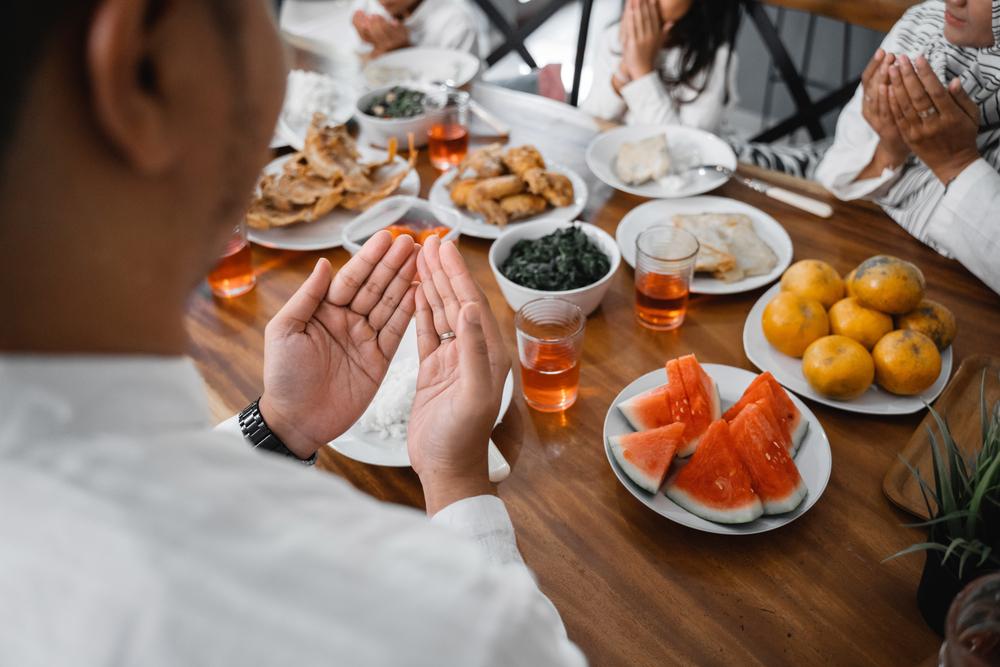
The fast is broken each evening with iftar, often shared with family, friends, neighbors, and the wider community. Mosques and charities host large communal meals, fostering unity and inclusion.
5. Cultural Expressions of Ramadan Across the Muslim World
5.1 Diversity of Ramadan Traditions
While fasting is universal, cultural expressions of Ramadan vary:
- Middle Eastern lanterns (fanous)
- South Asian Ramadan bazaars
- Turkish communal iftar tents
- Indonesian night prayers and Qur’an recitations
These traditions reflect the adaptability of Islam across cultures while maintaining core religious principles.
5.2 Ramadan Cuisine and Culinary Heritage
Food plays a symbolic role:
- Dates and water for breaking the fast
- Traditional soups, breads, and desserts
- Regional specialties that reflect local history
Despite culinary richness, moderation remains a key ethical principle.
6. Health Perspectives on Fasting
6.1 Physical Health Benefits
Modern research suggests that controlled fasting may:
- Improve metabolic health
- Enhance insulin sensitivity
- Support cellular repair
- Promote digestive rest
Islamic fasting differs from intermittent fasting regimens, as it integrates spiritual intention and ethical restraint.
6.2 Mental and Emotional Well-Being
Ramadan often brings:
- Reduced stress through spiritual focus
- Greater emotional regulation
- A sense of purpose and clarity
The structured routine of fasting and prayer contributes to psychological stability for many practitioners.
7. Economic and Social Rhythms During Ramadan
7.1 Changes in Daily Life
Work hours, school schedules, and social activities often adjust to accommodate fasting. Nighttime becomes more active, particularly in Muslim-majority societies.
7.2 Economic Activity and Consumer Ethics
While spending may increase, Islam encourages:
- Ethical consumption
- Avoidance of waste
- Generosity over excess
Ramadan thus serves as a moral checkpoint for economic behavior.
8. Ramadan in the Modern Global Context
8.1 Fasting in Non-Muslim Societies
Millions of Muslims observe Ramadan in secular or non-Muslim-majority countries, balancing religious commitments with work, education, and social integration.
This experience has contributed to greater interfaith awareness and cultural dialogue.
8.2 Media, Technology, and Ramadan
Digital tools now support Ramadan practices:
- Qur’an apps
- Prayer time reminders
- Online charity platforms
- Virtual religious lectures
Technology has expanded access to religious knowledge while reshaping communal experiences.
9. Ethical and Philosophical Reflections on Fasting
9.1 Fasting as Moral Training
Islamic fasting is a form of ethical education, teaching:
- Honesty (even when unobserved)
- Compassion
- Gratitude
- Accountability
It reinforces the belief that true piety lies in character, not mere ritual.
9.2 Universal Lessons of Ramadan
Although rooted in Islam, the principles of Ramadan—self-restraint, empathy, mindfulness, and generosity—resonate universally. This has led to growing interest in fasting practices beyond religious boundaries.
Conclusion
Ramadan, as a sacred month defined primarily by fasting, represents one of the most profound spiritual institutions in Islam. While abstaining from food and drink is its most visible feature, fasting in Ramadan encompasses a comprehensive system of worship, ethics, social responsibility, and self-transformation.
Through fasting, Muslims reconnect with their faith, cultivate discipline, strengthen communal bonds, and develop compassion for others. Ramadan serves as an annual spiritual recalibration, reminding believers of their dependence on God and their responsibilities toward humanity.
In an increasingly fast-paced and material-driven world, Ramadan offers a counterbalance—a month of reflection, restraint, and renewal. Its enduring relevance lies in its ability to shape not only religious identity but also moral consciousness, making it one of the most significant religious observances in the global spiritual landscape.