






European cuisine stands as one of the richest, most influential, and most refined food cultures in the world. It encompasses endless regional variations, centuries‑old traditions, and a relentless pursuit of culinary excellence. Yet few corners of this gastronomic landscape are as distinct, iconic, and deeply revered as Italian pasta and French haute cuisine.
This article examines the history, techniques, cultural significance, regional diversity, and modern evolution of these two pillars of European gastronomy. Combining professional insight with rich detail, this work explores how technique, ingredients, creativity, and heritage intersect to create dishes that are both timeless and continually reimagined.
1. Introduction: The Powerhouses of European Culinary Tradition
European food culture has shaped global palates for centuries, influencing and being influenced by trade, exploration, agriculture, and cultural exchange. At the heart of this tapestry are traditions that are:
- Rooted in local ingredients
- Developed through rigorous technique
- Celebrated for aesthetic, sensory, and emotional impact
Two seemingly different worlds—Italian pasta’s rustic brilliance and French haute cuisine’s refined artistry—represent complementary approaches to cooking. One is driven by simplicity and ingredient integrity; the other by technique precision and layered complexity.
2. Italy: The Soul of Pasta
2.1 The Origins and Cultural Role of Pasta
Pasta, in its many forms and sauces, is perhaps the most emblematic Italian dish category. Its history spans over a millennium, with references in medieval texts and culinary lore. Far from a single dish, pasta embodies a philosophy of:
- Regional identity
- Ingredient seasonality
- Balance between texture and sauce
In Italy, pasta is not just food—it’s part of daily life, family ritual, and cultural expression.
2.2 Understanding Pasta: Shapes and Purposes
Pasta comes in hundreds of shapes, each designed to:
- Highlight certain sauces
- Create textural contrast
- Bring harmony to the bite
Some classic pairings include:
| Pasta Shape | Sauce Type | Rationale |
|---|---|---|
| Spaghetti | Olive oil, tomato, seafood | Long strands carry light, smooth sauces |
| Penne / Rigatoni | Chunky meat or vegetable sauces | Tubes trap sauce within grooves |
| Fettuccine | Creamy sauces (e.g., Alfredo) | Broad ribbons adhere to rich emulsions |
| Orecchiette | Broccoli rabe, sausage | Cup shape captures bits of vegetables |
| Bucatini | Amatriciana | Hollow center holds sauce |
Understanding shape–sauce synergy is central to Italian culinary mastery.
2.3 Classic Italian Pasta Dishes
2.3.1 Spaghetti alla Carbonara
- Ingredients: Guanciale (or pancetta), egg yolks, Pecorino Romano, black pepper
- Technique: Emulsifying eggs with pasta water to create a creamy sauce without curdling
- Cultural significance: Roman classic, prized for simplicity and balance
2.3.2 Tagliatelle al Ragù (Bolognese)
- Region: Emilia‑Romagna
- Method: Long‑simmered meat sauce with soffritto (onion, carrot, celery), wine, milk
- Textural goal: Nutty sweetness with rich umami from slow reduction
2.3.3 Pasta all’Amatriciana
- Key elements: Guanciale, tomato, chili, Pecorino
- Origin: Amatrice, Lazio
- Technique insight: Render fat slowly for depth; finish with pasta water to bind sauce
2.3.4 Pesto alla Genovese
- Region: Liguria
- Ingredients: Fresh basil, pine nuts, Parmigiano‑Reggiano, garlic, olive oil
- Method: Traditionally ground with mortar and pestle to preserve aromatics
Each dish reflects regional climate, local produce, and centuries of refinement.
2.4 Pasta Making: Tradition Meets Technique
Professional and artisanal pasta makers emphasize:
- Flour quality: Semolina for structure; 00 flour for silkier dough
- Hydration control: Achieving perfect elasticity
- Resting periods: Allowing gluten to relax
- Cutting precision: Uniform strands or shapes for even cooking
- Cooking al dente: Tender with slight resistance
These technical choices directly influence texture, flavor uptake, and mouthfeel.
3. France: The Pinnacle of Haute Cuisine
3.1 Defining Haute Cuisine
French haute cuisine is a style of cooking that emphasizes:
- Technical rigor
- Balance of complex flavors
- Artful plating
- Culinary innovation grounded in tradition
While not every French meal is haute cuisine, this tier of gastronomy represents the apex of professional culinary practice and technique.
3.2 Historical Foundations: From Royal Kitchens to Modern Restaurants
French haute cuisine evolved out of royal and aristocratic kitchens during the Renaissance and matured through the centuries with the influence of figures such as:
- La Varenne (17th century): Codified French technique
- Marie‑Antonin Carême (19th century): Architect of elaborate presentation
- Auguste Escoffier (early 20th century): Systematized kitchen hierarchy and modern technique
These chefs laid the groundwork for classical techniques still taught in culinary schools worldwide.
3.3 Core Techniques in French Haute Cuisine
French culinary technique is foundational to Western cooking. Key methods include:
3.3.1 Sauces and Reductions
French sauces are pillars of flavor architecture. The five “mother sauces” — béchamel, velouté, espagnole, hollandaise, and tomato — serve as bases for hundreds of derivatives. Techniques involve:
- Controlled roux formation
- Deglazing with wine or stock
- Slow reduction for concentrated depth
- Temperature control to prevent separation
Mastery of one sauce demonstrates command over fat, heat, and emulsion.
3.3.2 Fonds, Stocks, and Clarified Broths
Stocks (fonds) are foundational for soups, sauces, and braises. Professional stocks are:
- Simmered gently to extract flavor without cloudiness
- Strained and clarified when needed
- Used as building blocks for layered complexity
3.3.3 Sautéing, Poêling, and Braising
- Sautéing: High‑heat technique to create Maillard browning
- Poêling: Pan‑cooking finished in oven
- Braising: Long, slow cooking in a flavorful liquid
Each delivers a distinct texture and flavor profile.
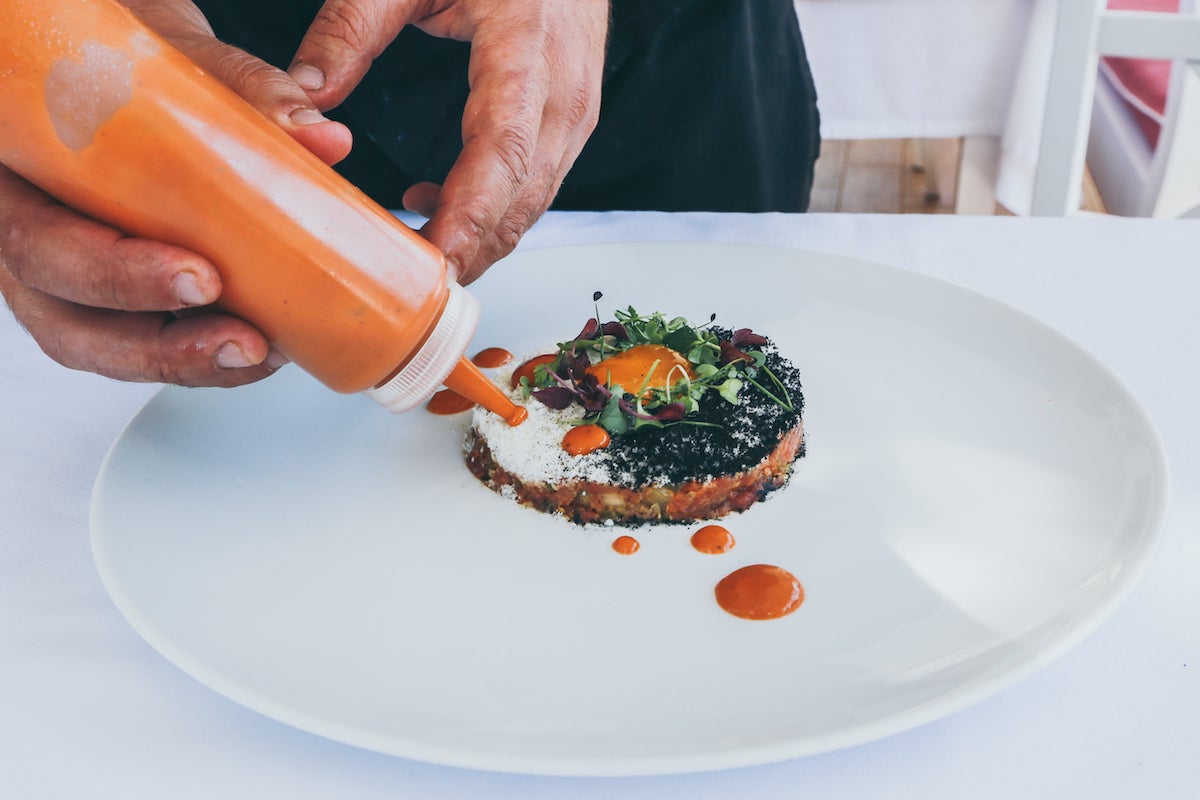
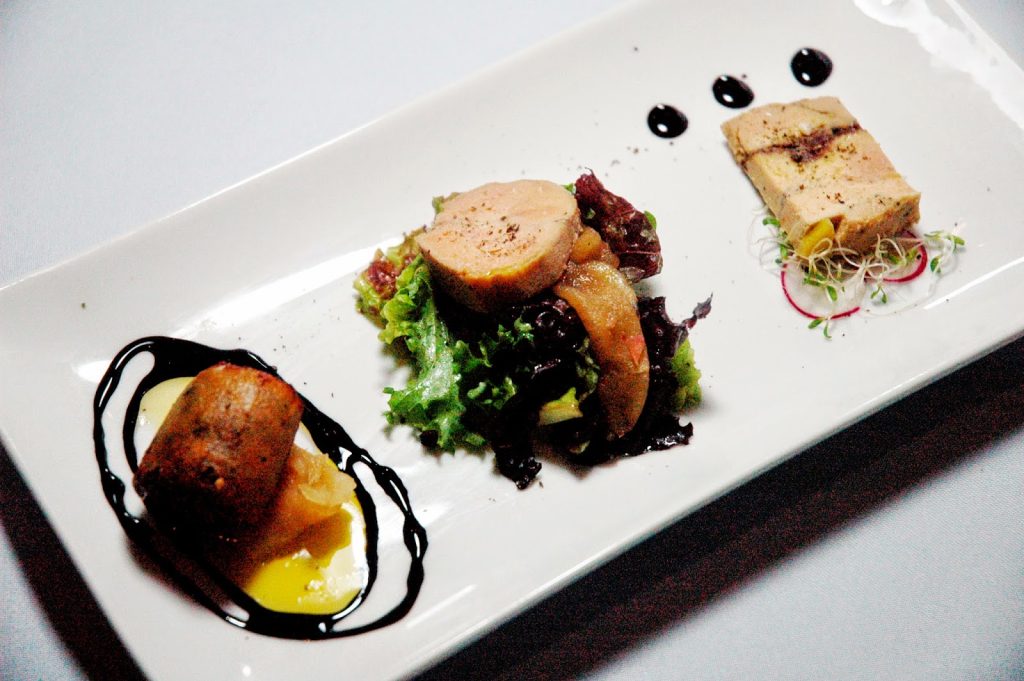
3.3.4 Plating and Aesthetics
Haute cuisine is visual as well as gustatory:
- Balance of color and negative space
- Height, texture contrast, and sauce gestures
- Garnishes serving purpose, not mere decoration
The plate becomes a canvas.
4. French Classics: Elegance and Precision
4.1 Coq au Vin
- Method: Chicken braised in red wine with mushrooms, onions, and bacon
- Technique Notes: Slow braise allows deep flavor extraction; wine reduction builds the sauce body
4.2 Boeuf Bourguignon
- Origin: Burgundy
- Process: Red wine‑braised beef with mirepoix, aromatics, and herbs
- Significance: Exemplifies technique synergy — searing, braising, and reduction
4.3 Soufflé
- Science: Egg whites whipped to stiff peaks for lift; base (béchamel or purée) provides support
- Challenge: Timing and temperature critical to rise without collapse
4.4 Duck à l’Orange
- Technique: Crisping duck skin while preserving succulence; balancing sweet acid of orange sauce
- Cultural impact: Exemplifies French balance of richness and brightness
4.5 Tarte Tatin
- Method: Upside‑down caramelized apple tart; baking with precise sugar caramel control
- Lesson: Technique influences both flavor and structure
5. Comparative Themes: Italy and France
Though distinct, Italian pasta and French haute cuisine share deep commonalities:
| Aspect | Italian Pasta | French Haute Cuisine |
|---|---|---|
| Philosophy | Simplicity & ingredient integrity | Technique & refined complexity |
| Core Skills | Dough handling, sauce pairing | Sauces, stocks, emulsions |
| Cultural Role | Everyday life & regional identity | Professional artistry & dining ritual |
| Flavor Approach | Rustic, direct, balanced | Layered, nuanced, often rich |
| Presentation | Generous & communal | Precise & aesthetic |
Understanding these parallels and divergences enriches appreciation of European gastronomy.
6. The Cultural Significance of Pasta and Haute Cuisine
6.1 Pasta as Cultural Identity
In Italy:
- Meals are social experiences
- Recipes are passed through generations
- Local varieties connect food to terroir
Regional pride is so strong that dishes vary significantly even between neighboring towns.
6.2 French Cuisine as Cultural Heritage
France’s culinary system is a source of national pride:
- Codified in cooking schools
- Protected through appellations (e.g., cheese, wines)
- Celebrated in gastronomy festivals (e.g., Bocuse d’Or)
French cuisine is often tied to rituals of service, hospitality, and formality.
7. Technique Case Studies: Professional Insight
To truly understand these culinary worlds, we examine specific techniques with professional depth.
7.1 Emulsifying Sauces: Carbonara vs. Hollandaise
- Carbonara: Heat of pasta, egg yolk, and cheese emulsify with rendered fat to form silky sauce
- Hollandaise: Warm butter gradually incorporated into egg yolks and lemon juice; temperature control prevents curdling
Both require precise temperature and timing — illustrating how emulsions define texture and mouthfeel.
7.2 Pasta Dough Hydration and Gluten Development
Professional pasta makers adjust:
- Ratio of semolina to water
- Resting time for dough relaxation
- Extrusion vs. rolling for texture
These influence chew, absorption, and sauce adhesion.
7.3 Reduction and Concentration in French Sauces
In French cooking, reduction is a core technique:
- Reducing stocks concentrates flavor
- Deglazing pan fond incorporates caramelized bits into the sauce
- Degreasing ensures clean, balanced taste
These skills underpin the subtlety of French sauces.
8. Evolution and Innovation
8.1 Modern Italian Pasta
Contemporary chefs experiment with:
- Alternative flours (ancient grains, gluten‑free options)
- Fusion sauces (Asian‑Italian crossovers)
- Deconstructed presentations
Yet respect for
classic ratios and technique remains central.
8.2 Contemporary French Cuisine
Modern French chefs push boundaries:
- Molecular gastronomy interpretations
- Minimalist plating with sensory surprise
- Interaction of global ingredients with French technique
Haute cuisine remains dynamic and forward‑looking.
9. Dining Experience: From Trattoria to Michelin Star
9.1 Italian Trattoria Culture
- Warm, familial atmosphere
- Courses enjoyed at leisure
- Wine pairing emphasizes regional identity
Pasta is often the primo — a bridge between antipasti and secondi.
9.2 French Fine Dining
- Formal service structure
- Multi‑course tasting menus
- Wine and sauce pairing as art
Here, food is choreography, requiring training, precision, and coordination.
10. Professional Training and Mastery
Becoming a master in either tradition requires:
- Technical education
- Repetition and muscle memory
- Understanding of flavor science
- Respect for tradition mixed with creative curiosity
Culinary academies and apprenticeships continue to propagate these skills globally.
11. Conclusion: The Legacy and Future of European Gastronomy
Italian pasta and French haute cuisine represent the soul and the mind of European culinary culture. They teach us:
- Technique empowers expression
- Tradition anchors innovation
- Flavor is intertwined with culture and history
- Food communicates identity and emotion
As dining continues to globalize, these traditions ensure that every plate is not merely nourishment, but a story — of land, of people, of enduring craft.