






Introduction
India is a civilization where food, faith, and festivity are inseparably intertwined. Across its vast geography and immense cultural diversity, festivals punctuate the Indian calendar almost every month, each carrying distinct religious meanings, seasonal significance, and social values. At the heart of these celebrations lies festival food—elaborate, symbolic, and deeply rooted in tradition. Indian festival foods are not merely celebratory dishes; they are cultural texts that narrate stories of devotion, harvest cycles, community bonding, and regional identity.
From sweets prepared for Diwali to savory offerings during Navratri, from harvest delicacies of Pongal to communal feasts of Eid and Christmas, India’s festive cuisine reflects centuries of culinary evolution shaped by religion, climate, agriculture, and local customs. This article presents a comprehensive and professional exploration of Indian festival foods, examining their historical roots, religious symbolism, regional diversity, cooking techniques, nutritional aspects, and contemporary relevance. Through this lens, festival food emerges as a powerful expression of India’s pluralistic culture and living heritage.
1. The Cultural and Religious Context of Indian Festival Foods
1.1 Food as Sacred Offering and Social Bond
In Indian tradition, food occupies a sacred status. Many festival dishes originate as offerings to deities (prasada or bhog), later shared among devotees. This practice reinforces the belief that food is a divine gift and that sharing it strengthens communal harmony.
Festival foods also function as instruments of social cohesion. Preparing and consuming these dishes often involves:
- Family participation across generations
- Community kitchens and collective meals
- Ritualized hospitality toward guests and neighbors
Thus, festive cuisine in India serves both spiritual and social purposes.
1.2 Diversity Shaped by Religion and Region
India’s festivals arise from multiple religious traditions, including Hinduism, Islam, Christianity, Sikhism, Buddhism, and Jainism. Each tradition contributes its own culinary customs, dietary rules, and symbolic foods. At the same time, regional diversity—North, South, East, West, and Northeast India—introduces unique ingredients, flavors, and cooking styles.
As a result, Indian festival food is not a single cuisine but a constellation of culinary systems, unified by symbolism yet distinct in expression.
2. Hindu Festivals and Their Traditional Foods
2.1 Diwali: The Festival of Lights and Sweets
Diwali is one of India’s most widely celebrated festivals, symbolizing the victory of light over darkness and good over evil. Food plays a central role, particularly sweets (mithai), which represent prosperity, joy, and abundance.
Common Diwali foods include:
- Ladoo (made from gram flour, semolina, or coconut)
- Barfi (milk-based sweets with nuts and spices)
- Kaju katli (cashew fudge)
- Jalebi and gulab jamun
Savory snacks such as chakli, namak pare, and mathri balance the sweetness. The exchange of sweets among families and neighbors reinforces social bonds.
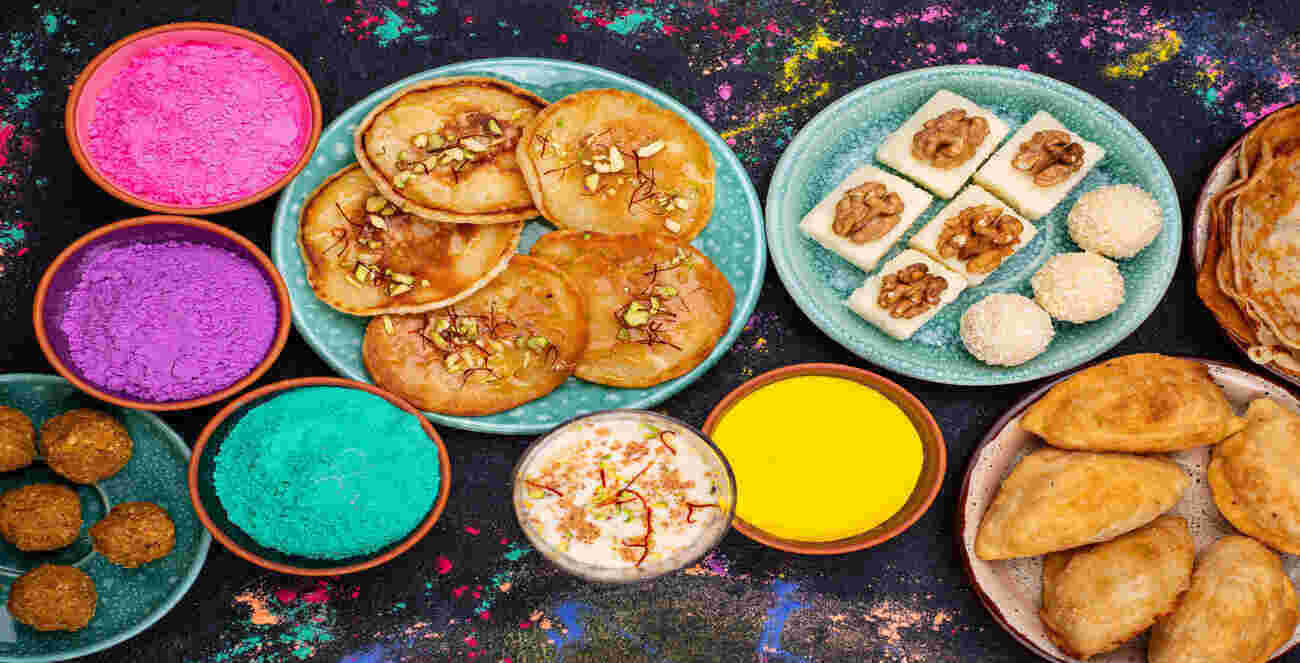
2.2 Holi: Celebration of Color and Spring
Holi marks the arrival of spring and is associated with joy, playfulness, and renewal. Its foods are equally vibrant and indulgent.
Traditional Holi dishes include:
- Gujiya: deep-fried dumplings filled with sweetened khoya and nuts
- Malpua: syrup-soaked pancakes
- Thandai: a cooling milk-based drink flavored with nuts and spices
These rich foods reflect the celebratory excess and sensory delight associated with Holi.
2.3 Navratri and Durga Puja: Ritual Fasting and Feasting
Navratri is a nine-day festival dedicated to the worship of the Goddess in her various forms. Many devotees observe dietary restrictions, avoiding grains, onions, garlic, and meat.
Festival foods during Navratri include:
- Sabudana khichdi (tapioca pearls)
- Kuttu ki puri (buckwheat bread)
- Singhare ke pakode (water chestnut fritters)
In eastern India, Durga Puja features elaborate feasts after rituals, with dishes such as khichuri, fried vegetables, sweets, and fish curries, reflecting regional preferences.
2.4 Ganesh Chaturthi: Devotion and Modak
Ganesh Chaturthi celebrates Lord Ganesha, the remover of obstacles. His favorite offering is modak, a dumpling filled with jaggery and coconut, steamed or fried.
The preparation and offering of modak symbolize humility, gratitude, and the sweetness of devotion.
3. Harvest Festivals and Seasonal Foods
3.1 Pongal: Gratitude to Nature in South India
Pongal is a harvest festival celebrated primarily in Tamil Nadu. The central dish, also called pongal, is made from newly harvested rice, lentils, milk, and jaggery.
There are two main varieties:
- Sakkarai pongal (sweet)
- Ven pongal (savory with pepper and ghee)
Cooking pongal outdoors and allowing it to overflow symbolizes abundance and prosperity.
3.2 Makar Sankranti: Sesame, Jaggery, and the Sun
Celebrated across India under different names, Makar Sankranti marks the transition of the sun into Capricorn. Foods emphasize sesame seeds and jaggery, believed to provide warmth during winter.
Popular dishes include:
- Til laddoo
- Chikki (nut brittle)
- Puran poli
The shared message across regions is harmony, renewal, and seasonal balance.
3.3 Baisakhi and Lohri: Northern Harvest Traditions
In Punjab and northern India, Baisakhi and Lohri celebrate the wheat harvest. Traditional foods include:
- Makki di roti (corn flatbread)
- Sarson da saag (mustard greens)
- Dairy-based sweets
These hearty dishes reflect agrarian abundance and communal celebration.
4. Muslim Festivals and Festive Cuisine
4.1 Ramadan and Iftar Foods
During Ramadan, Muslims fast from dawn to sunset. The Iftar meal, which breaks the fast, is both nourishing and celebratory.
Common Indian Iftar foods include:
- Dates and fruits
- Samosas and pakoras
- Haleem, a slow-cooked meat and grain dish
- Sharbat and milk-based drinks
These foods emphasize balance, sustenance, and sharing.
4.2 Eid al-Fitr: Celebration Through Rich Cuisine
Eid al-Fitr marks the end of Ramadan and is celebrated with elaborate meals and hospitality.
Signature dishes include:
- Sheer khurma (vermicelli pudding with milk and nuts)
- Biryani
- Kebabs and curries
Sweets play a central role, symbolizing gratitude and joy.
4.3 Eid al-Adha: Feasting and Charity
Eid al-Adha emphasizes sacrifice and generosity. Meat-based dishes dominate, but a significant portion of food is distributed to the poor, reinforcing social responsibility through cuisine.
5. Christian Festivals and Colonial Influences
5.1 Christmas in India: Fusion of Cultures
Indian Christmas cuisine varies by region but often reflects colonial and local influences.
Popular festive foods include:
- Fruit cake and plum cake
- Roast meats
- Kalkals and marzipan (especially in Goa)
These foods blend European baking traditions with Indian spices and ingredients.
5.2 Easter and Community Feasts
Easter celebrations include special meals shared among family and church communities, highlighting renewal and fellowship.
6. Sikh Festivals and Langar Traditions
6.1 Guru Nanak Jayanti and Baisakhi
Sikh festivals emphasize equality and service. Food is central to langar, the communal kitchen in gurdwaras.
Langar meals typically include:
- Lentils
- Flatbreads
- Rice dishes
Prepared and served by volunteers, langar embodies humility and inclusivity.
7. Techniques, Ingredients, and Culinary Craftsmanship
7.1 Traditional Cooking Methods
Festival foods often rely on time-intensive techniques such as:
- Slow cooking
- Deep frying
- Fermentation
- Hand-grinding spices
These methods enhance flavor complexity and reflect culinary devotion.
7.2 Ingredients with Symbolic Meaning
Certain ingredients carry symbolic value:
- Ghee for purity and richness
- Jaggery for warmth and sweetness
- Rice for fertility and prosperity
The choice of ingredients is often guided by ritual prescriptions as much as taste.
8. Nutrition, Balance, and Moderation
8.1 Feast and Fast Cycles
Indian festival cuisine is traditionally balanced by fasting periods. This cyclical pattern promotes moderation and metabolic balance.
8.2 Modern Health Awareness
Today, many households adapt traditional recipes by:
- Reducing sugar and fat
- Baking instead of frying
- Incorporating whole grains
These adaptations ensure relevance without losing cultural essence.
9. Festival Foods in Contemporary India
9.1 Urbanization and Convenience
Modern lifestyles have transformed festival food preparation:
- Ready-made sweets and snacks
- Catering services
- Commercialization of traditional foods
While convenience has increased, concerns about authenticity and quality persist.
9.2 Globalization and Diaspora Influence
Indian festival foods have traveled globally with the diaspora. Festivals abroad serve as cultural anchors, preserving identity through cuisine while integrating local influences.
10. Festival Food as Intangible Cultural Heritage
10.1 Transmission Through Generations
Recipes are often passed orally, through observation and participation. Cooking together during festivals becomes an educational and emotional experience.
10.2 Preservation in a Changing World
As fast food and digital culture expand, traditional festival foods remain powerful symbols of continuity, reminding communities of shared roots and values.
Conclusion
Indian festival foods represent a remarkable synthesis of religion, culture, agriculture, and artistry. They are not merely celebratory indulgences but carefully structured expressions of gratitude, devotion, and community. Each dish carries layers of meaning—seasonal, spiritual, and social—reflecting India’s complex and pluralistic identity.
In a rapidly modernizing world, festival foods continue to anchor individuals and communities to tradition while adapting to contemporary realities. Whether prepared in a village kitchen or an urban apartment, these foods preserve a living heritage where cooking becomes ritual, sharing becomes worship, and celebration becomes nourishment for both body and soul.
Indian festival cuisine thus stands as one of the richest culinary traditions in the world—deeply symbolic, endlessly diverse, and profoundly human.