






Introduction: A Journey Through Turkish Cuisine
Turkey, a country that spans two continents—Europe and Asia—has long been a culinary crossroads. Its geographical location has made it a melting pot of cultures, each leaving an indelible mark on Turkish food. The cuisine is diverse, rich in flavor, and deeply intertwined with the country’s history, geography, and traditions. From the mystical streets of Istanbul to the peaceful villages of Anatolia, Turkish food offers a feast for the senses.
The culinary traditions of Turkey reflect a fascinating blend of flavors, techniques, and ingredients, influenced by centuries of history. Turkey’s culinary journey—from the ancient civilizations of Anatolia, to the Ottoman Empire, and its diverse regional cultures—has resulted in a gastronomic treasure trove that remains relevant and beloved worldwide.
In this article, we’ll explore the rich history, key ingredients, traditional dishes, regional specialties, and the modern-day evolution of Turkish food, showcasing why Turkish cuisine is a true culinary treasure.
1. The Historical Roots of Turkish Cuisine
1.1 The Crossroads of Civilizations
Turkey is often described as a bridge between the East and West, a characteristic that is well-reflected in its diverse culinary landscape. Historically, the region has been home to several ancient civilizations, including the Hittites, Phrygians, Greeks, Romans, and Seljuks, all of whom contributed to the development of the country’s food culture.
However, it was the Ottoman Empire, which spanned much of Southeast Europe, the Middle East, and North Africa, that truly shaped modern Turkish cuisine. The Ottomans were known for their affluent imperial courts that brought together a diverse array of food from the empire’s vast territories. Spices, herbs, and ingredients from Africa, Asia, and Europe were blended together to create some of the most famous dishes in the world today.
1.2 Key Ingredients in Turkish Cooking
At the heart of Turkish cuisine lies an emphasis on fresh, seasonal, and local ingredients. These ingredients form the backbone of Turkey’s rich culinary traditions. Let’s take a closer look at some of the staples that define Turkish cooking:
- Olive Oil: Especially important in the Aegean and Mediterranean regions of Turkey, olive oil is used not only for cooking but also as a dressing for salads, vegetables, and mezes (small appetizers).
- Lamb and Beef: Turkey’s cuisine is meat-centric, with lamb and beef being the most commonly used proteins. These meats are often grilled, stewed, or made into kebabs.
- Yogurt: Yogurt is an integral part of Turkish food, used in everything from savory dishes like kebabs to desserts such as ayran (a yogurt drink) or künefe (a sweet cheese dessert).
- Bulgur and Rice: Grains like bulgur (cracked wheat) and rice are staple foods in Turkey, often used in pilafs, soups, and salads.
- Spices and Herbs: Turkish cuisine is known for its rich use of spices. Common spices include cumin, paprika, oregano, cinnamon, sumac, and mint, while herbs such as parsley, dill, and thyme are frequently used in both cooking and as garnishes.
2. Traditional Turkish Dishes
2.1 Kebabs: The Heart of Turkish Grilling
No exploration of Turkish cuisine would be complete without a mention of the kebab, a dish that has become synonymous with Turkish food worldwide. While there are many different types of kebabs in Turkey, they all share a common love for grilled meat, often served with fresh bread or rice.
- Şiş Kebab: This is a skewered dish where cubes of marinated lamb, beef, or chicken are grilled over an open flame. It’s often accompanied by grilled vegetables like tomatoes, onions, and peppers.
- Döner Kebab: A beloved street food, döner is made by stacking meat (often lamb, chicken, or beef) on a vertical rotisserie and cooking it slowly. The meat is then thinly sliced and served with pita or flatbread.
- Adana Kebab: Originating from the city of Adana, this spicy kebab is made with minced lamb, onions, and red pepper, skewered and grilled. Its robust flavor is perfect for spice lovers.
2.2 Meze: A Feast of Small Plates
The concept of meze, which refers to a variety of small, shareable dishes, is at the heart of Turkish dining. Whether served as appetizers or part of a larger meal, meze dishes offer a delightful array of tastes and textures. They highlight Turkey’s use of fresh vegetables, legumes, cheese, and yogurt.
Some popular meze options include:
- Hummus: A creamy dip made from chickpeas, tahini, garlic, and lemon juice, often served with pita bread or vegetables.
- Baba Ganoush: A smoky eggplant dip made with tahini, garlic, and lemon juice.
- Ezme: A spicy, tangy tomato-based salad made with finely chopped onions, peppers, garlic, and parsley.
2.3 Pide: The Turkish Pizza
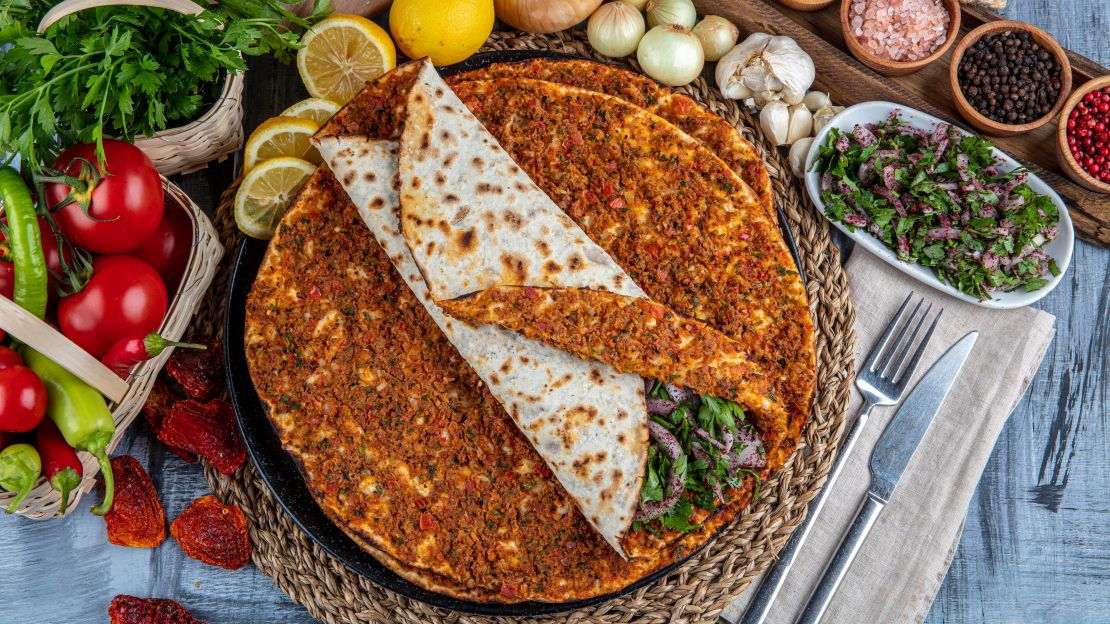
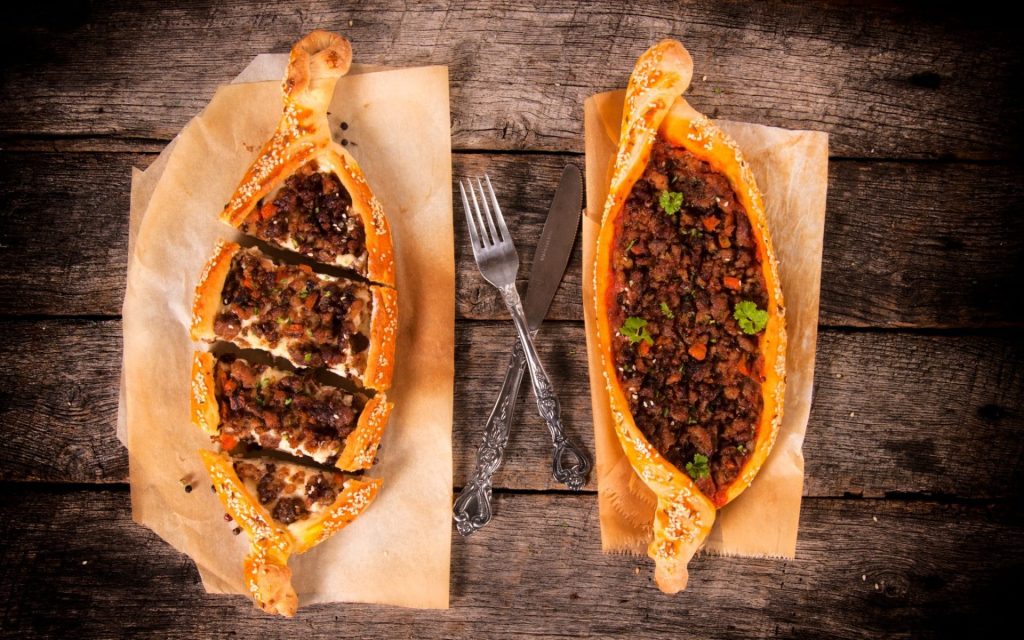
Often compared to pizza, pide is a flatbread topped with a variety of ingredients, including cheese, minced meat, vegetables, and eggs. The dough is thin, and the toppings are spread evenly before being baked in a wood-fired oven.
- Kiymali Pide: A minced lamb topping with onions and spices on a crispy flatbread.
- Peynirli Pide: A vegetarian version, topped with cheese, tomatoes, and herbs.
2.4 Soups and Stews: Hearty Comfort
Soup and stew are integral to Turkish cuisine, offering comfort and warmth, especially during the colder months. These dishes often feature hearty legumes, vegetables, and meats, creating rich, flavorful broths.
- Mercimek Çorbası: A simple yet delicious lentil soup made with red lentils, onions, garlic, and cumin. It’s often served with a splash of lemon.
- İçli Köfte: A stuffed bulgur ball, filled with ground meat, onions, and spices, typically boiled or fried.
2.5 Desserts: The Sweet Side of Turkish Cuisine
Turkish desserts are known for their richness and sweetness, often incorporating phyllo dough, syrups, and nuts. Here are some of the most iconic desserts in Turkey:
- Baklava: Layers of phyllo dough filled with chopped pistachios or walnuts, soaked in a sugar syrup or honey.
- Künefe: A dessert made with shredded phyllo dough, filled with melted cheese, and soaked in sweet syrup, topped with crushed pistachios.
3. Regional Specialties: A Diverse Culinary Landscape
3.1 Aegean Region: Fresh, Light, and Olive Oil-Based
The Aegean region is famous for its olive oil-based dishes, light seafood preparations, and vegetable-heavy meals. The cuisine here reflects the Mediterranean way of eating: fresh, light, and often vegetarian.
- Zeytinyağlı Enginar: Artichokes cooked with olive oil, peas, carrots, and herbs.
- Balık Ekmek: A fish sandwich made with grilled mackerel, served with lettuce, onions, and tomato in bread.
3.2 Southeastern Anatolia: Bold Flavors and Spices
The southeastern part of Turkey is known for its bold, spicy flavors and the liberal use of chilies, garlic, and pistachios. Adana, Gaziantep, and Sanliurfa are known for their fiery kebabs and rich pastries.
- Urfa Kebab: A spicy, tender kebab made from minced lamb and served with fresh flatbread.
- Baklava: Gaziantep is renowned for producing some of the best pistachio baklava in Turkey, characterized by its thin layers of phyllo dough and a sweet, syrupy finish.
4. Turkish Street Food: A Feast on the Go
Street food is an essential part of Turkish life, especially in larger cities like Istanbul and Ankara. Vendors line the streets, offering delicious snacks that range from savory to sweet.
- Simit: A sesame-crusted bread ring, often sold by street vendors and served with a side of cheese or jam.
- Kokoreç: A spicy offal dish made from lamb intestines, typically grilled and served in a sandwich.
- Çiğ Köfte: A raw meatball made from bulgur, onions, and spices, which is served cold and is often eaten as a snack or part of a meze platter.
5. The Evolution of Turkish Cuisine
In recent years, Turkish cuisine has experienced a modern renaissance. With a renewed interest in traditional recipes, young chefs are blending modern cooking techniques with time-honored recipes. Istanbul, in particular, has become a hub for innovative restaurants that celebrate Turkish food in a contemporary setting.
Chefs are experimenting with regional ingredients, presentation styles, and global flavors while still honoring the fundamental principles of Turkish cooking. Turkish street food has also become increasingly popular abroad, with dishes like döner kebab and baklava taking center stage in international food culture.
Conclusion: The Everlasting Charm of Turkish Cuisine
The culinary treasure of Turkey is a reflection of its diverse culture, history, and landscapes. Turkish food offers a vibrant tapestry of flavors, from rich, meaty kebabs to fresh, herbaceous meze and decadent desserts. It’s a cuisine that invites both locals and visitors to gather around the table, share stories, and savor every bite. Whether enjoyed in a bustling city restaurant, a cozy village home, or from a street vendor, Turkish food remains a beloved and integral part of the country’s identity.