





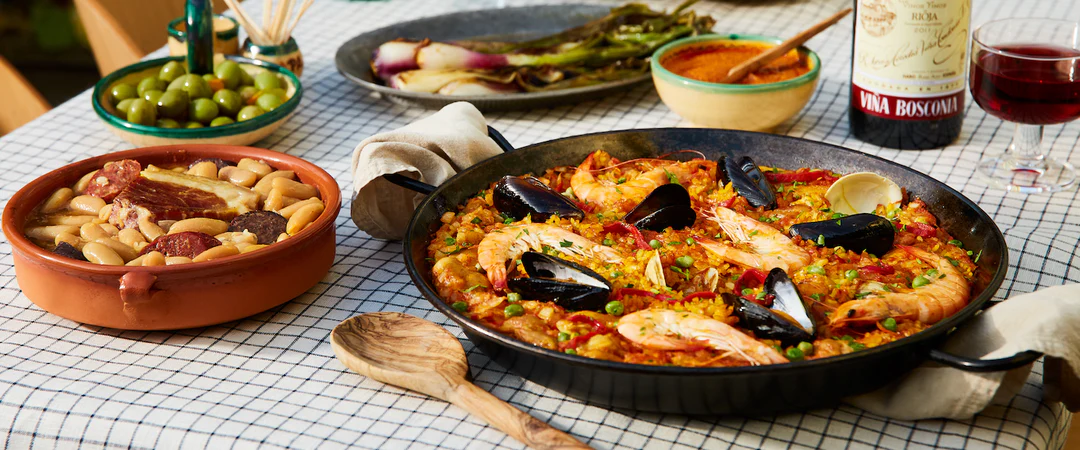

Spain’s culinary heritage is renowned for its vibrant flavors, fresh ingredients, and regional diversity, with seafood paella emerging as one of the nation’s most celebrated dishes. Originating in Valencia, paella exemplifies the intersection of local agriculture, Mediterranean culture, and culinary artistry. Its combination of rice, seafood, vegetables, and spices showcases Spain’s dedication to fresh, seasonal ingredients and time-honored cooking techniques.
This article offers a comprehensive exploration of Spanish seafood paella, covering its historical origins, regional variations, signature ingredients, cooking techniques, cultural significance, nutritional benefits, global influence, and modern adaptations, highlighting why it remains an enduring symbol of Spanish gastronomy.
Historical Origins of Paella
Paella’s roots are deeply tied to the landscape and history of Valencia, a region on Spain’s eastern Mediterranean coast:
Agricultural and Maritime Influences
- Valencia’s fertile rice fields, nourished by the Turia River and Mediterranean irrigation systems, provided the perfect foundation for rice cultivation.
- Coastal proximity ensured a steady supply of fresh seafood, such as shrimp, mussels, clams, and squid.
- Early versions of paella combined rice with vegetables, herbs, and locally available proteins, reflecting the agricultural and maritime bounty.
Cultural and Historical Development
- Moorish Influence: Introduced rice cultivation to Spain around the 8th century, along with spices like saffron, which became integral to paella’s flavor and color.
- Christian Reconquest: Further diversified ingredients by introducing meats such as rabbit and chicken, eventually leading to regional variations.
- 19th–20th Century Popularization: Paella transitioned from a local Valencian dish for farmers and fishermen to a national culinary symbol.
Paella represents centuries of cultural exchange, agricultural adaptation, and culinary refinement, establishing it as a cornerstone of Spanish gastronomy.
Regional Variations of Paella
Though seafood paella is globally recognized, Spain boasts diverse regional variations:
Valencian Paella (Paella Valenciana)
- Traditional recipe includes rabbit, chicken, green beans, and sometimes snails, reflecting inland ingredients.
- Uses short-grain rice, saffron, and olive oil, often cooked over an open fire.
Seafood Paella (Paella de Mariscos)
- Coastal adaptation emphasizing fresh seafood instead of meat.
- Key ingredients: shrimp, mussels, clams, squid, and fish.
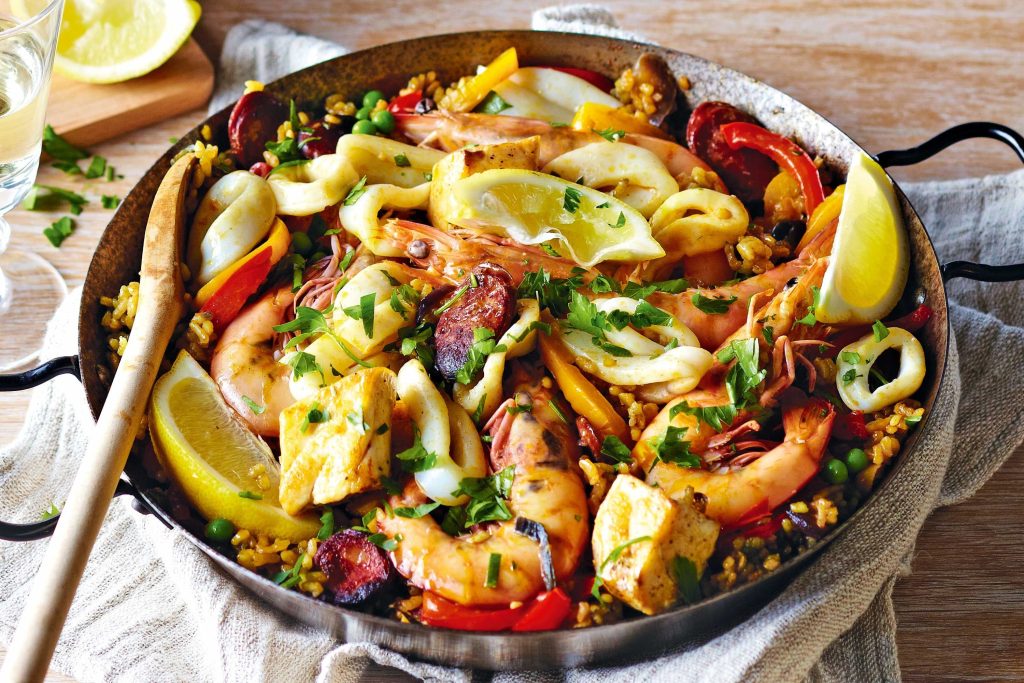
- Often enriched with tomatoes, bell peppers, peas, and aromatic herbs.
Mixed Paella (Paella Mixta)
- Combines seafood and meat, catering to modern tastes while preserving traditional technique.
Regional Influences Beyond Valencia
- Catalonia: Incorporates local shellfish and mild spices.
- Andalusia: Adds paprika, garlic, and occasionally chorizo.
- Each region interprets paella based on available ingredients and cultural preferences, maintaining a dynamic culinary tradition.
Signature Ingredients
Seafood paella relies on fresh, high-quality ingredients to achieve its distinctive flavor, aroma, and texture:
- Rice: Short-grain varieties such as Bomba or Calasparra, which absorb liquid without losing texture.
- Seafood: Shrimp, mussels, clams, squid, and firm white fish.
- Vegetables: Tomatoes, bell peppers, peas, artichokes.
- Fats: Olive oil forms the base, providing richness and depth.
- Spices and Aromatics: Saffron is essential for color and flavor; paprika, garlic, and parsley enhance complexity.
- Stock: Seafood or fish stock is added to infuse the rice with umami.
- Optional: Lemon wedges for freshness and acidity.
The careful balance of seafood, rice, vegetables, and aromatics defines the authentic taste of Spanish paella.
Traditional Cooking Techniques
Paella’s preparation is as important as its ingredients, reflecting skill, timing, and attention to detail:
- The Pan (Paellera): A wide, shallow pan ensures even heat distribution and optimal rice texture.
- Sofrito Base: Garlic, onion, and tomatoes are sautéed in olive oil to develop a flavor foundation.
- Toasting the Rice: Rice is briefly sautéed in the sofrito to coat grains with flavor before adding stock.
- Layering Seafood: Seafood is arranged atop rice, partially submerged, to cook evenly while maintaining visual appeal.
- Simmering: Stock is added, and the mixture simmers without stirring, allowing the formation of socarrat—the prized crispy rice layer at the bottom.
- Finishing Touches: Fresh herbs, lemon wedges, and sometimes a drizzle of olive oil enhance aroma and presentation.
The combination of technique, timing, and ingredient quality ensures a paella with tender rice, perfectly cooked seafood, and vibrant flavor.
Flavor Philosophy
Seafood paella embodies the Mediterranean principles of simplicity and freshness:
- Freshness: Seafood must be at peak quality to highlight natural flavors.
- Balance: The sweetness of seafood, earthiness of saffron, and acidity of tomatoes harmonize.
- Texture: Short-grain rice absorbs liquid while remaining slightly firm; socarrat adds a contrasting crunch.
- Visual Appeal: Colorful vegetables, shellfish, and golden saffron create an inviting presentation.
Paella demonstrates how minimalist seasoning and high-quality ingredients produce depth and complexity without unnecessary embellishment.
Nutritional Profile
Seafood paella aligns with Mediterranean dietary principles, providing a balance of protein, carbohydrates, and healthy fats:
- Protein: Lean seafood provides omega-3 fatty acids, essential amino acids, and micronutrients like iodine and selenium.
- Carbohydrates: Short-grain rice supplies sustained energy.
- Healthy Fats: Olive oil delivers monounsaturated fats and antioxidants.
- Vitamins and Minerals: Vegetables contribute fiber, vitamins A and C, and folate.
- Overall Balance: Moderate portioning allows paella to be both satisfying and nutritious.
Its nutritional value demonstrates how traditional cuisine integrates flavor with health-conscious principles.
Cultural and Social Significance
Paella is not just a dish—it is a cultural ritual and social experience:
- Family Gatherings: Traditionally prepared for Sunday lunches and festivals.
- Community Cooking: Large pans encourage communal participation, fostering social bonds.
- Festivals and Celebrations: Paella is central to events such as the Fallas Festival in Valencia.
- Culinary Heritage: Recipes are passed down through generations, preserving regional identity.
The preparation and sharing of paella embody Spain’s communal, celebratory approach to food.
Global Influence
Paella has traveled far beyond Spain, influencing chefs, home cooks, and restaurants worldwide:
- International Recognition: Seafood paella is served in Spanish restaurants globally.
- Culinary Education: Culinary schools teach authentic technique and ingredient selection.
- Adaptation: Paella is modified with local seafood, vegetables, or even vegan alternatives while maintaining core principles.
- Tourism: Spanish culinary tourism promotes authentic paella experiences, attracting visitors to Valencia and coastal regions.
Its global presence underscores Spain’s culinary influence and the universal appeal of fresh, balanced Mediterranean cuisine.
Modern Innovations
Contemporary chefs experiment with paella while honoring tradition:
- Artisanal Ingredients: Organic rice, sustainable seafood, and local vegetables enhance flavor and ethics.
- Deconstructed Paella: Components plated separately but inspired by classic technique.
- Fusion Variations: Incorporating international spices or ingredients while respecting the original method.
- Cooking Technology: Modern burners and paella-specific pans facilitate precise heat control for optimal socarrat formation.
These innovations illustrate how tradition and creativity coexist, keeping Spanish paella relevant in modern gastronomy.
Tips for Preparing Authentic Seafood Paella
- Select High-Quality Ingredients: Fresh seafood, saffron, and short-grain rice are non-negotiable.
- Use a Proper Paella Pan: Ensures even cooking and authentic socarrat.
- Control Heat: Moderate, consistent heat prevents burning while creating the crust.
- Do Not Stir During Simmering: Preserves socarrat and avoids mushy rice.
- Finish with Fresh Elements: Parsley, lemon, and a drizzle of olive oil enhance aroma and flavor.
Attention to these details distinguishes authentic paella from imitations, highlighting Spanish culinary expertise.
Conclusion
Seafood paella is a culinary masterpiece that embodies Spain’s history, geography, and culture. From its Valencian roots to its coastal adaptations, paella demonstrates how simple ingredients, meticulous technique, and cultural tradition combine to create a dish of enduring global appeal.
Through careful ingredient selection, balanced flavors, and communal preparation, seafood paella represents the essence of Mediterranean cuisine: freshness, harmony, and conviviality. Its continued popularity underscores Spain’s influence on world gastronomy and highlights the power of food as both art and cultural expression.
By exploring seafood paella, one gains not only a taste of Spain but also an understanding of how culinary heritage reflects history, geography, and social values, making every bite a celebration of tradition and flavor.