





Introduction
South African cuisine is a vivid tapestry of flavors, techniques, and cultural influences, reflecting the country’s rich history and diverse population. From the indigenous San and Khoisan communities to European colonists and Asian immigrants, each group has left an indelible mark on the nation’s culinary landscape. Today, South African food represents more than sustenance—it is a celebration of identity, heritage, and innovation.
This article explores the historical roots, regional variations, signature dishes, and contemporary trends in South African cuisine, demonstrating how European, Asian, and indigenous traditions have merged to create a unique gastronomic identity. By examining ingredients, cooking techniques, and cultural narratives, readers can gain a comprehensive understanding of why South African food is both globally admired and deeply local.
1. Historical Influences on South African Cuisine
1.1 Indigenous Heritage
- The San and Khoisan peoples were the first to inhabit South Africa and relied on hunting, gathering, and foraging.
- Staples included:
- Wild game
- Root vegetables such as sorghum, yams, and bulbs
- Native fruits and herbs
- Cooking methods: roasting over open fire, drying meats, and fermentation
1.2 European Influence
- Dutch, British, and Portuguese colonists introduced new ingredients, livestock, and culinary techniques.
- Dutch settlers (Boers) brought:
- Pastries, breads, and meat preservation methods
- Techniques like braaing (barbecue) adapted from European roasting
- British colonial cuisine influenced tea culture, puddings, and refined baking.
1.3 Asian Influence
- Indian, Malaysian, and Indonesian communities contributed spices, curries, and pickling techniques.
- Cape Malays, descendants of Southeast Asian slaves, introduced:
- Cape Malay curry, bobotie, and sambals
- Sweet-spiced flavor profiles blending cinnamon, turmeric, and cardamom
1.4 The Fusion Process
- Over centuries, cross-cultural exchanges led to hybrid dishes, blending European techniques, Asian spices, and indigenous ingredients.
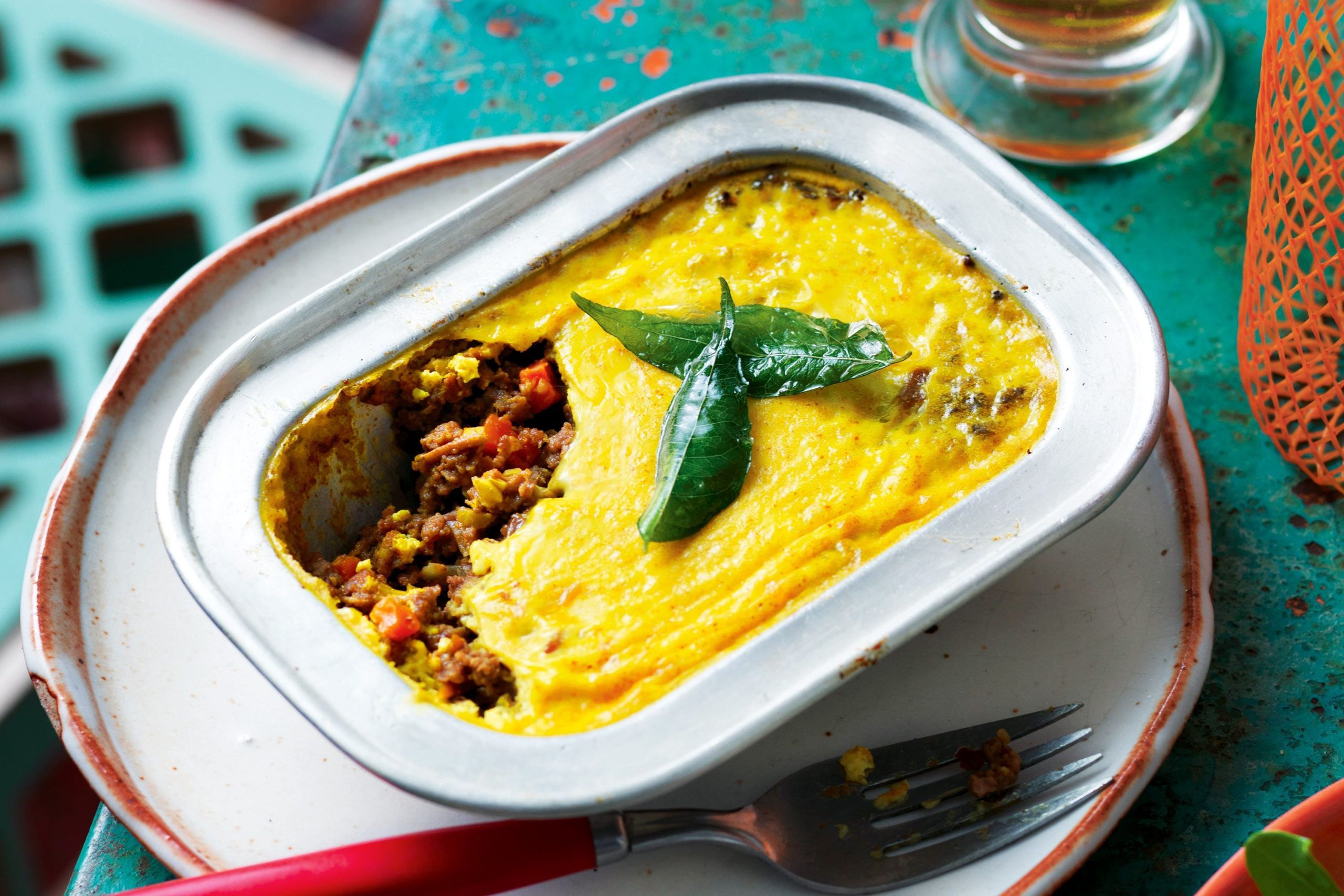
- Example: Bobotie, a Cape Malay dish of spiced minced meat baked with an egg custard topping, illustrates this fusion.
2. Regional Diversity in South African Cuisine
2.1 Western Cape
- Known for Cape Malay cuisine, characterized by aromatic curries and sweet-savory dishes.
- Signature ingredients: cinnamon, turmeric, dried fruits, and coconut milk
- Popular dishes:
- Bobotie
- Cape Malay curry
- Breyani (spiced rice layered with meat)
2.2 KwaZulu-Natal
- Influenced by Indian immigrants, particularly in Durban.
- Dishes feature curries, sambals, and heavily spiced meat preparations.
- Popular dishes:
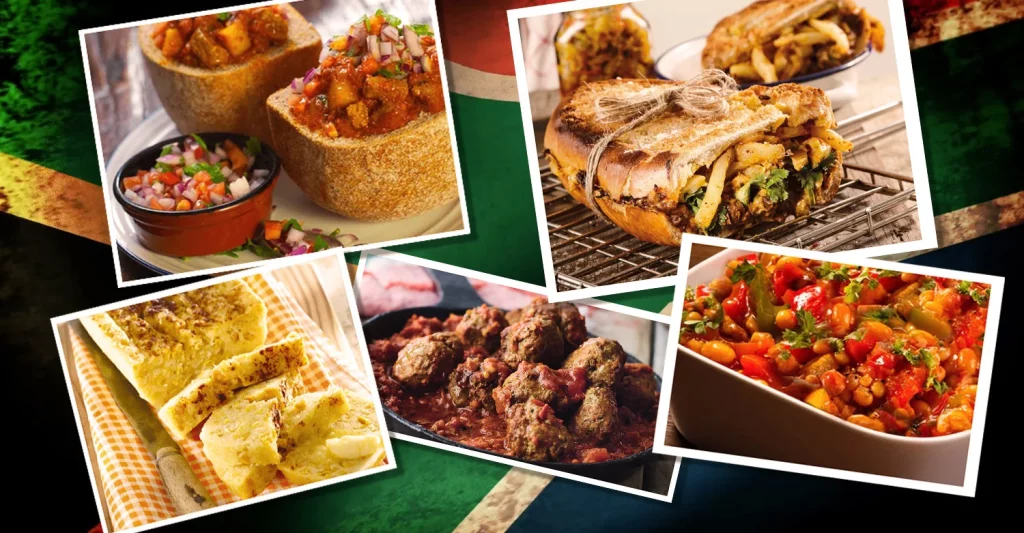
- Bunny Chow: hollowed-out bread filled with curry
- Durban chicken curry
2.3 Gauteng and Johannesburg
- A cosmopolitan hub blending traditional African, European, and modern culinary trends.
- Street foods: vetkoek (fried dough) with savory fillings), meat pies, and boerewors rolls.
2.4 Northern and Eastern Provinces
- Indigenous traditions dominate, with maize (corn) as a staple, prepared as pap or porridges.
- Use of wild greens, beans, and game meat continues traditional diets.
3. Signature Ingredients of South African Cuisine
3.1 Proteins
- Beef, lamb, chicken, and game meat (springbok, kudu, ostrich)
- Seafood, particularly along the coast: snoek, yellowtail, and prawns
- Use of marination and spice blends enhances natural flavors
3.2 Grains and Staples
- Maize meal: used to make pap, a versatile porridge or side dish
- Sorghum and millet: traditional grains with historical significance
- Rice: especially in Cape Malay dishes
3.3 Vegetables and Legumes
- Indigenous vegetables: amarula leaves, wild spinach, and pumpkin
- Asian influence: okra, beans, and lentils
- European influence: potatoes, carrots, and cabbage
3.4 Spices and Flavorings
- Indigenous herbs and aromatic plants: rooibos, buchu, and wild rosemary
- Asian spices: curry powders, turmeric, coriander, and cardamom
- European seasonings: bay leaves, cloves, and nutmeg
4. Cooking Techniques
4.1 Braai (Barbecue)
- National tradition; involves grilling meat over open flames.
- Techniques: slow grilling, smoking, and marinating meats
- Typical braai meats: boerewors, lamb chops, chicken, and fish
4.2 Baking and Roasting
- Influenced by Dutch and British settlers
- Popular baked goods: koeksisters, melktert (milk tart), and bread rolls
4.3 Stewing and Currying
- Cape Malay and Indian influence
- Slow-cooked stews with layered spices, fruits, and coconut milk enhance complexity
- Examples: bobotie, Cape curries, and breyani
4.4 Frying and Deep-Frying
- Street foods often use vetkoek or fried fish
- Technique ensures crisp exterior with soft interior
4.5 Fermentation
- Indigenous techniques include fermented maize porridges
- Adds depth of flavor, acidity, and nutritional benefits
5. Iconic South African Dishes
5.1 Bobotie
- Spiced minced meat with egg custard topping
- Blend of Cape Malay spices and European baking techniques
- Sweet and savory, often served with yellow rice and chutney
5.2 Braai Specialties
- Boerewors: sausage made from beef, lamb, and spices
- Sosaties: skewered, marinated meats grilled over fire
- Accompanied by pap, salads, and chakalaka (spicy relish)
5.3 Bunny Chow
- Durban street food; hollowed bread filled with curry
- Symbolizes Indian-South African culinary fusion
5.4 Potjiekos
- Stewed dishes slow-cooked in cast-iron pots
- Layers ingredients for depth of flavor without stirring, reflecting indigenous practices
5.5 Koeksisters
- Sweet, twisted doughnuts soaked in syrup
- Reflects Dutch influence, popular in Afrikaner communities
5.6 Melktert (Milk Tart)
- Custard-based tart with sweet, spiced filling
- Shows colonial European baking influence
6. Street Food and Everyday Cuisine
- South African urban life emphasizes affordable, flavorful street foods
- Vetkoek: fried dough, sometimes stuffed with curried meat or cheese
- Biltong: air-dried cured meat, a traditional snack with indigenous origins
- Samosas and curries reflect Indian and Asian influences
- Chakalaka: spicy vegetable relish accompanying meat and bread
7. Beverages and Fermented Drinks
- Rooibos tea: native to Western Cape; caffeine-free and rich in antioxidants
- Amarula liqueur: made from indigenous marula fruit
- Umqombothi: traditional beer brewed from maize and sorghum
- Wine: South Africa’s vineyards reflect European influence, especially from Dutch settlers
8. Contemporary Trends
8.1 Fusion Cuisine
- Modern chefs blend traditional, Asian, and European techniques
- Use of indigenous ingredients in fine dining settings
- Example: Ostrich carpaccio with Cape Malay spices
8.2 Plant-Forward Cuisine
- Increasing focus on vegetable-centric dishes, sustainable proteins, and foraged ingredients
- Aligns with global trends in health and environmental consciousness
8.3 Global Recognition
- South African cuisine is celebrated in international gastronomy festivals
- Chefs like Margot Janse and Reuben Riffel bring local flavors to global stages
9. Cultural and Social Significance
- Food serves as a medium for storytelling and heritage preservation
- Braai culture strengthens community bonds
- Traditional dishes reflect celebrations, rituals, and historical memory
- Culinary tourism highlights South Africa’s diversity and innovation
10. Challenges and Opportunities
10.1 Preserving Indigenous Practices
- Modernization risks losing traditional techniques and recipes
- Revival projects and culinary schools help preserve knowledge
10.2 Sustainable Ingredients
- Emphasis on responsible sourcing of seafood, game, and local produce
- Reducing environmental impact while maintaining flavor
10.3 Global Competition
- Balancing authenticity with innovation ensures South African cuisine remains relevant
- Opportunity for chefs to highlight fusion dishes rooted in history
Conclusion
South African cuisine is a remarkable fusion of European, Asian, and indigenous influences, reflecting the country’s complex cultural heritage. Its diversity is expressed through:
- Ingredients: indigenous grains, exotic spices, and European baking staples
- Techniques: braaing, baking, stewing, and fermenting
- Dishes: bobotie, bunny chow, vetkoek, and Cape Malay curries
This rich culinary tapestry demonstrates that food is more than sustenance—it is identity, history, and art on a plate. As modern chefs innovate while honoring tradition, South African cuisine continues to celebrate diversity, flavor, and cultural heritage, making it a vibrant component of global gastronomy.