






France is universally celebrated as a cornerstone of global gastronomy, shaping how the world perceives culinary artistry, technique, and taste. French cuisine embodies tradition, refinement, and innovation, combining high-quality ingredients with meticulous preparation methods to create dishes that are both flavorful and visually stunning. Beyond mere nourishment, French food represents culture, history, and social identity, influencing countless chefs, culinary schools, and international dining trends.
This article provides a comprehensive exploration of classic French cuisine, including its historical origins, regional diversity, signature ingredients, iconic dishes, culinary techniques, cultural significance, nutrition, global influence, and modern adaptations, demonstrating why France remains a culinary powerhouse.
Historical Roots of French Cuisine
French culinary tradition is the product of centuries of cultural, social, and technological evolution:
Medieval and Renaissance Beginnings
- During the Middle Ages, French cuisine was heavily influenced by regional produce, the monarchy, and imported spices from Asia and the Middle East.
- Nobility emphasized elaborate presentations and the combination of sweet and savory flavors, laying the groundwork for sophisticated sauce-making.
- Renaissance chefs introduced new ingredients from the Americas, including tomatoes, potatoes, and peppers, which gradually became staples in French cooking.
The Birth of Haute Cuisine
- By the 17th and 18th centuries, French culinary practice evolved into haute cuisine, characterized by formal techniques, precise cooking methods, and elaborate presentations.
- Influential chefs, such as Marie-Antoine Carême, codified recipes, sauces, and culinary techniques, earning recognition as pioneers of structured French gastronomy.
- The development of restaurants and culinary academies during this period helped establish French cuisine as both an art form and a professional discipline.
Codification of French Techniques
- Auguste Escoffier, in the late 19th and early 20th centuries, simplified and organized French culinary practices, creating the brigade system and standardizing sauces and courses.
- These innovations not only professionalized French kitchens but also provided a framework for chefs worldwide.
French cuisine’s historical evolution illustrates a balance of tradition and innovation, emphasizing technique, ingredient quality, and cultural symbolism.
Regional Diversity in French Cuisine
France’s culinary richness is deeply tied to its geographic and climatic diversity, resulting in distinct regional cuisines:
Northern France
- Characteristics: Dairy, butter, cream, potatoes, cabbage, apples.
- Iconic Dishes: Boeuf Bourguignon, Coq au Vin, Tarte Tatin.
- Flavor Profile: Rich, hearty, and comfort-oriented.
Southern France (Provence and Mediterranean Coast)
- Characteristics: Olive oil, tomatoes, garlic, seafood, herbs (thyme, rosemary, basil).
- Iconic Dishes: Ratatouille, Bouillabaisse, Salade Niçoise.
- Flavor Profile: Light, aromatic, and fresh.
Central France
- Characteristics: Cheese, charcuterie, root vegetables, wine-based sauces.
- Iconic Dishes: Quiche Lorraine, Pot-au-Feu.
- Flavor Profile: Balanced, savory, and traditional.
Eastern France (Alsace, Lorraine, Burgundy)
- Characteristics: Wine, mustard, sausages, game meats.
- Iconic Dishes: Choucroute Garnie, Coq au Vin, Beef Burgundy.
- Flavor Profile: Robust, earthy, and wine-infused.
Western France (Brittany, Normandy)
- Characteristics: Seafood, apples, cream, butter.
- Iconic Dishes: Moules Marinières, Crêpes, Camembert cheese dishes.
- Flavor Profile: Fresh, creamy, and maritime-influenced.
Regionality is central to French cuisine, demonstrating how local resources and climate shape ingredient selection and cooking style.
Signature Ingredients
French cuisine relies on carefully selected ingredients, each contributing to the flavor, texture, and aroma of a dish:
- Dairy: Butter, cream, milk, and a wide variety of cheeses such as Camembert, Roquefort, and Comté.
- Meat and Poultry: Beef, veal, lamb, duck, and chicken.
- Seafood: Fish, shellfish, and crustaceans from coastal regions.
- Vegetables: Leeks, onions, carrots, potatoes, tomatoes, and seasonal greens.
- Herbs and Spices: Thyme, rosemary, tarragon, bay leaf, parsley, nutmeg, pepper.
- Oils and Fats: Butter dominates in the north, olive oil in the south.
- Grains and Legumes: Bread, rice, lentils, and beans.
Ingredient quality is paramount in French cooking, reflecting a philosophy where each component contributes to balance and harmony.

Classic French Culinary Techniques
French cuisine is often synonymous with technical mastery, emphasizing precision and technique:
- Sauce Making: Mother sauces (Béchamel, Velouté, Espagnole, Hollandaise, Tomato) form the backbone of countless dishes.
- Sautéing and Roasting: Provides rich flavor through caramelization and Maillard reactions.
- Poaching and Steaming: Preserves moisture and subtle flavors.
- Braising and Stewing: Ideal for tougher cuts, yielding tender, flavor-packed dishes.
- Pastry and Baking: French pastry techniques produce croissants, tarts, éclairs, and puff pastry creations.
- Knife Skills: Precision cutting ensures uniform cooking and presentation aesthetics.
Mastery of these techniques allows chefs to transform simple ingredients into complex, balanced dishes, highlighting the art and discipline of French cooking.
Iconic French Dishes
French cuisine offers a wide array of globally recognized dishes, many of which have become culinary benchmarks:
Appetizers and Starters
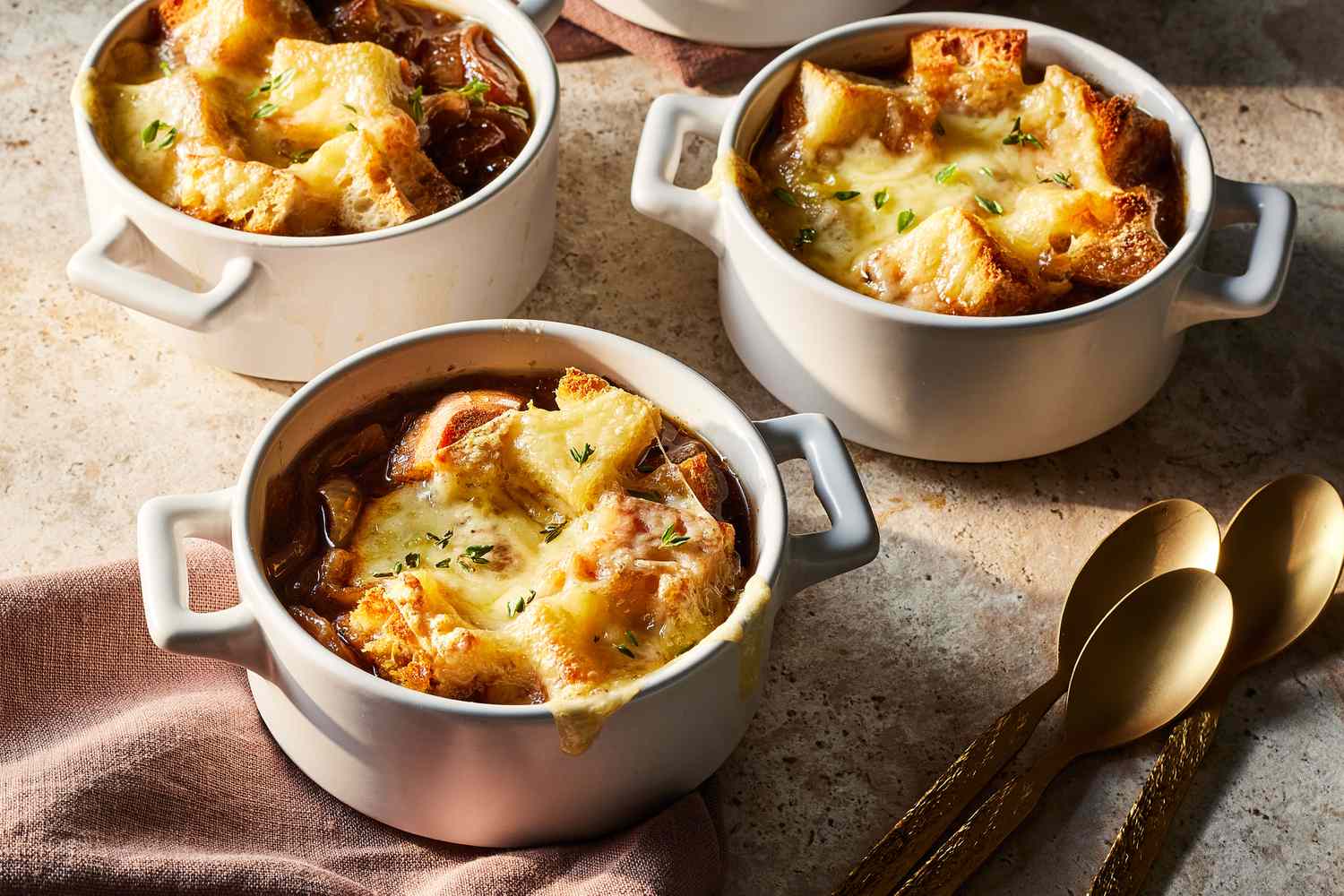
- Soupe à l’oignon (French Onion Soup): Caramelized onions in rich beef broth, topped with cheese and toasted bread.
- Salade Niçoise: Mediterranean salad with tuna, olives, hard-boiled eggs, and fresh vegetables.
- Quiche Lorraine: Savory tart with custard, cheese, and bacon.
Main Courses
- Boeuf Bourguignon: Beef braised in red wine with onions, mushrooms, and bacon.
- Coq au Vin: Chicken slow-cooked in red wine with vegetables and herbs.
- Cassoulet: Slow-cooked white beans with sausages, duck, and pork.
- Bouillabaisse: Seafood stew with saffron-infused broth, traditional to Provence.
Side Dishes
- Ratatouille: Layered or stewed vegetables, showcasing Mediterranean flavors.
- Gratin Dauphinois: Creamy potato gratin baked with garlic and cheese.
- Pommes Anna: Thinly sliced, layered potatoes baked in butter.
Desserts
- Crème Brûlée: Rich custard with caramelized sugar topping.
- Tarte Tatin: Upside-down caramelized apple tart.
- Éclairs and Profiteroles: Choux pastry with cream fillings.
- Macarons: Delicate almond-based sandwich cookies.
These dishes reflect regionality, ingredient quality, and technical sophistication, serving as culinary icons both in France and internationally.
The Cultural Significance of French Cuisine
French food is deeply intertwined with history, social rituals, and identity:
- Meals as Cultural Rituals: Lunch and dinner often involve multiple courses, fostering social connection.
- Seasonal Celebrations: Specific dishes mark holidays, such as Christmas, Easter, and Bastille Day.
- Culinary Heritage: Recipes are often passed down through generations, preserving regional identity.
- Dining Etiquette: Presentation, sequence of courses, and table manners reflect respect for both food and company.
Food in France is both sustenance and social expression, embodying values of tradition, hospitality, and artistry.
Nutrition and Health
While rich in flavor, French cuisine also aligns with balanced dietary principles:
- Mediterranean Influence: Southern France emphasizes vegetables, olive oil, and seafood.
- Protein and Fat Balance: Cheese, cream, and butter are complemented with vegetables, grains, and wine.
- Moderation Principle: Portion control and multi-course meals encourage mindful eating.
- Seasonality: Fresh, locally sourced ingredients provide optimal nutrient profiles.
French cuisine demonstrates that indulgence and nutrition can coexist when approached thoughtfully.
Global Influence and Modern Adaptations
French culinary techniques and dishes have shaped global gastronomy:
- Fine Dining Standards: Michelin-starred restaurants worldwide are heavily influenced by French culinary philosophy.
- Culinary Education: Escoffier’s methods and French cooking schools remain the gold standard for professional chefs.
- Fusion Cuisine: French techniques are applied to international ingredients and flavors, creating innovative dishes.
- Popularization: Pastries, sauces, and bread-making traditions have been exported globally, influencing home and professional kitchens alike.
French cuisine continues to be a benchmark for quality, creativity, and refinement in both professional and casual settings.
Challenges in Preserving Tradition
Despite its global influence, French cuisine faces challenges:
- Globalization: Fast food and standardized meals threaten traditional practices.
- Ingredient Availability: Climate change and modern agriculture impact seasonal produce.
- Culinary Knowledge Transfer: Maintaining artisan skills requires mentorship and education.
- Balancing Tradition and Innovation: Chefs must preserve authenticity while appealing to modern tastes.
Preserving French culinary heritage requires careful stewardship, innovation rooted in tradition, and cultural appreciation.
Experiencing Classic French Cuisine
To truly appreciate French gastronomy:
- Explore Regional Specialties: Travel to experience authentic flavors.
- Visit Markets: Fresh produce, cheese, and meats showcase seasonality.
- Learn Techniques: Hands-on cooking enhances understanding of sauces, pastry, and knife skills.
- Pair with Wines: Regional wine complements dishes, enriching flavor perception.
- Engage with Cultural Context: Each dish tells a story of history, geography, and tradition.
Experiencing French cuisine is as much about cultural immersion as it is about taste.
Conclusion
Classic French cuisine represents a harmonious blend of history, technique, regional diversity, and artistry. From rustic northern stews to refined southern seafood dishes, France’s culinary repertoire demonstrates a balance between tradition and innovation, simplicity and complexity, flavor and presentation.
By understanding its historical evolution, regional variation, iconic dishes, and cultural significance, one appreciates why French cuisine continues to influence global gastronomy, professional culinary training, and home kitchens alike. French food is more than sustenance—it is a living art form, a reflection of culture, and a celebration of life.