






Introduction
Sushi’s journey from a localized Japanese food tradition to a global culinary phenomenon is one of the most compelling examples of how food travels, transforms, and creates cultural intersections. Once rooted in specific ecological conditions, social customs, and aesthetic philosophies of Japan, sushi has crossed oceans and borders to become a familiar presence in cities across the world. Today, sushi exists simultaneously as a traditional craft, a mass-produced convenience food, a health-oriented lifestyle choice, and a platform for culinary experimentation.
This global spread has not been a simple process of imitation. As sushi entered new cultural environments, it encountered different tastes, values, economic systems, and food traditions. In response, it adapted—sometimes subtly, sometimes dramatically. These adaptations gave rise to new forms of sushi that differ from their Japanese predecessors yet remain connected to them through technique, structure, or symbolism. In this way, sushi has become a living example of how food mediates cultural exchange, creating points of contact between societies.
The globalization and innovation of sushi reveal that food is not static. It is shaped by migration, technology, media, and local creativity. Sushi’s evolution highlights how culinary traditions can retain core identities while engaging with new cultural contexts. This article explores sushi’s global spread and innovation to show how food operates as a meeting ground where cultures interact, negotiate meaning, and generate new forms of expression.
1. Sushi’s Cultural Foundations in Japan
1.1 Historical Origins and Culinary Philosophy
To understand sushi’s global transformation, it is essential to understand its cultural foundations in Japan. Sushi originated from early methods of fish preservation using fermented rice, which later evolved into vinegared rice-based preparations during the Edo period. What distinguished sushi from many other foods was not complexity, but refinement. Simplicity, precision, and respect for ingredients became defining values.
Japanese culinary philosophy emphasizes harmony—between flavors, textures, colors, and seasons. Sushi reflects this philosophy through minimal seasoning, careful knife work, and attention to freshness. Each element serves a purpose, and excess is avoided. This approach aligns with broader cultural ideals such as balance, restraint, and mindfulness.
1.2 Sushi as Social Practice
In Japan, sushi is not merely food; it is a social practice. Traditional sushi counters foster close interaction between chef and diner, built on trust and shared understanding. Etiquette, timing, and communication all play roles in the dining experience. Sushi thus embodies cultural norms related to respect, hierarchy, and craftsmanship.
These social meanings form the cultural core that sushi carries with it as it travels abroad, even when the external form changes.
2. Early Stages of Sushi’s Global Spread
2.1 Migration and Cultural Transmission
Sushi’s initial spread beyond Japan was closely tied to Japanese migration. In the late nineteenth and early twentieth centuries, Japanese communities formed in regions such as Hawaii, the west coast of the United States, Brazil, and Peru. Early Japanese restaurants primarily served fellow migrants, preserving culinary traditions as a form of cultural continuity.
At this stage, sushi remained relatively marginal in host societies. Raw fish consumption posed cultural and practical challenges, and many restaurants emphasized cooked dishes instead. Sushi’s global breakthrough would come later, under different historical conditions.
2.2 Postwar Global Interest in Japanese Culture
Following World War II, Japan’s economic growth and increasing global presence sparked international interest in Japanese culture. Business travel, tourism, and cultural exchange introduced foreign audiences to Japanese aesthetics, technology, and cuisine.
Sushi began to be associated with modernity, sophistication, and craftsmanship. Its clean presentation and emphasis on freshness resonated with changing global tastes, laying the foundation for its wider acceptance.
3. Sushi in the United States: Innovation Through Adaptation
3.1 Overcoming Cultural Barriers
The United States played a pivotal role in sushi’s globalization. When sushi first appeared in American cities, it faced skepticism. Raw fish was unfamiliar, and traditional sushi did not align with mainstream American dining habits.
To overcome these barriers, chefs adapted sushi to local preferences. Ingredients such as avocado, cooked seafood, and creamy sauces were introduced. These changes reduced psychological distance while maintaining the basic structure of sushi.
3.2 The California Roll as Cultural Hybrid
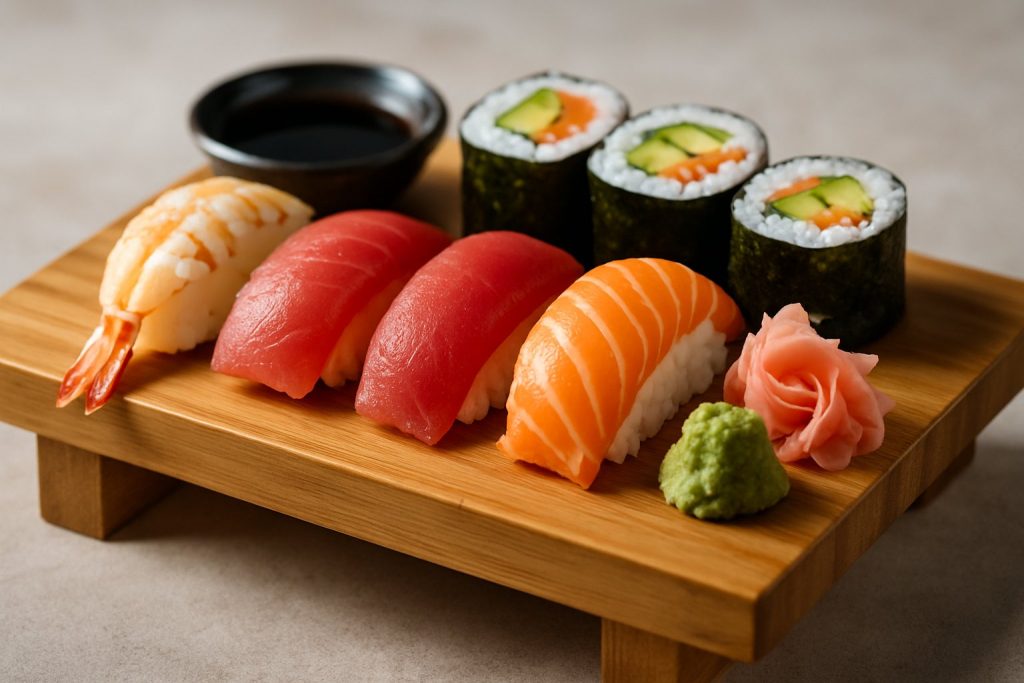
The California roll became a turning point in sushi’s global story. By placing familiar ingredients inside the roll and hiding raw fish, it redefined sushi for a new audience. This innovation did more than increase popularity; it demonstrated how culinary traditions could evolve through cross-cultural interaction.
The California roll exemplifies cultural hybridity. It is neither fully traditional nor disconnected from its origins. Instead, it represents a negotiation between Japanese technique and American taste, illustrating how food can serve as a bridge between cultures.
4. Sushi’s Expansion Across Europe
4.1 From Exotic Luxury to Everyday Food
In Europe, sushi initially appeared as an exotic and luxurious cuisine. Early sushi restaurants emphasized elegance and novelty, catering to elite consumers seeking new cultural experiences.
Over time, sushi became increasingly accessible. It moved from fine-dining establishments to casual restaurants, takeout shops, and supermarkets. This shift reflected broader changes in European food culture, including increased openness to global cuisines and faster-paced urban lifestyles.
4.2 Local Ingredients and Regional Preferences
European sushi adaptations often incorporate local ingredients such as smoked salmon, cream cheese, and regional vegetables. These choices reflect both availability and taste preferences. While such variations differ from traditional Japanese sushi, they reveal how local cultures leave their imprint on imported foods.
Through these adaptations, sushi became embedded in everyday European life, no longer perceived as foreign but as part of a shared global food repertoire.
5. Sushi in Latin America: Fusion and Identity
5.1 Historical Context of Cultural Blending
In Latin America, sushi’s evolution has been shaped by long histories of migration and cultural mixing. Countries such as Peru and Brazil have significant Japanese-descended populations, creating fertile ground for culinary fusion.
Nikkei cuisine, which blends Japanese techniques with Latin American ingredients and flavors, represents one of the most sophisticated examples of sushi innovation. Spicy sauces, tropical fruits, and local seafood coexist with Japanese methods of preparation.
5.2 Sushi as a New Cultural Expression
In this context, sushi is not merely adapted; it is reimagined. These hybrid forms express local identities while maintaining connections to Japanese heritage. Sushi becomes a shared cultural space where multiple traditions intersect and produce something new.
This process highlights how food can contribute to evolving cultural identities rather than simply transmitting fixed traditions.
6. Sushi Across Asia Beyond Japan
6.1 Regional Adaptation and Competition
In other parts of Asia, sushi entered regions with strong existing food traditions. In South Korea, China, and Southeast Asia, sushi competes with local cuisines while also influencing them.
Adaptations often include changes in seasoning, portion size, and presentation to suit regional preferences. In some areas, sushi is integrated into street food culture; in others, it remains associated with modern dining.
6.2 Cultural Familiarity and Difference
Because of geographic proximity and shared histories, sushi’s reception in Asia differs from that in Western countries. While still perceived as Japanese, it feels less culturally distant. This familiarity allows for more experimental adaptation without the same concerns about authenticity.
7. Industrialization and Global Accessibility
7.1 Mass Production and Convenience Sushi
One of the most significant aspects of sushi’s globalization is its industrialization. Sushi is now mass-produced for supermarkets, convenience stores, and transportation hubs. This development has made sushi accessible to millions of people who might never visit a sushi restaurant.
However, industrialization changes sushi’s cultural meaning. The intimate relationship between chef and diner is replaced by standardized production. Sushi becomes a commodity rather than a craft, raising questions about quality and tradition.
7.2 Technology and Global Supply Chains
Advances in refrigeration, logistics, and food safety have enabled the global distribution of sushi-grade fish. These systems connect distant oceans and markets, making sushi a truly global food.
At the same time, they reveal the hidden infrastructures behind culinary globalization and the environmental costs associated with it.
8. Innovation in Sushi: Creativity Across Cultures
8.1 New Ingredients and Techniques
Global innovation has expanded sushi’s possibilities. Chefs experiment with plant-based ingredients, unconventional proteins, and new presentation styles. Sushi burritos, pressed sushi, and vegetarian sushi reflect contemporary culinary creativity.
These innovations respond to changing dietary preferences, including health consciousness and sustainability concerns. Sushi’s adaptable structure makes it an ideal platform for experimentation.
8.2 Culinary Dialogue Through Innovation
Innovation does not erase tradition; it engages with it. Many chefs view innovation as a dialogue with the past, drawing inspiration from Japanese techniques while responding to local contexts.
Through this dialogue, sushi becomes a shared culinary language spoken with different accents around the world.
9. Authenticity, Appropriation, and Cultural Debate
9.1 Rethinking Authenticity
As sushi diversified globally, debates about authenticity intensified. Traditionalists argue for strict adherence to Japanese methods, while others emphasize the legitimacy of adaptation.
These debates reflect broader cultural questions about ownership and authority. Sushi’s global journey suggests that authenticity is not a fixed standard but a relational concept shaped by context, intention, and respect.
9.2 Cultural Exchange Versus Cultural Exploitation
Concerns about cultural appropriation arise when sushi is commercialized without acknowledgment of its origins. However, many scholars argue that food exchange becomes problematic only when power imbalances and disrespect are involved.
When innovation is accompanied by understanding and appreciation, sushi serves as an example of meaningful cultural exchange rather than exploitation.
10. Sushi, Sustainability, and Global Responsibility
10.1 Environmental Challenges
The global demand for sushi has placed pressure on marine ecosystems, particularly through overfishing of popular species. These challenges highlight the ethical dimensions of culinary globalization.
Addressing sustainability requires collaboration across cultures, industries, and governments, demonstrating how food connects global responsibilities.
10.2 Innovation as a Solution
In response, chefs and organizations promote sustainable sourcing, alternative seafood, and plant-based sushi. These efforts align with traditional Japanese values of respecting nature and seasonal balance.
Sushi thus becomes a site where global environmental concerns intersect with cultural tradition.
11. Sushi as a Medium of Cultural Intersection
Sushi’s global spread and innovation reveal how food operates as a cultural intersection. Through sushi, people encounter Japanese aesthetics, values, and techniques, even when adapted to local tastes. At the same time, local cultures leave their mark on sushi, reshaping it to reflect their own identities.
This mutual influence demonstrates that cultural exchange is not one-directional. Sushi does not simply travel from Japan to the world; it returns transformed, influencing Japanese cuisine in turn. The result is a dynamic global food culture built on interaction rather than imitation.
Conclusion
The global spread and innovation of sushi vividly demonstrate how food intersects with cultures around the world. From its origins in Japanese tradition to its countless global adaptations, sushi has evolved through migration, creativity, and dialogue. Each transformation reflects the cultural context in which sushi is prepared and consumed.
Sushi’s journey shows that food is not merely a product of culture but a producer of culture. It creates spaces for interaction, challenges boundaries, and encourages mutual understanding. In a globalized world often marked by division, sushi offers a powerful reminder that cultural exchange can occur in everyday, tangible ways—through taste, technique, and shared experience.
Ultimately, sushi’s enduring global presence illustrates that culinary traditions survive not by remaining unchanged, but by engaging openly with the world. Through this engagement, sushi continues to connect cultures, one carefully crafted bite at a time.