






Introduction
In the world of professional cooking, knife skills are foundational. Mastery of cutting techniques not only ensures consistency in cooking and presentation, but also impacts flavor development, texture, and safety in the kitchen. From finely diced onions to perfectly julienned vegetables, the way ingredients are prepared can elevate a dish from ordinary to exceptional.
This article explores the technical, artistic, and practical aspects of knife skills, providing an in-depth guide for culinary professionals, enthusiasts, and students. It examines types of knives, cutting methods, the science behind cutting, safety principles, and how precision enhances both taste and visual appeal. Through these insights, readers can understand why knife mastery is central to culinary excellence.
1. The Importance of Knife Skills
1.1 Precision in Cooking
- Uniform cuts ensure even cooking times, preventing some pieces from overcooking while others remain underdone.
- Examples:
- Julienne carrots cook evenly in stir-fries.
- Consistent cubes of meat or tofu roast uniformly.
1.2 Flavor and Texture Enhancement
- Surface area impacts flavor absorption and caramelization.
- Smaller cuts allow marinades and seasonings to penetrate, enhancing taste.
1.3 Presentation and Visual Appeal
- Knife work affects aesthetics:
- Fine chiffonade of herbs adds elegance.
- Geometric precision elevates plating, reflecting professionalism.
1.4 Efficiency and Safety
- Proper knife technique reduces waste and kitchen accidents.
- Professional chefs can work faster and more confidently, increasing productivity.
2. Understanding Knives: Types and Uses
2.1 Chef’s Knife
- Versatile, generally 8–12 inches, used for chopping, slicing, dicing, and mincing.
2.2 Paring Knife
- Small knife for delicate tasks: peeling, trimming, or intricate cuts.
2.3 Santoku Knife
- Japanese-style, excellent for precision slicing and chopping vegetables and proteins.
2.4 Serrated Knife
- Ideal for bread, tomatoes, and soft-skinned fruits, allowing smooth cutting without crushing.
2.5 Specialty Knives
- Filleting knife, cleaver, and boning knife serve specific purposes in meat, fish, and hard vegetables.
2.6 Knife Maintenance
- Regular sharpening, honing, and proper storage maintain performance and safety.
- Dull knives are more dangerous due to slipping and increased effort.
3. Cutting Techniques
3.1 Basic Cuts
- Chop: Rough, uniform pieces for quick-cooking dishes.
- Dice: Small, consistent cubes; classified by size (small, medium, large).
- Slice: Thin or thick cuts, ideal for meats, vegetables, or fruits.
- Julienne: Thin matchstick strips; enhances texture and presentation.
- Brunoise: Minuscule cubes, usually derived from julienne, used for sauces and garnishes.
- Chiffonade: Rolled leaves sliced thinly; common with herbs and leafy greens.
3.2 Advanced Techniques
- Roll cut: For cylindrical vegetables like carrots or zucchini; allows uniform pieces.
- Bias cut: Angled slices, often for stir-fry or presentation, increasing surface area.
- Paysanne cut: Thin, flat, rustic pieces; often used in soups.
- Tourner (barrel cut): French technique creating seven-sided vegetables, uniform for elegant plating.
3.3 Protein-Specific Techniques
- Filleting: Removing bones from fish, ensuring uniform portions.
- Butterflying: Splitting meat or seafood for even cooking or stuffing.
- Cubing: For stew meats; ensures tenderness through even heat distribution.
4. Knife Handling and Safety
4.1 Grip Techniques
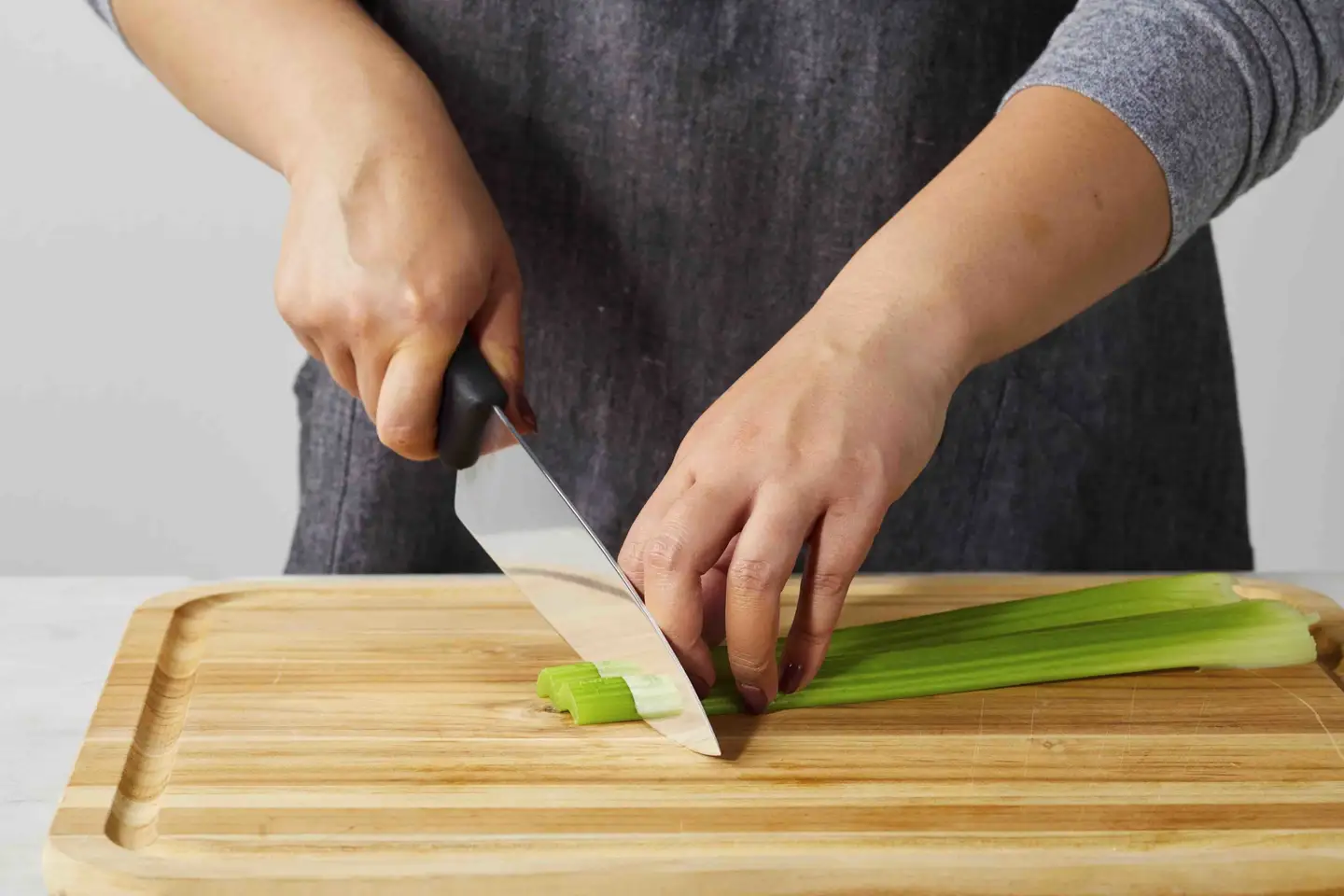
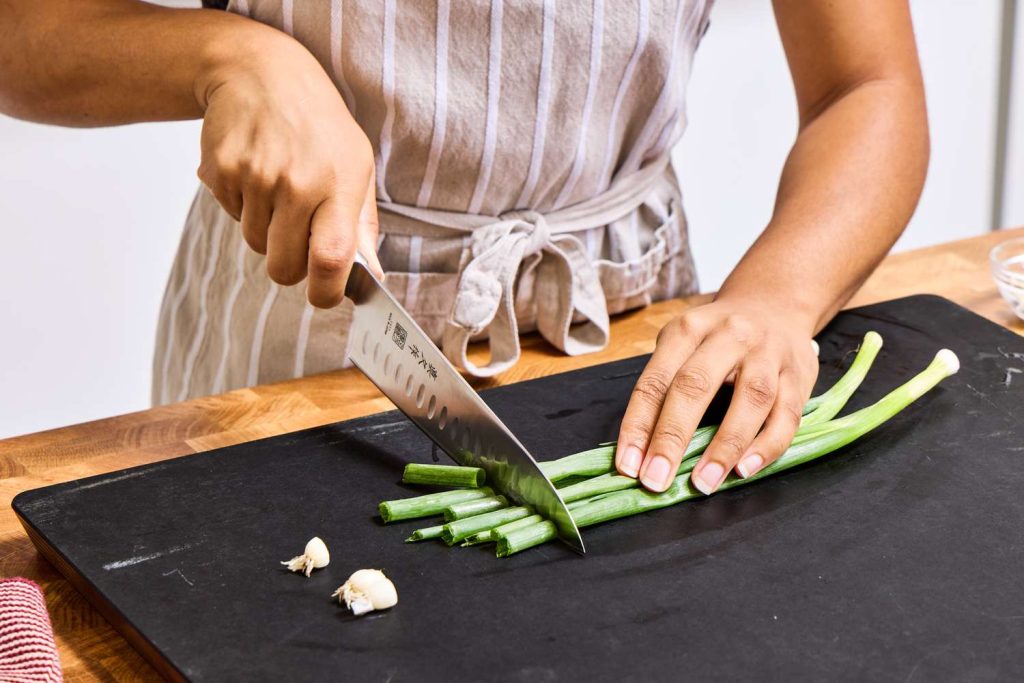
- Pinch grip: Thumb and index finger grip blade; rest remaining fingers on handle for control.
- Handle grip: Traditional method; less precise but common in beginners.
4.2 Proper Cutting Posture
- Keep fingers curled (claw grip) to prevent cuts.
- Stable cutting surface; non-slip cutting board recommended.
4.3 Safety Principles
- Cut away from the body.
- Keep knives sharp to reduce slipping hazards.
- Clean and dry knives immediately after use.
4.4 Efficiency and Workflow
- Arrange mise en place to minimize movement.
- Practice repetitive cuts to develop speed and muscle memory.
5. The Science of Cutting
5.1 Enzymatic Reactions
- Cutting increases surface area, accelerating reactions such as:
- Browning (Maillard reaction) in onions or meats.
- Oxidation in fruits and vegetables.
5.2 Texture Influence
- Thickness of cuts affects mouthfeel:
- Thin slices of cucumber remain crisp in salads.
- Thick-cut potatoes yield soft interiors after roasting.
5.3 Heat Transfer and Cooking Time
- Uniform pieces ensure consistent cooking, crucial for professional kitchens.
- Example: Evenly diced vegetables sauté simultaneously, avoiding uneven textures.
6. Cultural and Regional Knife Techniques
6.1 French Cuisine
- Emphasizes precision, uniformity, and decorative cuts.
- Classic techniques include tourner, brunoise, and paysanne.
6.2 Japanese Cuisine
- Focus on knife aesthetics and minimal waste.
- Techniques like usuba, yanagiba, and deba are essential in sushi and kaiseki preparation.
6.3 Chinese Cuisine
- Wok cooking requires rapid cuts: thin julienne, diagonal bias, or roll cuts for stir-frying.
6.4 Mediterranean and Middle Eastern Cuisine
- Coarse chopping and mincing often for salads, dips, and stews.
- Herbs are chiffonade-sliced to release aroma without bruising.
7. Knife Skills in Modern Culinary Practice
7.1 Molecular Gastronomy
- Precision cutting critical for controlled textures and presentation in avant-garde cuisine.
- Small, uniform pieces facilitate gelation, foams, and spherification.
7.2 Fusion Cuisine
- Global ingredient integration requires versatile cutting techniques for vegetables, seafood, and proteins.
7.3 Sustainability Considerations
- Efficient knife work reduces waste by maximizing edible portions.
- Proper cuts minimize trim and peel waste.
8. Training and Mastery
8.1 Professional Education
- Culinary schools emphasize repetition, speed drills, and precision exercises.
- Apprenticeships provide real-world applications in high-volume kitchens.
8.2 Practice at Home
- Start with basic cuts and safety techniques.
- Gradually advance to julienne, brunoise, and tournée.
8.3 Muscle Memory Development
- Repeated practice develops consistent hand-eye coordination.
- Professional chefs often dedicate hours weekly to refining speed and accuracy.
8.4 Benchmarking Skills
- Compare cuts for uniformity, even cooking, and visual appeal.
- Video or mirror practice can improve posture and technique.
9. Knife Maintenance and Longevity
9.1 Sharpening
- Use whetstones or honing rods regularly to maintain edge.
- Knife angle (typically 15–20°) crucial for sharpness.
9.2 Cleaning and Storage
- Hand wash knives; avoid dishwashers to prevent corrosion and dulling.
- Knife blocks, magnetic strips, or sheaths protect blades.
9.3 Material Considerations
- Stainless steel: durable, corrosion-resistant.
- High-carbon steel: sharper edge, may require more maintenance.
- Ceramic: retains sharpness but fragile.
10. Knife Skills and Culinary Career Advancement
10.1 Professional Kitchens
- Knife proficiency enhances workflow efficiency, dish consistency, and team performance.
10.2 Competitive Cooking
- Culinary competitions evaluate speed, precision, and creativity in cutting techniques.
10.3 Personal Brand
- Exceptional knife skills elevate chef reputation and culinary credibility.
10.4 Food Photography and Presentation
- Precise cuts contribute to aesthetic appeal, essential in marketing, media, and fine dining.
11. The Artistry of Knife Work
11.1 Beyond Function
- Knife work is both practical and artistic, blending geometry, rhythm, and aesthetic sensibility.
11.2 Plating and Garnish
- Geometrically uniform cuts create visual harmony.
- Garnishes such as chiffonade herbs or brunoise vegetables add color, texture, and refinement.
11.3 Expressing Culinary Identity
- Knife technique can reflect personal style, cultural heritage, or innovative vision.
12. Challenges and Common Mistakes
- Using dull knives increases accidents and effort.
- Overcutting or uneven cutting leads to uneven cooking and poor presentation.
- Ignoring proper grip or posture causes hand fatigue and injury.
- Inconsistent practice prevents mastery and speed development.
13. Future of Knife Skills in Gastronomy
- Integration with technology: digital tutorials, augmented reality, and precision-guided cutting tools.
- Continued fusion of tradition and innovation in modern cuisine.
- Emphasis on sustainable, waste-minimizing cuts.
- Knife skills remain irreplaceable in the tactile, sensory, and artistic elements of cooking.
Conclusion
Knife skills are the backbone of culinary expertise, combining science, artistry, and technique. They influence every aspect of cooking:
- Consistency and precision in preparation
- Enhanced flavor and texture through surface area and uniformity
- Visual appeal that elevates dining experiences
- Safety and efficiency in professional and home kitchens
Mastering knife techniques is not merely about wielding a blade—it is about cultivating control, intuition, and artistry. From the simplest dice to intricate tournéed vegetables, precision cutting transforms ingredients into culinary works of art.
For chefs, students, and culinary enthusiasts, refining knife skills is an ongoing journey. Each cut reflects dedication, discipline, and a deep respect for ingredients, illustrating why the path to culinary mastery begins with the knife.