





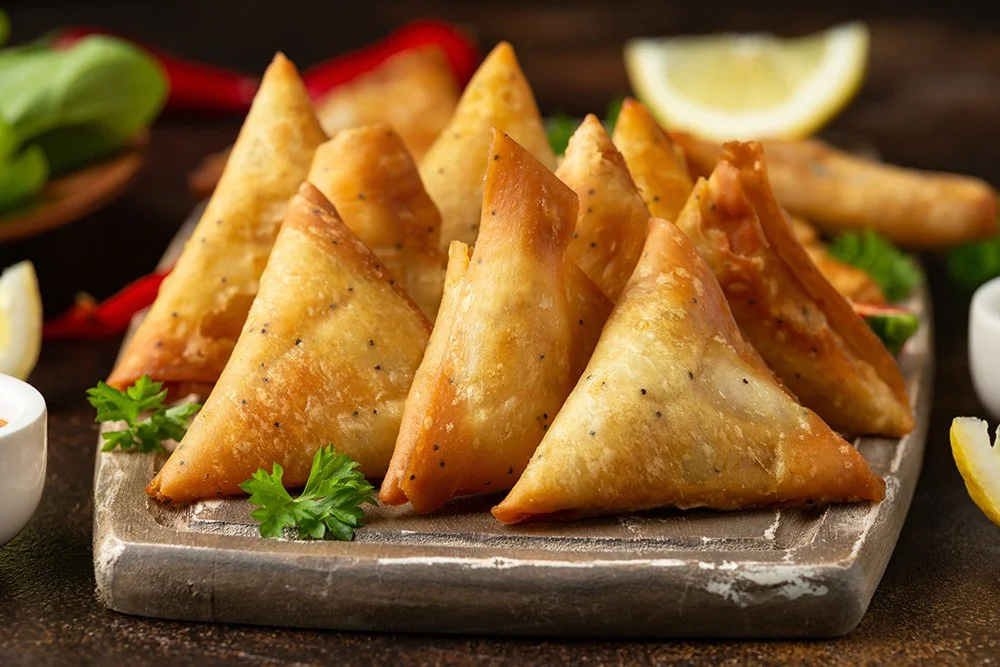

Samosas are one of the most beloved snacks in Indian cuisine and beyond, cherished for their golden, crispy exterior and savory fillings. These triangular pastries have become a global culinary phenomenon, found in street stalls, restaurants, and home kitchens around the world. The secret to perfect samosas lies not only in the quality of ingredients but also in mastering the techniques for the dough, fillings, shaping, and frying.
This article provides a comprehensive, professional guide to making crispy samosas. It covers the history and cultural significance of samosas, the science behind crispiness, traditional and modern fillings, dough preparation, shaping methods, frying techniques, baking alternatives, and tips for achieving restaurant-quality results.
1. Historical Background of Samosas
Samosas have a rich history spanning centuries, reflecting trade routes, cultural exchanges, and culinary adaptation.
1.1 Origins
- Samosas are believed to have originated in the Middle East, where triangular pastries called sambusak were filled with meat, nuts, and spices.
- Traders and travelers introduced these pastries to India around the 13th-14th centuries, where they evolved into the vegetable- and potato-filled versions popular today.
1.2 Cultural Significance
- In India, samosas are traditionally served as snacks during festivals, family gatherings, and tea-time occasions.
- They symbolize hospitality, creativity in cooking, and the celebration of flavors.
- Globally, samosas have become an iconic representation of Indian cuisine, adapted with regional ingredients and fillings in Africa, Southeast Asia, and the UK.
2. Anatomy of a Perfect Samosa
A well-crafted samosa requires attention to three essential components: the dough, the filling, and the cooking method.
2.1 The Dough
- Texture: Crispy, flaky, and able to hold the filling without tearing.
- Ingredients: Typically wheat flour, water, salt, and fat (ghee, oil, or butter).
- Role of Fat: Fat in the dough separates the gluten strands, contributing to flakiness and crispiness.
- Hydration: The amount of water added affects elasticity; too much makes it sticky, too little makes it brittle.
2.2 The Filling
- Texture: Firm but tender, not watery, to prevent soggy samosas.
- Flavors: Balanced with spices, salt, acidity (lemon or amchur powder), and heat (chilies or pepper).
- Varieties:
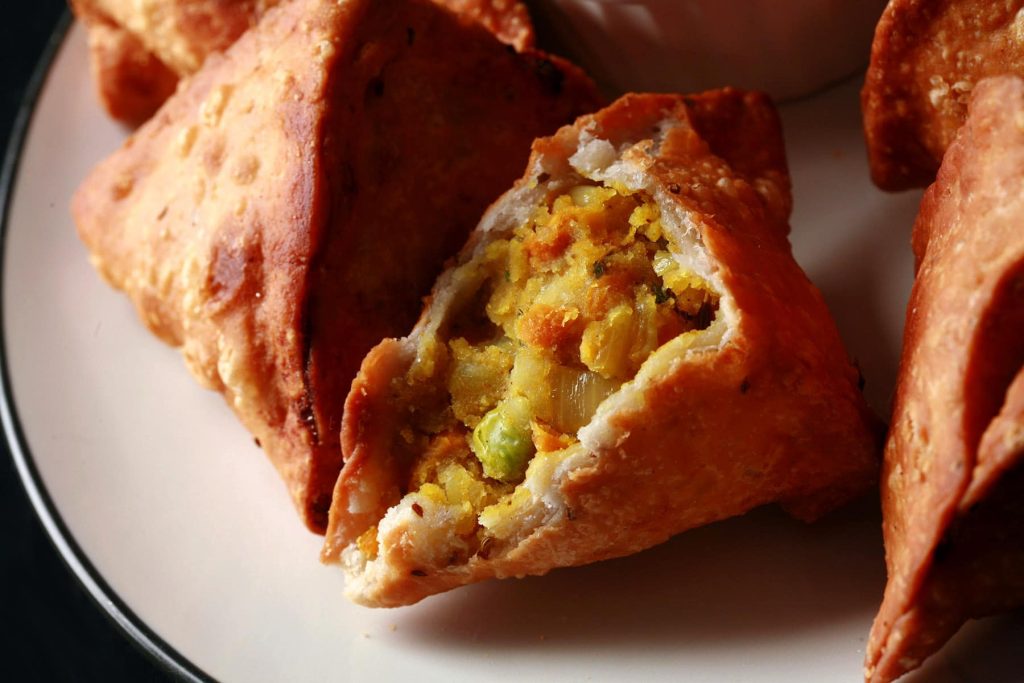
- Vegetable: Potatoes, peas, carrots, onions, and green chilies.
- Meat: Minced lamb, chicken, or beef with onions, garlic, and aromatic spices.
- Fusion/Global: Cheese, mushrooms, lentils, or sweet fillings like chocolate or sweet potato.
2.3 Cooking Method
- Deep-frying: Produces the classic golden, crisp exterior.
- Baking: Healthier alternative but requires a higher temperature and brushing with oil or ghee.
- Air-frying: Modern method for low-fat crispy samosas with slightly different texture.
3. Making the Perfect Samosa Dough
Achieving a crispy samosa begins with dough preparation.
3.1 Ingredients for Dough
- 2 cups all-purpose flour (maida) or whole wheat flour for a healthier option
- 4 tablespoons oil or ghee
- 1/2 teaspoon salt
- 1/4 cup water (adjust for kneading)
3.2 Kneading Technique
- Combine flour and salt in a mixing bowl.
- Rub in fat (oil or ghee) until mixture resembles breadcrumbs.
- Gradually add water, kneading to a stiff, smooth dough.
- Rest the dough for 30–45 minutes under a damp cloth; resting allows gluten to relax, making rolling easier.
3.3 Tips for Flakiness
- Use cold water and fat for a layered, crisp texture.
- Avoid over-kneading; excessive gluten development can make the dough tough.
- Divide dough into small balls before rolling to maintain uniform thickness.
4. Preparing the Filling
4.1 Vegetable Filling
- Ingredients:
- 2 large potatoes, boiled and diced
- 1/2 cup green peas, boiled
- 1 teaspoon cumin seeds
- 1 teaspoon coriander powder
- 1/2 teaspoon garam masala
- 1–2 green chilies, finely chopped
- 1 tablespoon oil
- Salt to taste
- Fresh coriander leaves, chopped
- Method:
- Heat oil in a pan, add cumin seeds until aromatic.
- Add green chilies and stir for 30 seconds.
- Mix in potatoes, peas, coriander powder, garam masala, and salt.
- Cook for 3–4 minutes, then add fresh coriander leaves.
- Let the mixture cool before filling the dough.
4.2 Meat Filling
- Ingredients:
- 250g minced meat (chicken, lamb, or beef)
- 1 medium onion, finely chopped
- 1 teaspoon ginger-garlic paste
- 1 teaspoon cumin powder
- 1 teaspoon coriander powder
- 1/2 teaspoon red chili powder
- 1 tablespoon oil
- Salt to taste
- Method:
- Heat oil in a pan, sauté onions until translucent.
- Add ginger-garlic paste and cook until fragrant.
- Add minced meat, spices, and salt, cooking until the meat is dry and fully cooked.
- Cool before using as filling.
4.3 Filling Tips
- Avoid watery fillings; moisture can break the dough during frying.
- Taste and adjust spices before filling.
- Cool fillings completely to prevent dough softening.
5. Shaping and Assembling Samosas
The folding technique is crucial for even cooking and crispiness.
5.1 Steps to Shape a Samosa
- Roll dough into small circles (about 4–5 inches in diameter).
- Cut the circle in half to form two semi-circles.
- Fold each semi-circle into a cone shape, sealing the edge with water.
- Fill the cone with 1–2 tablespoons of filling.
- Close the open top, sealing tightly to avoid oil penetration.
5.2 Tips for Uniformity
- Ensure the cone is tight but not overfilled.
- Use a brush or finger dipped in water to seal edges securely.
- Maintain consistent size for even frying.
6. Frying Techniques for Maximum Crispiness
6.1 Deep-Frying
- Heat oil in a deep pan or kadai to 180°C (350°F).
- Add samosas gently, 2–3 at a time, to prevent overcrowding.
- Fry on medium heat, turning occasionally, until golden brown and crisp.
- Remove with a slotted spoon and drain on paper towels.
6.2 Baking Alternative
- Preheat oven to 200°C (400°F).
- Brush samosas lightly with oil or ghee.
- Bake for 20–25 minutes, turning halfway for even browning.
- Results in a slightly lighter but still crisp samosa.
6.3 Air-Frying
- Preheat air fryer to 180°C (350°F).
- Spray or brush samosas with oil.
- Cook for 12–15 minutes, turning halfway.
- Achieves a lower-fat crispiness, slightly less golden than deep-frying.
6.4 Tips for Crispiness
- Use medium heat; high heat browns outside while leaving inside raw.
- Do not overcrowd pan to maintain oil temperature.
- Freshly made dough and cooled filling are key for perfect texture.
7. Serving and Accompaniments
- Serve hot with chutneys such as tamarind, mint, or coriander.
- Accompany with tea, lassi, or other beverages for authentic experience.
- Garnish with fresh coriander, lemon wedges, or yogurt for additional flavor.
8. Variations and Innovations
- Sweet Samosas: Filled with chocolate, coconut, nuts, or sweetened khoya.
- Fusion Fillings: Paneer tikka, spiced lentils, or international ingredients like cheese and spinach.
- Mini Samosas: Bite-sized versions for appetizers or party platters.
- Gluten-Free Dough: Made with rice flour, chickpea flour, or a mix for dietary alternatives.
9. Scientific Basis of Crispiness
- The combination of fat, flour, and water creates layers in the dough, forming air pockets during frying.
- Proper oil temperature ensures Maillard reaction, creating golden color and complex flavors.
- Resting dough allows gluten relaxation, producing a flakier exterior.
- Moisture control in the filling prevents sogginess and maintains crisp texture.
10. Cultural Significance of Samosas
- Samosas are an integral part of Indian festivals, weddings, and tea-time culture.
- They symbolize creativity in cooking, as fillings and spices reflect regional and personal preferences.
- Globally, samosas have become a culinary ambassador for Indian cuisine, celebrated for taste and portability.
Conclusion
Making crispy samosas is both an art and a science, requiring careful attention to dough, fillings, shaping, and cooking technique. From mastering the nixtamalization of dough to achieving the perfect golden exterior, every step contributes to a harmonious snack that is crispy on the outside and flavorful on the inside.
Whether served at a festive gathering, enjoyed with tea, or shared as street food, samosas exemplify the richness of Indian culinary tradition. With proper technique and quality ingredients, anyone can achieve restaurant-quality crispy samosas at home, preserving centuries of cultural heritage while delighting the palate with every bite.
The perfect samosa balances texture, flavor, and visual appeal, making it not just a snack but a testament to the ingenuity and artistry of Indian cuisine.