





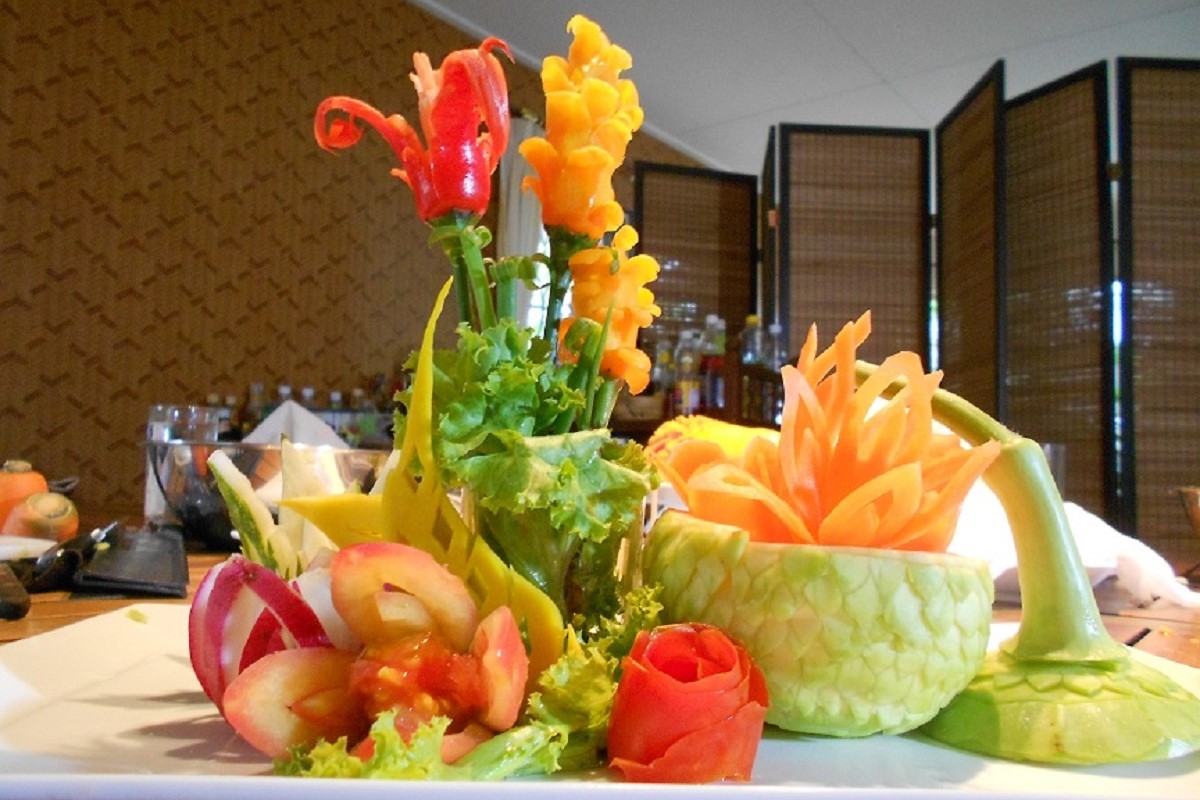

Introduction: The Art of Carving Vegetables
In the realm of culinary arts, vegetable carving is often seen as an art form that elevates food from mere sustenance to visual storytelling. While many people associate vegetable carving with Asian cuisine, particularly Thai and Japanese traditions, it has long been a part of Western gastronomy as well. The skill of carving vegetables into intricate shapes has been utilized in banquets, festivals, and high-end restaurants to create an aesthetic experience that appeals not only to the palate but also to the eyes.
In this article, we will explore how vegetable carving is applied in Western cuisine, its historical roots, technical aspects, and its relevance in modern gastronomy. We will also examine how professional chefs incorporate this ancient practice into contemporary presentations, transforming everyday vegetables into edible works of art.
Part 1: The Historical Roots of Vegetable Carving in Western Cuisine
1.1 Origins and Early Development
The practice of carving fruits and vegetables dates back to ancient civilizations, where it was used in both religious rituals and as a form of decoration at royal feasts. In Western culture, however, the art form was not as commonly explored until the Renaissance period when European nobility began using intricate food displays to demonstrate their wealth and cultural sophistication. During this period, elaborate feasts often featured ornamental displays crafted from vegetables, fruits, and even edible flowers, designed to captivate guests with their beauty and precision.
By the 18th century, vegetable carving had become an integral part of culinary presentation, with French chefs leading the way in transforming basic foodstuffs into decorative art. The concept of ornamental carvings began to gain recognition in fine dining, with chefs using this technique to enhance the visual appeal of dishes, particularly at banquets and gala dinners.
1.2 The Influence of French Haute Cuisine
The French have long been regarded as the pioneers of haute cuisine, or high-end culinary art. The French Revolution and the subsequent rise of the aristocracy fueled an interest in luxury dining experiences, which often included lavish food displays. This era saw the birth of garnishing techniques where vegetables were not just ingredients, but were used to create intricate sculptures for platters, plat du jour, and buffets.
French chefs of the period were particularly known for their delicate yet intricate vegetable carvings, often featuring flowers, leaves, and elaborate motifs. The influence of French cuisine on vegetable carving can still be seen in modern Western culinary practices, especially in gala dinners and state banquets.
Part 2: Techniques and Tools Used in Western Vegetable Carving
2.1 Basic Tools of the Trade
To master the art of vegetable carving, chefs rely on a variety of specialized tools designed for creating fine details and precise cuts. Some of the most common tools include:
- Carving Knives: Sharp knives are essential for achieving the fine details in vegetable carving. Many chefs prefer small paring knives, which provide greater control and precision for intricate work.
- Vegetable Peelers: Used to create smooth, even layers of vegetable skin for decorative purposes.
- Sculpting Tools: Similar to those used in wood carving, these tools help create more detailed and three-dimensional sculptures.
- Cookie Cutters and Stamps: For simple shapes like flowers or stars, chefs often use these to add uniformity to designs.
2.2 Carving Techniques
Western vegetable carving can range from simple garnishing to more advanced sculptural pieces. Key carving techniques include:
- Slicing and Shaping: Simple cuts like thin slices and shapes are often used for basic garnishing.
- Peeling and Layering: Some of the more complex designs involve peeling the skin of the vegetable and layering thin sections to form delicate flowers or petals.
- Shaping and Sculpting: Advanced techniques involve cutting and sculpting vegetables into animals, figures, or geometric patterns. Cucumbers, carrots, and radishes are popular vegetables for sculpting intricate designs.
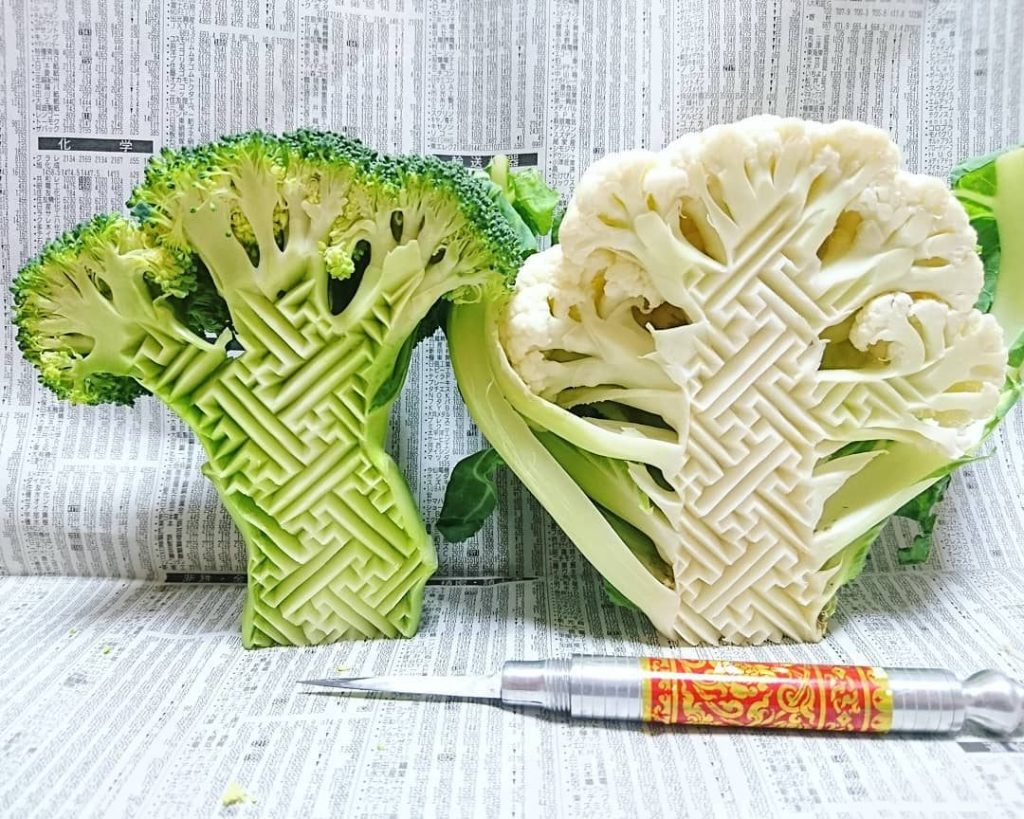
Part 3: Types of Vegetables Used in Carving
While virtually any vegetable can be carved, certain ones are more commonly used in Western cuisine due to their texture, color, and shaping ability.
3.1 Root Vegetables
- Carrots: The firm texture and bright orange color of carrots make them ideal for carving detailed designs such as flowers or animal shapes.
- Beets: Beets, particularly red beets, can be used for carving intricate floral motifs. The rich color provides an aesthetic contrast when carved and placed on a plate.
- Radishes: Radishes are often carved into delicate petals and flowers. Their ability to hold shape and their crisp texture make them a popular choice for garnishing.
3.2 Cucumbers and Zucchini
The relatively soft yet firm texture of cucumbers and zucchinis allows for more elaborate carvings. They can be hollowed out, carved into spiral shapes, or used to create vases, flower petals, and leaves.
3.3 Pumpkins and Squashes
Especially popular in autumn months, pumpkins and squashes are commonly carved in both Western and Eastern culinary traditions. Halloween pumpkins are often used as inspiration for carvings, with intricate designs featuring scenes, faces, or geometric shapes. In Western cuisine, pumpkins are sometimes carved into decorative centerpieces for autumn feasts.
Part 4: The Role of Vegetable Carving in Modern Western Cuisine
4.1 Presentation in Fine Dining
In modern Western fine dining, vegetable carving is often used as a garnish or centerpiece to enhance the visual appeal of dishes. It is frequently employed in buffets, gala dinners, holiday celebrations, and special events where food is meant to be an aesthetic as well as a culinary experience. Michelin-starred restaurants and top-tier catering services often incorporate vegetable carvings to create dynamic, multi-sensory presentations that elevate the dining experience.
4.2 Carving for Special Occasions
For major events such as weddings, banquets, and festivals, chefs may carve large-scale fruit and vegetable displays, often depicting elaborate scenes or symbolic designs. Wedding cakes and banquet platters may be adorned with edible sculptures created from vegetables, making the food itself a part of the celebration.
Part 5: The Modern Influence of Social Media on Vegetable Carving
5.1 The Rise of Instagram and Culinary Art
In today’s digital age, social media platforms like Instagram and Pinterest have had a profound influence on how chefs and home cooks approach food presentation. Beautifully carved vegetables often make an appearance in posts, creating viral trends around certain food art. The rise of food-based content on social media has encouraged chefs to experiment with vegetable carving, pushing the boundaries of creativity.
5.2 The Impact of Food Styling
Culinary artists have become increasingly aware of the importance of food styling, especially with the growth of food photography for blogs, cookbooks, and social media. Carved vegetables, arranged in intricate patterns or artistic designs, enhance the visual appeal of dishes, helping to engage the audience and increase the food’s marketability.
Conclusion: The Continuing Evolution of Vegetable Carving in Western Cuisine
Vegetable carving in Western cuisine is more than just a decorative art—it is an expression of creativity, precision, and culinary craftsmanship. Though its roots can be traced back to the opulent banquets of the past, vegetable carving has continued to evolve, integrating with modern techniques and media to remain relevant in contemporary dining.
As the culinary world continues to embrace visual aesthetics, sustainability, and the artistic value of food, the role of vegetable carving will undoubtedly remain an integral part of the Western culinary tradition, creating beautiful, edible art that delights both the eyes and the taste buds.