





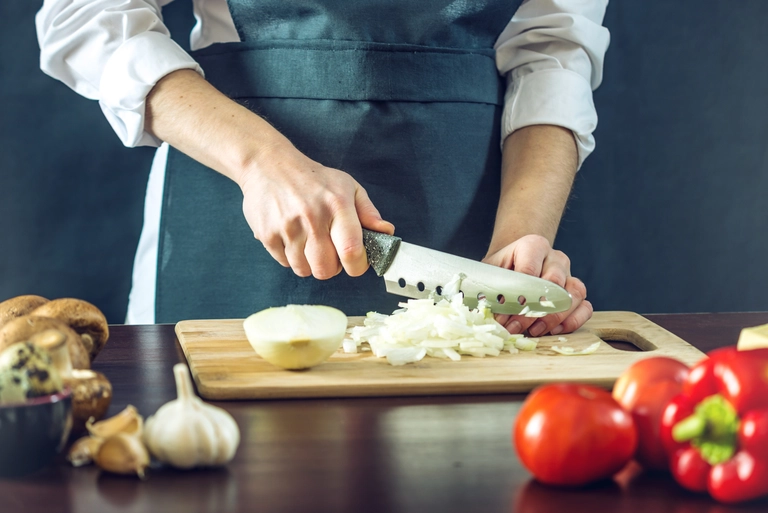

Introduction: Why Knife Skills Matter
In professional cooking, knives are more than tools—they are an extension of the chef’s hands, precision, and artistry. Knife skills form the foundation of culinary expertise, influencing everything from presentation to cooking efficiency and even flavor development. Mastery of knife techniques allows chefs to transform ingredients into edible art, control cooking times, and maximize taste and texture.
While many consider cooking an art of flavor and seasoning, precision in cutting, slicing, dicing, and julienning is a prerequisite for any chef aspiring to excellence. Proper knife skills not only demonstrate professionalism but also ensure safety, speed, and consistency in the kitchen. This article explores the history of knife skills, types of cuts, techniques for mastering knives, safety measures, and the broader impact of knife precision in modern cuisine.
Part 1: The Historical and Cultural Significance of Knife Skills
1.1 Evolution of Culinary Knives
The chef’s knife is a product of centuries of culinary evolution. Early humans first used stone and bronze tools for basic food preparation, evolving to metal blades in medieval Europe. In Asia, the Japanese santoku and Chinese cleaver became specialized tools for slicing, dicing, and chopping vegetables, reflecting regional cooking styles.
- European Influence: French cuisine developed knives specifically for filleting, paring, and carving, leading to the modern chef’s knife design. The French “couteau de chef” emphasizes a curved blade that allows a rocking motion, perfect for chopping herbs and vegetables.
- Asian Traditions: Japanese culinary culture emphasizes precision and uniformity, seen in techniques for sushi, sashimi, and vegetable carving. Chinese cleavers allow versatility, capable of chopping, crushing, and even tenderizing meat.
Knife evolution reflects the connection between cultural cuisine and the techniques required to manipulate ingredients effectively.
1.2 Knife Skills as a Cultural and Professional Statement
In professional kitchens, knife skills are more than practicality—they convey discipline, dedication, and artistry. Chefs with refined knife skills can execute dishes with speed, accuracy, and aesthetic appeal, which is crucial in fine dining where presentation matters as much as flavor. Additionally, knife techniques often become a signature style for chefs, reflecting their culinary philosophy and precision.
Part 2: Types of Knives and Their Functions
Understanding knife types is the first step in mastering knife skills. Each knife serves a specific purpose in food preparation:
- Chef’s Knife: The most versatile knife in the kitchen, typically 8–12 inches in length, used for chopping, slicing, and dicing vegetables, herbs, and meats. Its curved blade facilitates a rocking motion for smooth, continuous cuts.
- Paring Knife: Small, precise, and ideal for peeling, trimming, and intricate work such as deveining shrimp or scoring fruits.
- Serrated Knife: With a jagged edge, it excels at cutting bread, tomatoes, and soft-skinned fruits without crushing them.
- Boning Knife: Thin and flexible, designed to separate meat from bone cleanly.
- Cleaver: Heavy and broad, capable of chopping through bones and tenderizing meat while also handling vegetables.
- Santoku Knife: A Japanese all-purpose knife with a flat edge and sheepsfoot tip, ideal for slicing, dicing, and mincing with precision.
Each knife’s design reflects its functional specialty, emphasizing that using the right knife for the right task enhances efficiency and safety.
Part 3: Fundamental Knife Techniques
Mastering knife techniques requires repetition, focus, and an understanding of anatomy. Here are the foundational methods every chef must master:
3.1 Basic Cutting Techniques
- Chopping: Cutting ingredients into small, roughly uniform pieces. Proper chopping ensures even cooking and presentation.
- Dicing: Producing small, uniform cubes. Dicing requires precision and measurement, often used for vegetables in soups and sauces.
- Julienne: Cutting vegetables into thin matchstick-like strips. Used in salads, stir-fries, and garnishes.
- Brunoise: A very fine dice, usually 1–2 mm cubes, often used in sauces or as garnish.
- Mincing: Cutting ingredients (like garlic or herbs) into very fine pieces to release maximum flavor.
- Chiffonade: Rolling leafy herbs or greens and slicing them into thin ribbons, ideal for garnishing and delicate dishes.
3.2 Advanced Techniques
- Tourner (Turning): Creating seven-sided barrel-shaped vegetables, often used in classic French presentation.
- Supreme (Segmenting Citrus): Removing the pith and membranes to achieve clean, juicy citrus segments.
- Oblique Cut: A diagonal cut often used in stir-fry vegetables, combining visual appeal with faster cooking.
Each technique is designed to enhance aesthetics, texture, and even cooking time, demonstrating the chef’s skill and understanding of ingredients.
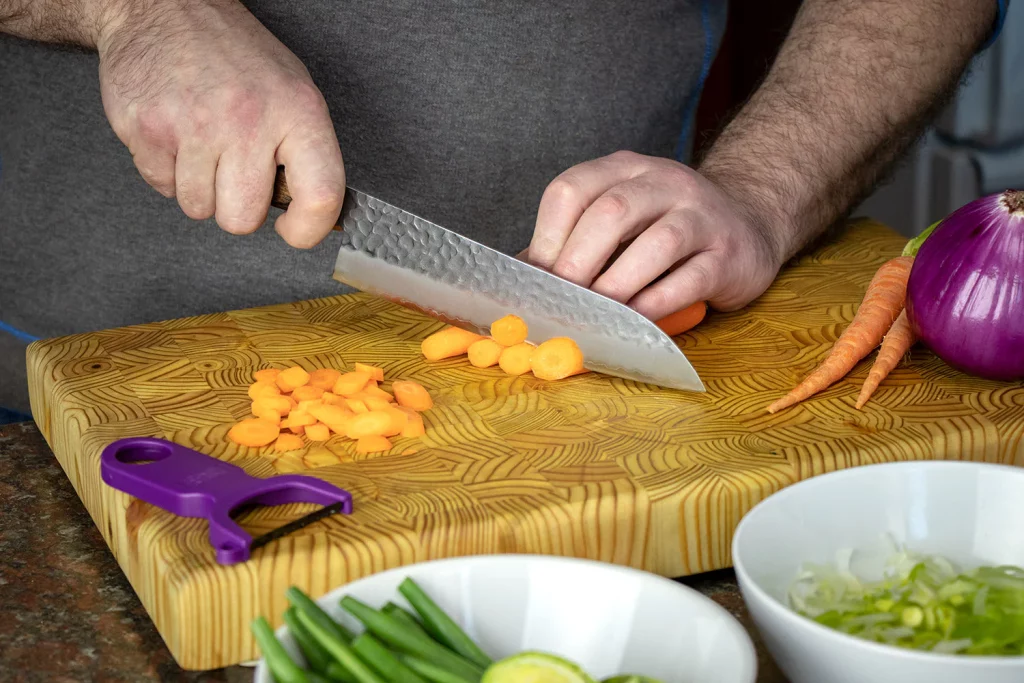
Part 4: Knife Maintenance and Safety
4.1 Maintaining Sharpness
A sharp knife is safer than a dull knife because it requires less force to cut, reducing the chance of slips. Chefs maintain knives through:
- Honing: Realigning the blade’s edge with a steel rod.
- Sharpening: Grinding or using whetstones to restore a dull edge.
- Proper Storage: Knife blocks, magnetic strips, or sheaths to prevent damage.
4.2 Safety Practices
Knife skills are inseparable from safety. Important practices include:
- Claw Grip: Tucking fingertips under to guide the knife while protecting them.
- Stable Cutting Surface: Using a dampened cutting board prevents slippage.
- Proper Technique: Always cutting away from the body and controlling motion.
A professional chef’s knife mastery combines speed, precision, and safety to create efficient workflows in a high-pressure kitchen environment.
Part 5: Knife Skills in Culinary Applications
5.1 Flavor and Cooking Efficiency
Knife techniques directly influence flavor release and cooking time. For example:
- Evenly diced vegetables cook uniformly, preventing overcooking or undercooking.
- Mincing garlic or herbs increases the surface area, releasing more aromatic compounds.
- Slicing meat thinly ensures faster cooking and tender texture.
5.2 Visual Presentation
In fine dining, presentation is crucial. Knife skills allow chefs to:
- Create uniform shapes for plating consistency.
- Construct intricate garnishes such as fan-shaped tomatoes or layered vegetables.
- Elevate simple dishes into artistic compositions, engaging the diner’s visual senses.
5.3 Signature Dishes and Creativity
Mastering knives also facilitates culinary creativity. Precision allows chefs to:
- Experiment with textures by creating different cuts of the same ingredient.
- Reinvent traditional dishes with decorative cuts.
- Showcase personal style through unique presentation.
Part 6: Training and Professional Development
6.1 Culinary Education
Professional chefs undergo rigorous training in knife skills:
- Culinary schools emphasize repetition of basic cuts, progressing to advanced techniques.
- Students practice speed, precision, and efficiency, often through timed drills.
- Knife skills are tested as part of culinary certifications and competitions.
6.2 Continuous Improvement
Even seasoned chefs continually refine knife skills:
- Practicing new cutting techniques for modern dishes.
- Studying cultural knife styles, like Japanese katsuramuki (paper-thin vegetable peeling).
- Incorporating scientific understanding of ingredient structure to improve texture and flavor.
Part 7: Cultural and Global Influence of Knife Skills
Knife mastery is celebrated across global cuisines:
- French Cuisine: Emphasizes precision, uniformity, and classical cuts.
- Japanese Cuisine: Knife skills are central to sushi and sashimi, emphasizing purity of form and texture.
- Chinese Cuisine: Cleaver techniques allow versatility in stir-fry, soups, and noodle preparation.
- Modern Fusion Cuisine: Combines techniques from multiple cultures, highlighting global knife artistry.
Knife skills thus form a cross-cultural language in culinary arts, bridging tradition and innovation.
Conclusion: Knife Skills as the Core of Culinary Excellence
Knife skills are more than technical ability—they are the foundation of a chef’s artistry, efficiency, and precision. From the basic chop to advanced decorative techniques, the mastery of knives enables chefs to:
- Cook ingredients uniformly for optimal flavor.
- Create visually stunning presentations that enhance dining experiences.
- Work safely and efficiently in high-pressure environments.
- Express creativity and personal style through precision and technique.
Ultimately, the chef’s knife is not just a tool—it is an extension of the hand, mind, and imagination. Mastering knife skills transforms cooking from a basic task into a professional art form, and it remains a cornerstone of culinary education and excellence across the world.