






Introduction: The Art of Precision and Presentation in Cooking
In the culinary world, a chef’s skills with a knife are fundamental. The precision with which ingredients are sliced, diced, julienned, or minced can elevate the simplest of dishes to works of art. Knife skills are not just about cutting food; they are about shaping, transforming, and presenting ingredients in a way that highlights their natural beauty, texture, and flavor.
When we think of a professional kitchen, we often picture the swift, calculated movements of chefs expertly working with their knives. These skills are not just a matter of technique; they are an essential part of culinary aesthetics. Food presentation—the way ingredients are arranged, structured, and enhanced on a plate—is just as important as the taste itself. The visual impact of a dish can stimulate the appetite and enhance the sensory experience of eating.
This article will explore the relationship between precision knife skills and ingredient presentation, examining the techniques, tools, and practices that professional chefs use to create visually appealing and perfectly executed dishes. We will discuss how these skills impact the flavor, texture, and overall experience of dining, as well as provide insights into the tools and methods that contribute to the artistry of modern cooking.
Part 1: The Importance of Precision Knife Skills
1.1 The Role of Knife Skills in Culinary Excellence
Knife skills are a cornerstone of professional cooking. In many ways, they serve as a foundation for all other cooking techniques. The way ingredients are cut can significantly influence the final texture and appearance of a dish, making precision essential in professional kitchens. Every cut has a purpose, whether it is to achieve uniformity for even cooking, to create delicate textures that add interest, or to ensure that flavors are properly balanced.
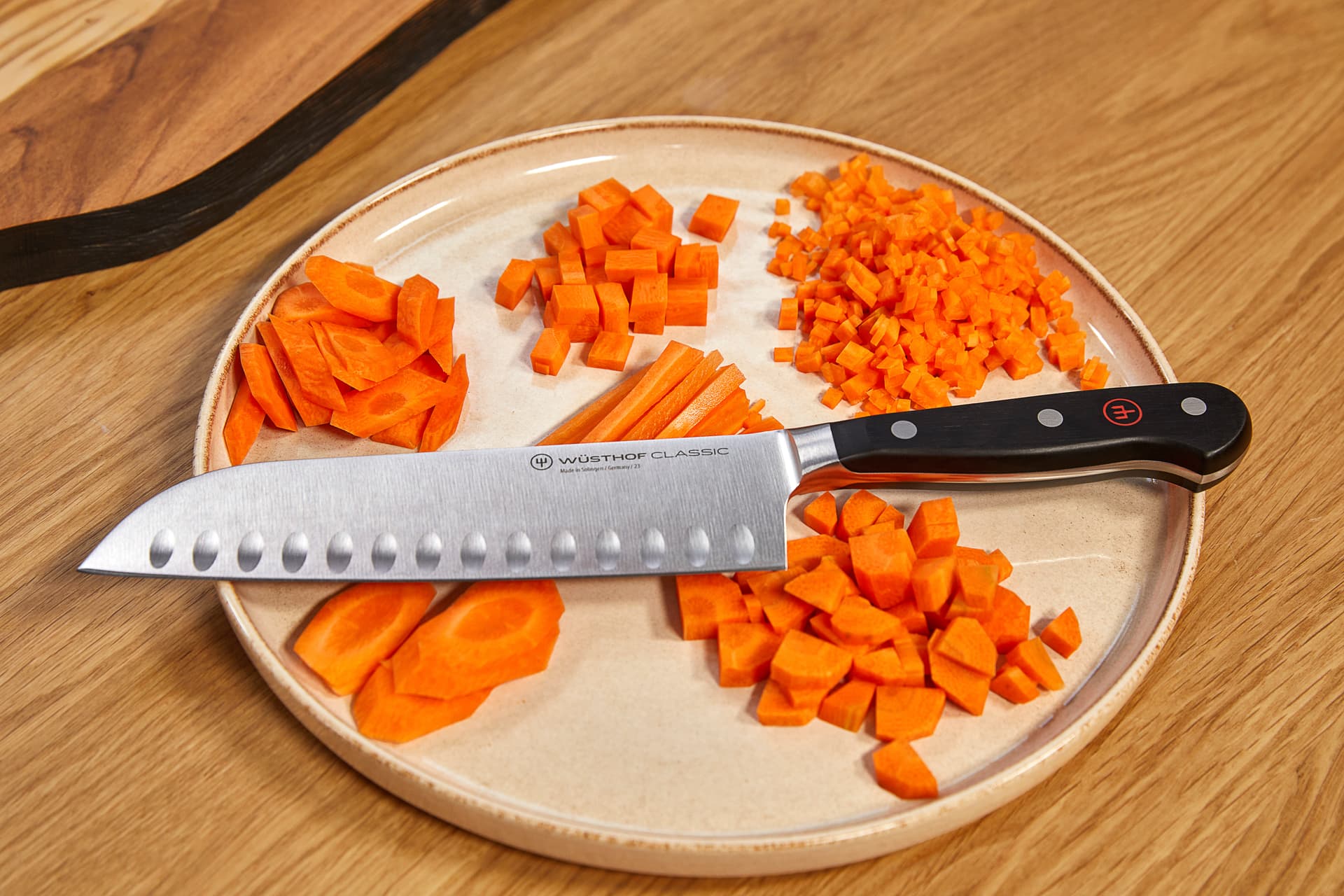
For example, julienning vegetables creates long, thin strips that are ideal for stir-fries or garnishes, allowing them to cook evenly and add a visually striking element to the dish. Meanwhile, brunoise—a fine dice—helps create a uniform, smooth texture in dishes like sauces or soups, where the ingredients need to blend seamlessly with one another.
Precision in knife work is not just about appearance; it is also about preserving the integrity of the ingredients. Cutting ingredients cleanly, as opposed to crushing or tearing them, preserves their texture and releases the flavors in a controlled manner. A perfectly sliced onion releases its natural sweetness, while a cleanly cut piece of fish retains its delicate texture and flavor.
1.2 The Tools of the Trade: Choosing the Right Knives
To achieve precision in knife skills, professional chefs rely on a selection of high-quality knives designed for different tasks. The types of knives used in the kitchen vary depending on the food being prepared, and each knife serves a specific purpose.
- Chef’s Knife: The most versatile knife in any kitchen, it is used for chopping, slicing, and dicing a wide range of ingredients, from vegetables to meat. A well-balanced chef’s knife allows for efficient, controlled cuts, making it essential for tasks that require both precision and speed.
- Paring Knife: A small, sharp knife perfect for intricate tasks such as peeling, trimming, and shaping delicate fruits and vegetables. It allows chefs to have a high degree of control, especially when working with small or delicate items.
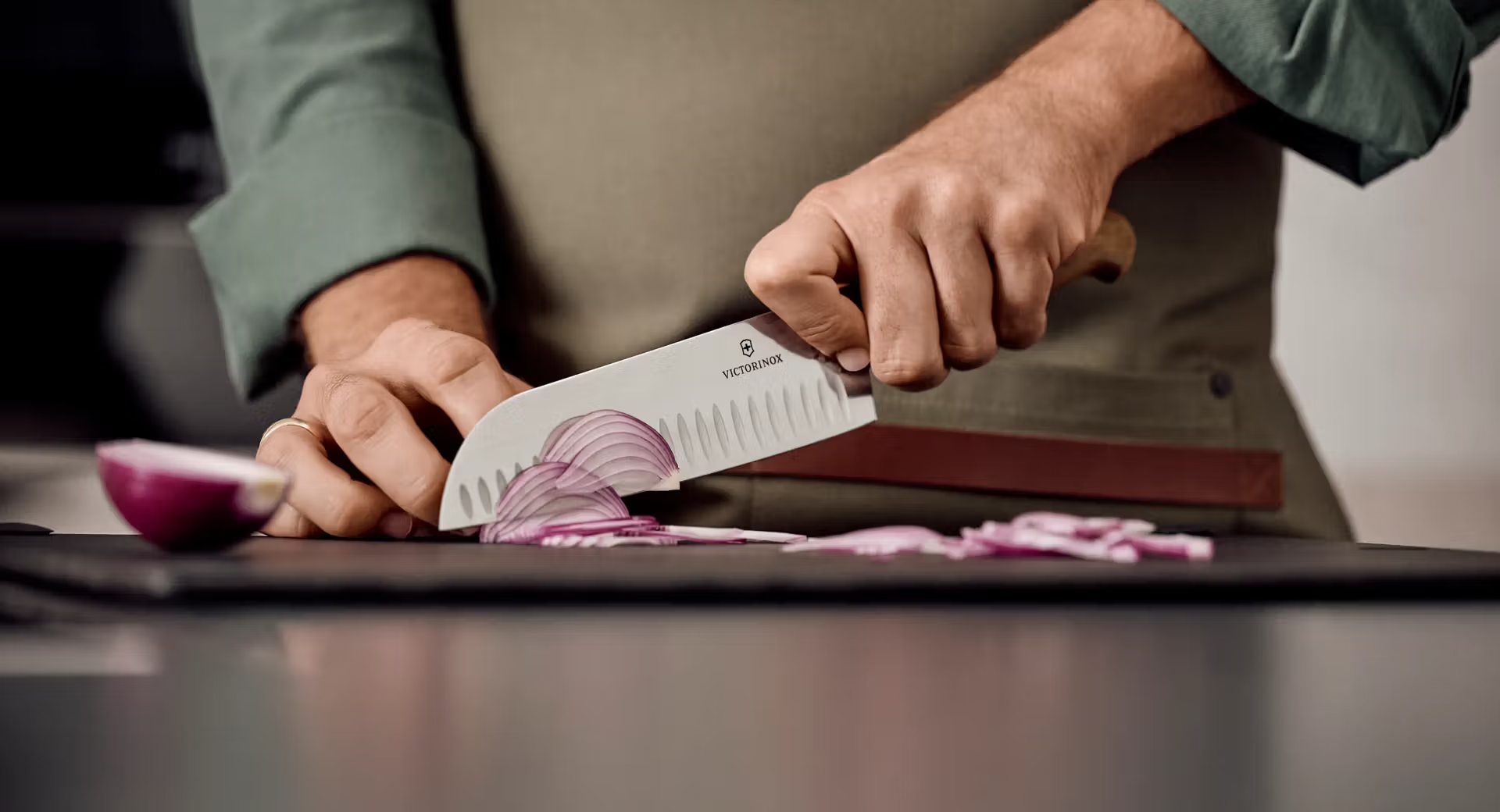
- Santoku Knife: A Japanese knife that excels at precision slicing and chopping, especially for vegetables. Its flat edge and broad blade make it ideal for fine cuts and quick dicing.
- Serrated Knife: Used primarily for cutting through bread or tomatoes, where a clean slice is required without crushing the ingredients.
The right knife for the right job is crucial for achieving precision in every cut. Chefs often spend years honing their skills with specific knives, understanding the nuances of each tool and how to use them to their full potential.
1.3 Techniques for Precision Cutting
Mastering the different types of cuts is essential for any chef looking to perfect their knife skills. Some common techniques include:
- Chopping: A basic technique where ingredients are roughly cut into uniform pieces, often used for vegetables or herbs. Precision is less important here, but uniformity is key for even cooking.
- Slicing: Slicing is used to cut ingredients into thin, even pieces. A sharp, steady knife is necessary to create uniform slices, especially when working with delicate items like fish, tomatoes, or mushrooms.
- Julienne: This technique involves cutting ingredients into long, thin matchstick-sized pieces. Precision is crucial for consistency, and the size of the pieces directly impacts the texture and cooking time of the dish.
- Brunoise: A technique where ingredients are diced into small, uniform cubes, typically 1-2 mm in size. This cut is used for fine preparations, where uniformity and a delicate texture are essential.
- Mincing: A fine, precise cut used for herbs or garlic, where the ingredient is chopped into small, even pieces. The goal is to release maximum flavor, especially in dishes like sauces or marinades.
Each of these cutting techniques requires precision, and even the slightest mistake in cutting can affect the texture and appearance of the final dish. Mastering these techniques is essential for any chef looking to elevate their culinary skills.
Part 2: Ingredient Presentation: The Art of Plating
2.1 The Importance of Visual Appeal in Cooking
While taste is paramount in any dish, the way food is presented also plays a crucial role in the dining experience. Humans eat with their eyes first—an artfully plated dish is more likely to excite the senses and stimulate the appetite. This is especially true in fine dining, where plating is considered an essential part of the experience.
Ingredient presentation goes beyond simply arranging food on a plate. It involves thinking about color, texture, balance, and shape to create a visually harmonious and appealing dish. A well-plated dish can elevate the dining experience by showcasing the chef’s creativity, attention to detail, and respect for the ingredients.
Plating is often described as an art form, with chefs using a variety of techniques to create dishes that are both beautiful and appetizing. The precision of knife skills plays a significant role in this, as the way ingredients are cut directly influences how they can be arranged on the plate. Clean, uniform cuts allow for neat and precise presentations, while irregular cuts can make the dish look chaotic or uneven.
2.2 Elements of a Well-Plated Dish
Creating an appealing plate requires a careful balance of several elements. Some of the most important factors to consider include:
- Color: The contrast between vibrant ingredients and neutral-colored elements helps make the dish pop. For example, a bright green garnish like parsley or cilantro can contrast beautifully with the rich brown tones of roasted meat.
- Texture: A dish should offer a range of textures, from crispy to creamy to tender. Knife skills come into play when preparing ingredients with different textures, as cutting them properly allows for a better balance on the plate.
- Shape and Size: The shape and size of the ingredients should be consistent to ensure even cooking and a visually balanced plate. Cutting ingredients into uniform pieces allows for a harmonious presentation.
- Garnishes: The use of garnishes is essential in plating. These small, decorative elements not only enhance the visual appeal but can also add complementary flavors and textures to the dish.
2.3 The Role of Knife Skills in Plating
Knife skills directly influence the ability to present ingredients effectively. Precise cuts allow for better control over the size, shape, and arrangement of ingredients on the plate. A chef may choose to fanfold vegetables, layer thinly sliced meats, or stack delicate ingredients to create height and depth.
In many cases, chefs use knives to create delicate garnishes that can elevate the dish’s visual appeal. For instance, thinly sliced radishes or vegetables can be arranged in intricate patterns, or herbs can be finely minced to add a finishing touch to a dish. Precision knife skills are essential for creating these small but impactful details.
Part 3: Knife Skills and Ingredient Presentation in Modern Cuisine
3.1 Trends in Modern Culinary Presentation
In contemporary dining, chefs are experimenting with minimalist plating, deconstructed dishes, and artistic presentations. The focus is increasingly on highlighting individual ingredients and creating a dialogue between textures, flavors, and forms. The precision of knife skills is key in this environment, as chefs need to ensure that ingredients are cut and presented in a way that is both visually striking and harmonious.
For example, in molecular gastronomy, chefs use advanced techniques such as spherification and foaming to present ingredients in novel ways. Knife skills are still crucial in these presentations, whether it is cutting components into the perfect shape for a dish or arranging elements on the plate with finesse.
3.2 Sustainable and Artisanal Presentations
There is also a growing emphasis on sustainability and the use of locally sourced ingredients in modern cuisine. Chefs are increasingly using whole ingredients, making the most of every part of the vegetable, fruit, or animal. In this context, precision knife skills are essential for utilizing the whole product—from creating perfect garnishes to turning vegetable scraps into flavorful broths or garnishes.
By mastering precision cutting techniques, chefs can reduce waste while enhancing the beauty of the dish. For example, carrot ribbons or potato chips made from the peels can be used as creative garnishes or textures in the dish, all while maintaining a high standard of presentation.
Conclusion: The Intersection of Skill and Aesthetics
Precision knife skills and ingredient presentation are inseparable in the world of fine cuisine. The way food is cut, arranged, and presented has a profound impact on the overall dining experience. Knife skills are not just a matter of technical ability—they are a fundamental part of how chefs create, interpret, and communicate through food.
As modern cuisine continues to evolve, the intersection of precision, technique, and aesthetics remains at the heart of culinary artistry. Whether it’s the delicate presentation of a deconstructed dish or the boldness of a perfectly sliced ingredient, knife skills are the foundation of the visual and sensory experience that makes each dish a masterpiece.
By understanding and mastering the relationship between knife skills and ingredient presentation, chefs are able to craft experiences that go beyond taste, engaging all of the senses and creating memorable moments for diners.