






Introduction
In the culinary world, knife skills are far more than a basic kitchen necessity; they represent the intersection of precision, efficiency, and artistry. Every professional chef understands that mastery of knife techniques directly impacts flavor, texture, presentation, and even the cooking process itself. Whether preparing a rustic stew or an intricate haute cuisine dish, the way ingredients are cut dictates how evenly they cook, how flavors meld, and how the dish appeals visually.
This article explores the essential role of knife skills in modern cooking, detailing techniques, tools, ergonomic principles, culinary science, and their effect on both professional kitchens and home cooking. It highlights why precise cutting is a cornerstone of culinary mastery.
1. The Historical Significance of Knife Skills
1.1 Culinary Tradition Across Cultures
- Knife techniques have been a central component of cooking traditions worldwide.
- Examples:
- Japanese cuisine emphasizes razor-sharp knives and delicate cuts, such as sashimi slicing.
- French cuisine codified knife cuts in classical training, including brunoise, julienne, and chiffonade.
- Middle Eastern and Mediterranean cuisines employ uniform chopping for even roasting and sautéing.
1.2 Evolution from Necessity to Art
- Historically, knife skills were driven by practicality: uniform cuts ensured even cooking and efficient food preparation.
- Over time, cutting techniques became an art form, showcasing visual appeal and elevating dishes from sustenance to culinary expression.
2. The Fundamentals of Knife Skills
2.1 Types of Cuts
- Julienne: thin, matchstick-like strips, ideal for stir-fries and garnishes.
- Brunoise: fine dice, approximately 1-2 mm cubes, used for sauces and garnishes.
- Chiffonade: rolled leaves cut into fine ribbons, enhancing presentation and texture.
- Paysanne: thin, small slices retaining natural shape, common in rustic dishes.
- Batonnet: thicker sticks, foundational cut for French cooking.
2.2 Uniformity and Precision
- Consistent size ensures even cooking.
- Improper cutting can result in uneven cooking, compromised texture, or flavor imbalance.
2.3 Knife Handling Techniques
- Pinch grip: recommended for professional control and precision.
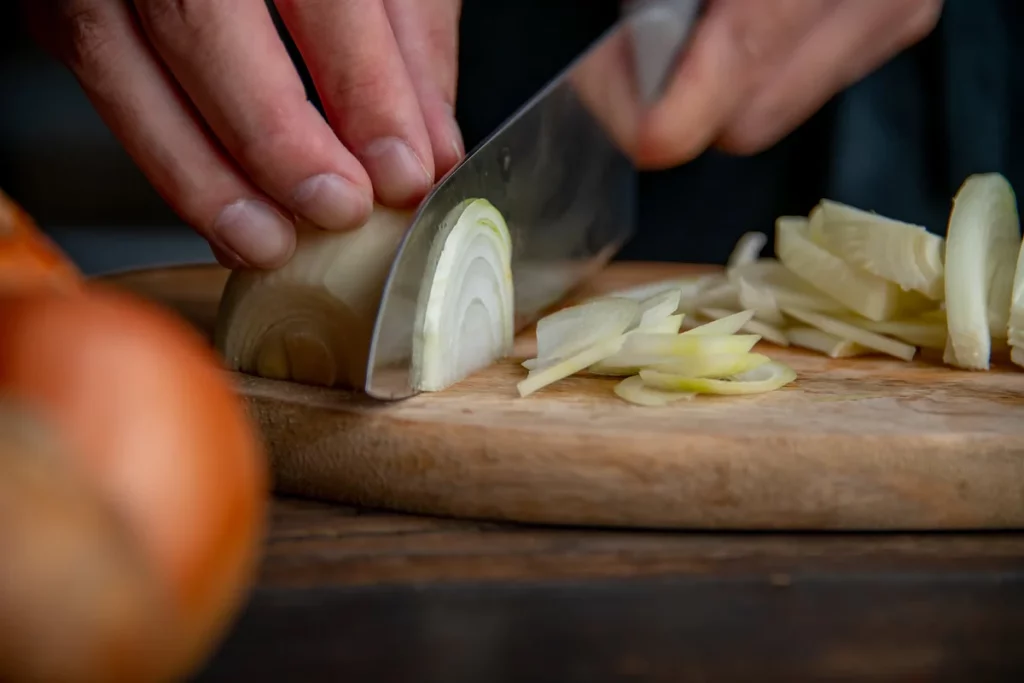
- Claw technique: protects fingers while ensuring consistent cuts.
- Wrist rotation: enables smooth, continuous slicing without jagged edges.
3. Knife Selection and Maintenance
3.1 Types of Culinary Knives
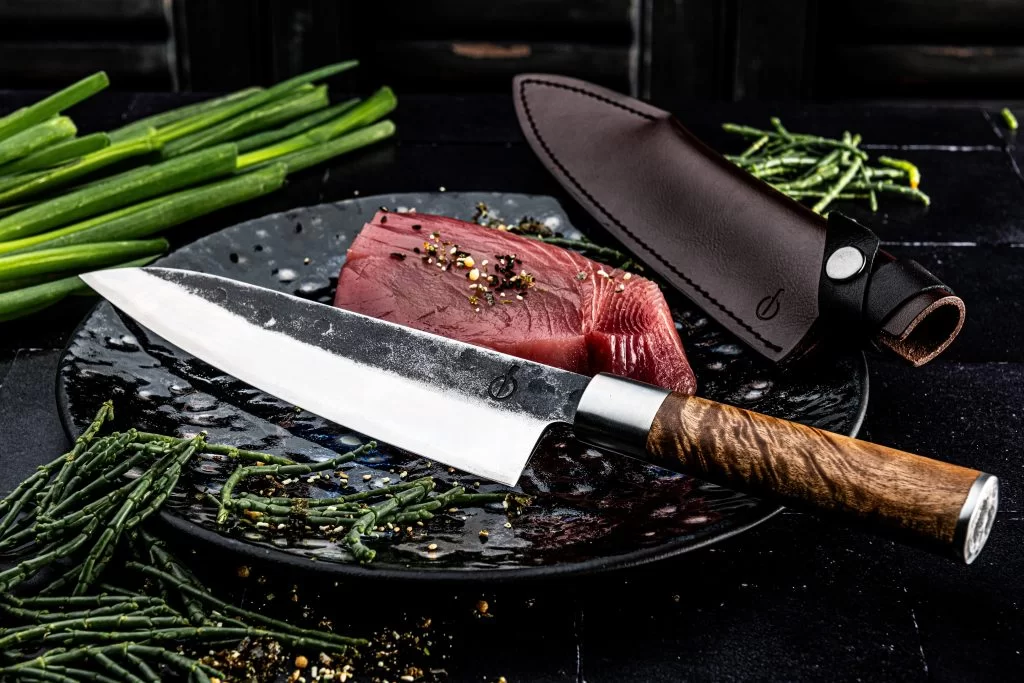
- Chef’s knife: multipurpose, 8–12 inches, versatile for chopping, slicing, and dicing.
- Paring knife: small, precise, for intricate work like peeling and segmenting.
- Santoku knife: Japanese-style, excellent for fine slicing and quick chopping.
- Boning knife: designed for meat and poultry, flexible for removing bones.
3.2 Sharpness and Edge Retention
- Sharp knives are safer, more efficient, and more precise.
- Frequent honing and professional sharpening maintain optimal cutting performance.
3.3 Knife Care
- Hand wash only to prevent corrosion and dulling.
- Store in knife blocks, magnetic strips, or protective sheaths to prevent edge damage.
4. Culinary Science Behind Knife Skills
4.1 Impact on Flavor and Texture
- Surface area: uniform cuts ensure even cooking and flavor absorption.
- Cell integrity: clean cuts reduce bruising, oxidation, and moisture loss in vegetables and fruits.
4.2 Heat Transfer and Cooking Efficiency
- Evenly cut ingredients cook at the same rate, preventing undercooked or overcooked components.
- In techniques like sautéing or stir-frying, consistent cuts ensure rapid, uniform heat distribution.
4.3 Aesthetic and Sensory Appeal
- Precisely cut ingredients enhance the visual appeal of dishes, affecting diners’ perception of taste.
- Layered textures and complementary shapes engage multiple senses beyond flavor.
5. Knife Skills in Professional Kitchens
5.1 Speed and Efficiency
- Chefs in busy kitchens rely on muscle memory, proper grip, and rhythm.
- Knife mastery reduces prep time, increasing overall operational efficiency.
5.2 Safety and Injury Prevention
- Poor technique leads to cuts, repetitive strain, and accidents.
- Proper knife skills, including the claw grip and sharp knife usage, reduce injuries significantly.
5.3 Consistency Across Culinary Teams
- Standardized cuts ensure dish consistency, crucial for chain restaurants and fine dining.
- Uniformity also facilitates plating efficiency and portion control.
6. Knife Skills and Culinary Creativity
6.1 Presentation and Plating
- Uniform and precise cuts allow intricate presentations, such as layered salads or decorative garnishes.
- Shapes like spirals, cubes, or ribbons elevate the dining experience visually.
6.2 Texture and Mouthfeel
- Fine cuts create delicate textures, while thicker cuts enhance chewiness and structure.
- Combining different cutting styles can layer textures, enriching the eating experience.
6.3 Ingredient Highlighting
- Knife skills help chefs accentuate natural qualities of ingredients, from crispness to juiciness.
- Example: thinly sliced citrus segments enhance visual and flavor impact in desserts or salads.
7. Knife Skills in Home Cooking
7.1 Empowering Home Cooks
- Mastering basic cuts improves preparation speed and dish quality.
- Simple techniques like dicing onions or julienning carrots can transform home-cooked meals.
7.2 Cost and Waste Reduction
- Efficient cutting minimizes waste by utilizing more of the ingredient.
- Clean cuts preserve integrity, reducing spoilage in storage.
7.3 Safety at Home
- Teaching safe cutting habits prevents common kitchen injuries.
- Using proper knives and cutting boards improves confidence and comfort in the kitchen.
8. Advanced Knife Techniques
8.1 Precision Carving
- Used for meat, poultry, and fish to maximize yield and presentation.
- Requires a combination of angle control, strength, and dexterity.
8.2 Decorative Cuts
- Techniques such as turning vegetables, crimping edges, or carving garnishes enhance aesthetic appeal.
- Common in high-end restaurants, competition settings, and food photography.
8.3 Specialty Cuts for Cultural Dishes
- Certain cuisines demand precise knife skills:
- Japanese sashimi and nigiri slicing
- French fine brunoise and julienne
- Chinese uniform stir-fry chopping
9. Training and Mastery
9.1 Formal Culinary Education
- Culinary institutes teach systematic knife skills, from basic to advanced.
- Students learn:
- Consistency in size and shape
- Safe handling
- Techniques tailored to ingredients
9.2 Practice and Muscle Memory
- Repetition builds speed, accuracy, and confidence.
- Practice includes:
- Cutting vegetables, fruits, and herbs daily
- Timing exercises to enhance efficiency
- Experimenting with complex cuts
9.3 Mentorship and Observation
- Learning under experienced chefs accelerates skill acquisition.
- Observing subtle wrist movements, grip changes, and cutting rhythm improves technique.
10. Global Culinary Examples
- Japanese sushi chefs: perfecting slicing angles for optimal texture and presentation.
- French classical kitchens: standardized cuts like julienne and brunoise for sauces and garnishes.
- Modern fusion cuisine: precise cuts combined with molecular gastronomy for innovative textures.
- Vegetarian and plant-forward dishes: careful cuts enhance leafy greens, root vegetables, and fruits to highlight freshness.
11. Knife Skills and Culinary Innovation
11.1 Experimental Textures
- Using knife techniques to alter ingredient texture, creating new mouthfeel experiences.
- Example: finely diced herbs releasing aroma more efficiently in sauces or garnishes.
11.2 Multi-Ingredient Harmonization
- Precise cutting ensures balanced flavors and textures across multiple ingredients, essential for complex dishes.
11.3 Visual Storytelling
- Food presentation can narrate a story through shapes, layering, and geometric consistency, made possible by expert knife work.
12. Challenges and Considerations
12.1 Balancing Speed and Precision
- Kitchens often require high-speed preparation without sacrificing accuracy.
- Overemphasis on speed can compromise visual appeal, even cooking, and safety.
12.2 Knife Quality and Maintenance
- Dull knives hinder technique and increase injury risk.
- Investment in high-quality knives and regular sharpening is essential for consistent results.
12.3 Ergonomic Considerations
- Long-term knife use requires attention to wrist alignment, cutting surface height, and hand fatigue prevention.
Conclusion
Knife skills are fundamental to culinary excellence. They affect flavor, texture, presentation, efficiency, safety, and creativity in both professional kitchens and home cooking. From classic French techniques to Japanese precision, from decorative garnishes to practical efficiency, mastering knife work is essential for any serious cook.
The role of knife skills transcends mere chopping; it is a discipline, an art form, and a science, influencing the overall dining experience. Chefs who refine their cutting techniques gain control over their ingredients, optimize cooking, and elevate the aesthetic appeal of dishes, ultimately shaping the culinary landscape.
In essence, mastery of the knife is mastery of the kitchen.