





Introduction: A Revolution in the World of Cuisine
Ferran Adrià, one of the most influential chefs in the history of modern cuisine, is often regarded as the pioneer of molecular gastronomy—a cooking movement that uses scientific principles and innovative techniques to create extraordinary culinary experiences. His work at the renowned El Bulli restaurant in Spain, where he redefined traditional notions of cooking, has made a profound impact on both the gastronomic world and the broader food culture. Adrià’s culinary philosophy, often referred to as “creative cuisine,” involves blending scientific innovation with artistic presentation to challenge the way we perceive and experience food.
Molecular gastronomy, a term coined by scientists Hervé This and Nicholas Kurti, refers to the application of scientific principles and methods to cooking, particularly focusing on the chemical and physical transformations that occur during food preparation. Adrià took this concept to new heights by pushing the boundaries of flavor, texture, and presentation in ways never before imagined. His avant-garde techniques are now integral to the repertoire of many modern chefs and have paved the way for new directions in culinary experimentation.
This article will explore Ferran Adrià’s role in popularizing molecular gastronomy, his techniques and innovations, and the lasting legacy of his work on the culinary world. We will also delve into how his approach to cooking revolutionized the dining experience and continues to inspire chefs and food enthusiasts around the globe.
Part 1: The Origins of Ferran Adrià’s Culinary Journey
1.1 Early Life and Culinary Beginnings
Ferran Adrià’s culinary journey began in the late 1970s, a time when Spanish cuisine was undergoing significant transformation. Born in 1962 in Barcelona, Adrià showed an early interest in food but had a somewhat unconventional path to becoming one of the world’s greatest chefs. His formal culinary education was minimal; instead, he honed his skills by working in various restaurants before joining El Bulli.
Adrià’s first experience in a professional kitchen came at the age of 18, when he started working as a dishwasher in a small restaurant in Barcelona. This initial exposure to the fast-paced, high-pressure environment of a restaurant kitchen sparked his interest in the culinary arts. Eventually, he began working as a cook and moved to El Bulli, where his career would truly take off.
1.2 El Bulli: The Birthplace of Innovation
In 1984, Adrià joined El Bulli, a small restaurant located in a remote part of Catalonia, Spain. El Bulli was then a modest establishment, but under the guidance of Adrià, it would go on to become one of the most innovative and influential restaurants in the world. Adrià’s arrival at El Bulli marked the beginning of a culinary revolution.
In the early years, El Bulli was known for its Mediterranean-inspired cuisine, but it was Ferran Adrià’s creativity and willingness to experiment with new techniques that elevated the restaurant to new heights. Adrià’s obsession with pushing the boundaries of flavor and texture led him to experiment with molecular gastronomy, a scientific approach to cooking that focuses on the chemical and physical properties of food. His work at El Bulli would go on to transform the culinary world and cement his reputation as a visionary chef.
1.3 The Influence of Molecular Gastronomy
While Ferran Adrià was working at El Bulli, the concept of molecular gastronomy was slowly gaining traction in the culinary world. The term “molecular gastronomy” was first introduced in the 1980s by scientists Hervé This and Nicholas Kurti, who explored the physical and chemical processes involved in cooking. However, it was Ferran Adrià who brought the concept into the mainstream, using science to enhance the art of cooking.
Molecular gastronomy allowed Adrià to manipulate the texture, taste, and appearance of food in groundbreaking ways. He experimented with techniques such as liquid nitrogen freezing, foam emulsions, and spherification, where liquids are transformed into gel-like spheres. These innovations not only challenged traditional cooking methods but also elevated food to an art form, pushing the limits of what was thought possible in the kitchen.
Part 2: Techniques and Innovations in Molecular Gastronomy
2.1 Foams and Emulsions
One of the most iconic techniques pioneered by Ferran Adrià is the creation of foams and emulsions. Using ingredients like lecithin, egg whites, and gelatin, Adrià was able to transform liquids into airy, flavorful foams that would become a signature element of his dishes. These foams are created by introducing air or gas into the liquid, resulting in a light, fluffy texture that retains the original flavor of the ingredients.
Foams were used in a variety of El Bulli’s dishes, from savory to sweet, and often served as an accompaniment or garnish. For example, one of Adrià’s signature creations was his foam of olives, which captured the essence of olives in a light, foamy texture that could be spooned onto the plate. The foam was a perfect example of how Adrià used molecular gastronomy to create surprising and novel textures while maintaining the familiar flavors of the ingredients.
2.2 Spherification
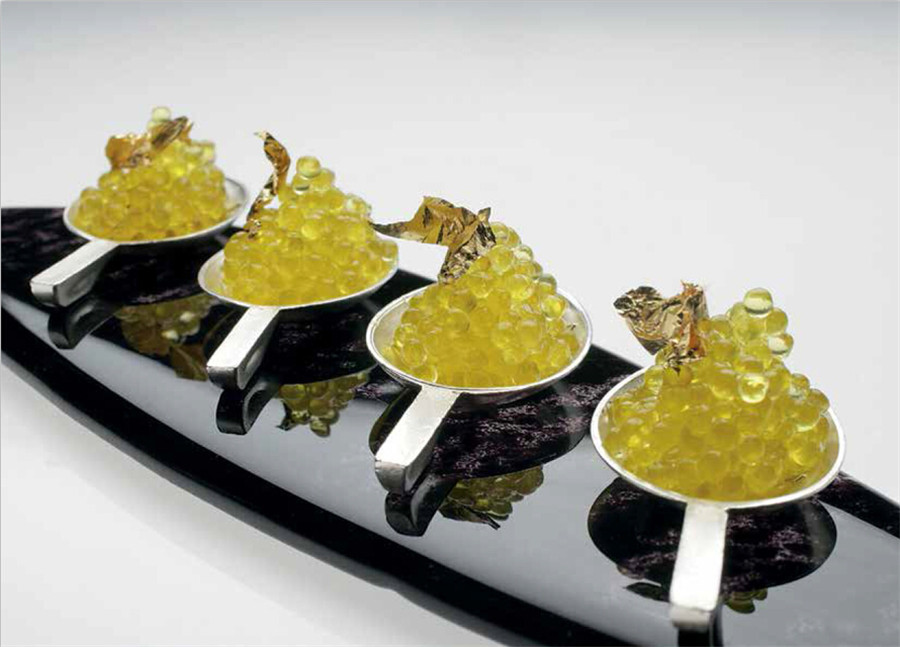
Another key technique that Adrià introduced to the culinary world was spherification. This process involves creating a thin membrane around a liquid, resulting in a gel-like sphere that bursts in your mouth, releasing the liquid inside. The technique is achieved through the use of sodium alginate and calcium chloride, which are used to create the membrane.
Spherification allowed Adrià to create visually stunning dishes that played with texture and flavor. One of his most famous creations was the liquid olive, which appeared as a small, olive-shaped sphere but burst with an intense olive flavor when bitten into. Spherification became one of Adrià’s signature techniques, and it exemplified his ability to manipulate food in ways that were both unexpected and captivating.
2.3 Sous-Vide Cooking
Sous-vide cooking, a technique that involves cooking food in a vacuum-sealed bag at low temperatures, is another innovation that Adrià embraced and helped popularize. The sous-vide method allows for precise control over the temperature, resulting in perfectly cooked meats, vegetables, and other ingredients. The technique retains the natural flavors and nutrients of the food while achieving a level of tenderness and consistency that is difficult to replicate with traditional cooking methods.
At El Bulli, sous-vide cooking was used to achieve textures that would be impossible with conventional cooking. For example, fish and meats cooked sous-vide at low temperatures for long periods could be served with a level of tenderness and juiciness that was previously unimaginable.
2.4 Liquid Nitrogen and Rapid Freezing
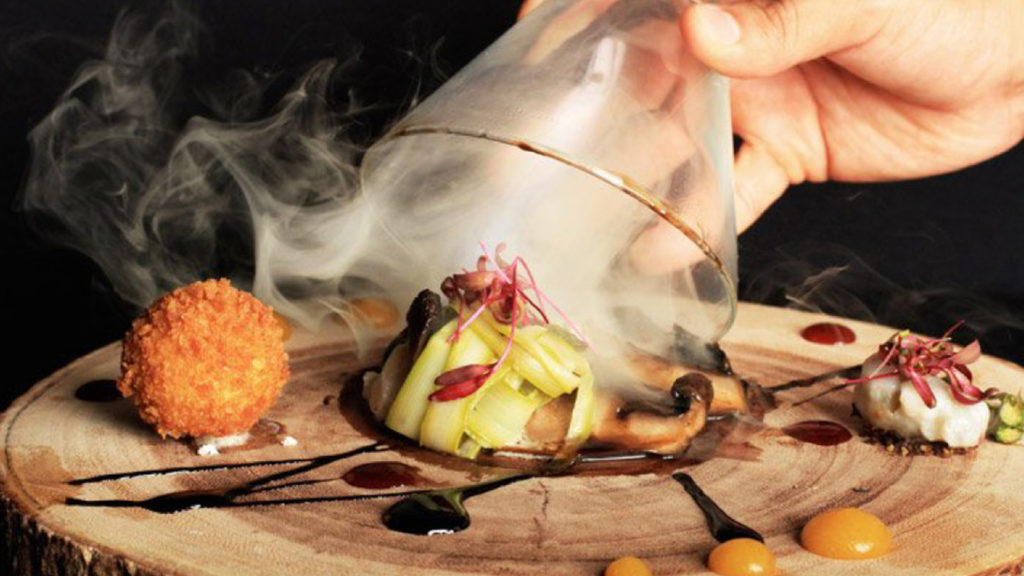
Liquid nitrogen, which is typically used in scientific laboratories, became another key ingredient in Ferran Adrià’s culinary toolbox. Adrià used liquid nitrogen to rapidly freeze ingredients, creating unique textures and presentations. For example, by freezing fruit or vegetable purees with liquid nitrogen, Adrià could create delicate, crunchy textures that contrasted with the softness of the other components of a dish.
Liquid nitrogen was also used to create dramatic presentations, such as clouds of vapor rising from the plate when the frozen ingredients were thawed. This visual spectacle added an element of theater to the dining experience, elevating the meal into a multisensory experience.
Part 3: The Impact of Ferran Adrià on Modern Cuisine
3.1 The Legacy of El Bulli
El Bulli, under the direction of Ferran Adrià, became a symbol of innovation in the culinary world. From 1987 to 2011, El Bulli was consistently ranked among the best restaurants in the world, and it received numerous accolades for its groundbreaking approach to cooking. El Bulli’s focus on creativity, experimentation, and scientific principles transformed the way we think about food and dining.
El Bulli’s legacy continues to influence chefs and food enthusiasts worldwide. Even though the restaurant closed in 2011, its impact on the culinary world is still felt today. Adrià’s influence can be seen in the work of chefs who have embraced molecular gastronomy and the experimental techniques he popularized. Additionally, Adrià’s ideas about food as an art form have encouraged chefs to think beyond the traditional boundaries of cooking and to experiment with new ways of presenting and experiencing food.
3.2 The Democratization of Molecular Gastronomy
While Ferran Adrià’s work at El Bulli was initially reserved for a select group of elite diners, the principles of molecular gastronomy have gradually become more accessible to home cooks and chefs around the world. Today, molecular gastronomy tools such as sous-vide machines, sifters for foams, and gelatin-based products are readily available, allowing even amateur cooks to experiment with these techniques.
Adrià himself has been instrumental in democratizing these techniques. Through his collaborations with food companies, educational initiatives, and public lectures, he has made the science of cooking more accessible to the general public. By sharing his knowledge and passion for innovation, Adrià has inspired a new generation of chefs to experiment with molecular gastronomy and push the boundaries of what is possible in the kitchen.
3.3 The Evolution of Culinary Art
Ferran Adrià’s contributions to molecular gastronomy are part of a larger shift in the way food is viewed in modern society. No longer just a means of sustenance, food is increasingly seen as a form of artistic expression. Chefs like Adrià have transformed cooking into a highly creative, exploratory endeavor that involves science, art, and technology.
By challenging traditional cooking methods and using science to create new flavors, textures, and presentations, Adrià has redefined the dining experience. His work has encouraged chefs to think outside the box and to approach food with curiosity, experimentation, and a willingness to break from convention.
Conclusion: A New Era in Culinary Innovation
Ferran Adrià’s influence on the world of gastronomy cannot be overstated. Through his pioneering work in molecular gastronomy, he has revolutionized the way food is prepared, presented, and experienced. From foams and spherification to sous-vide and liquid nitrogen freezing, Adrià’s innovations have forever changed the landscape of modern cuisine. His approach has not only challenged traditional culinary techniques but has also redefined the role of the chef as both a scientist and an artist.
Though El Bulli has closed its doors, Adrià’s impact on the culinary world lives on. His legacy continues to inspire chefs, scientists, and food lovers alike to explore new possibilities in the kitchen and to think about food in ways that go beyond mere sustenance. Ferran Adrià and his contributions to molecular gastronomy will forever remain a defining moment in the history of cuisine.