






Introduction
Dan Barber, the acclaimed chef and co-owner of Blue Hill restaurants in New York, is widely recognized for redefining modern gastronomy by placing agriculture, sustainability, and ecological awareness at the core of culinary creativity. Unlike chefs who focus solely on technique or innovation, Barber’s philosophy stems from an intimate connection with the farm. His culinary vision is inseparable from the land that produces the ingredients, reflecting a deep understanding of soil, seasonality, and ecosystem dynamics.
This farm-centered approach transforms the role of the chef from a mere cook to a steward of the land, a storyteller of local ecosystems, and a collaborator with farmers. Ingredients are not abstract commodities; they are living products shaped by the earth, climate, and human care. Each dish becomes a medium to convey the story of its origin, connecting diners to the farm, the seasons, and the cycles of life that sustain agriculture.
This essay explores Dan Barber’s philosophy in depth. It examines his relationship with farms, his influence on sustainable agriculture, the techniques he employs to honor farm-to-table principles, case studies of signature ingredients, and the broader implications of farm-centered cuisine for global gastronomy.
1. Early Influences and the Farm Connection
1.1 Childhood and Exposure to Agriculture
Dan Barber grew up in New York, but his early experiences visiting farms and observing seasonal cycles instilled a lifelong respect for agriculture. Unlike many chefs trained solely in kitchen techniques, Barber developed a holistic view of food production that included soil health, biodiversity, and crop rotation.
His experiences emphasized that the quality of the final dish is directly tied to the quality and integrity of the farm. Understanding the rhythm of planting, growth, and harvest became foundational to his culinary philosophy.
1.2 Culinary Education and Integration of Farming Principles
Barber attended the Culinary Institute of America, where he honed classical techniques. However, what set him apart was his dedication to integrating farming principles into gastronomy. He often visited farms, collaborating with farmers to explore ingredient potential and refine cultivation methods. This combination of formal culinary training and practical agricultural knowledge became the hallmark of his career.
2. Philosophy: The Farm as Inspiration
2.1 Ingredients as Narrators
At the heart of Barber’s philosophy is the belief that ingredients themselves narrate the story of the farm:
- Soil and Terroir: The character of vegetables, grains, and meats is shaped by soil composition, climate, and local biodiversity.
- Seasonality: Ingredients tell the story of time, marking the cycles of growth, harvest, and preservation.
- Human Stewardship: Farming practices—from crop rotation to ethical livestock management—contribute to the narrative of quality.
In this context, the chef’s role is to highlight, not dominate, the voice of the farm.
2.2 Sustainability as Ethical Imperative
Barber emphasizes that culinary inspiration cannot be separated from ecological responsibility. Sustainable practices—such as regenerative agriculture, organic methods, and closed-loop systems—ensure that the farm continues to produce high-quality ingredients for future generations. The farm becomes both a source of creativity and a moral compass for the kitchen.
3. The Role of Blue Hill Farms
3.1 Blue Hill at Stone Barns
Barber’s Blue Hill at Stone Barns, located in Pocantico Hills, New York, is a living example of farm-integrated cuisine. The restaurant is directly connected to a working farm, allowing Barber and his team to:
- Source ingredients seasonally and ethically.
- Experiment with growing techniques and crop varieties.
- Develop dishes that reflect the farm’s rhythms and ecology.
This proximity transforms the menu into a dynamic dialogue with the land, ensuring freshness, sustainability, and narrative depth.
3.2 Collaborative Farming
Barber works closely with farmers to explore the potential of ingredients:
- Innovative Cultivation: Introducing heirloom varieties, experimenting with soil amendments, or cultivating overlooked crops.
- Biodiversity: Encouraging polyculture to enhance ecosystem health and flavor complexity.
- Ethical Livestock: Supporting humane practices that prioritize animal welfare while producing superior products.
This collaboration blurs the line between chef and farmer, establishing a symbiotic relationship that informs both culinary and agricultural innovation.

4. Techniques Inspired by the Farm
4.1 Seasonal Menu Design
Barber designs menus around the farm calendar, ensuring that dishes highlight ingredients at peak freshness. For example:
- Spring features young greens, tender herbs, and fresh shoots.
- Summer celebrates tomatoes, beans, and summer squash.
- Autumn emphasizes root vegetables, pumpkins, and late-season fruits.
- Winter relies on preserved foods, fermented products, and hardy vegetables.
This cyclical approach reinforces the narrative of the farm and connects diners to the changing seasons.
4.2 Preservation and Fermentation
To extend the story of the farm beyond the growing season, Barber employs:
- Fermentation: Enhancing flavor while preserving seasonal ingredients.
- Pickling and Curing: Creating layered textures and flavors rooted in tradition.
- Root Cellaring: Maintaining integrity of vegetables and fruits during winter months.
These techniques ensure that the farm’s bounty continues to inspire culinary creativity year-round.
4.3 Minimalist Preparation to Highlight Terroir
Barber favors preparation methods that let the ingredient shine:
- Gentle roasting or steaming preserves natural flavor and texture.
- Light seasoning complements, rather than masks, the intrinsic character of the ingredient.
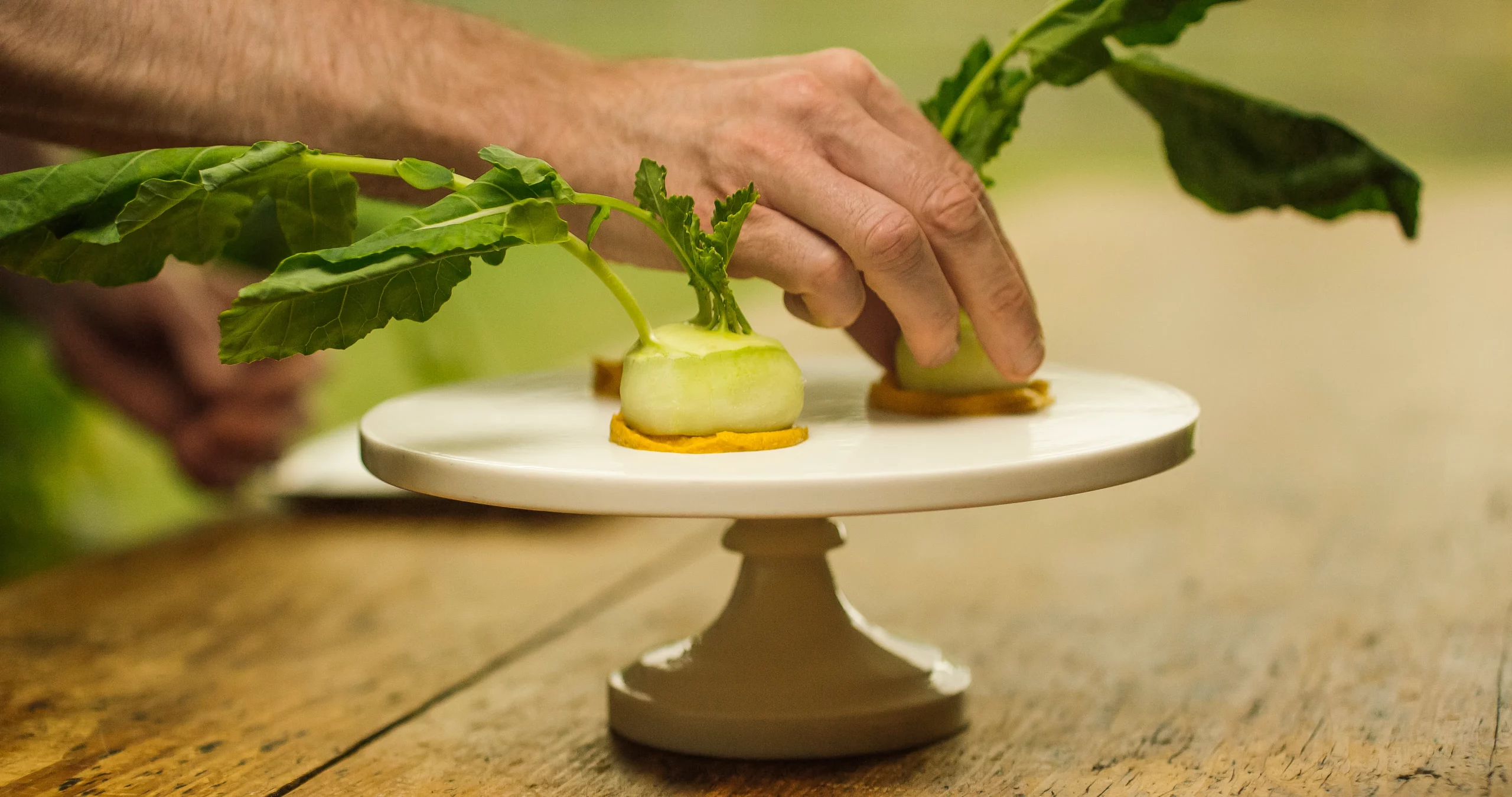
- Visual presentation emphasizes the beauty of natural forms, reflecting the farm’s landscape.
5. Case Studies of Signature Ingredients
5.1 Heritage Grains
Barber champions heirloom grains such as emmer, einkorn, and spelt:
- Grown on Blue Hill farms using regenerative techniques.
- Reflect historical agricultural practices, connecting diners to centuries of cultivation.
- Provide unique flavor, texture, and nutritional profiles that influence bread, pasta, and desserts.
5.2 Vegetables
- Root Vegetables: Roasted or pureed, they highlight soil conditions and seasonal rhythm.
- Leafy Greens: Early-season varieties are tender, aromatic, and intensely flavorful.
- Specialty Crops: Rare or underutilized vegetables are reintroduced, expanding biodiversity and menu diversity.
5.3 Livestock and Dairy
Barber works with farmers to source ethically raised livestock:
- Pasture-raised meats and heritage breeds reflect terroir and humane practices.
- Dairy from local farms supports sustainable cycles and provides rich, seasonal flavor.
- Eggs, cheeses, and cultured products are integrated into dishes to highlight freshness and provenance.
6. Sensory Storytelling Through Farm Ingredients
6.1 Flavor as a Narrative Tool
Each ingredient carries a story of soil, climate, and cultivation:
- Sweetness in carrots or beets reflects mineral content and harvest timing.
- Herbaceous notes in greens tell of microclimate and cultivation methods.
- Umami-rich flavors in fermented grains or meats reflect natural aging processes.
6.2 Texture and Aroma
- Crunchy, tender, soft, or chewy textures narrate seasonal and varietal differences.
- Aromas evoke the farm environment—fresh soil, wild herbs, or sun-ripened fruits.
- Plating echoes the visual language of the farm, from mossy greens to rustic roots.
7. Philosophical Implications of Farm-to-Table Inspiration
7.1 Redefining the Chef’s Role
Barber demonstrates that chefs can act as stewards of agriculture:
- Advocating for sustainable practices.
- Educating diners on the origins of food.
- Inspiring a shift in culinary values toward ecological and ethical awareness.
7.2 Integrating Ecology and Culinary Art
By connecting with farms, Barber creates dishes that reflect:
- Ecological cycles and biodiversity.
- Interdependence of soil, plant, and animal life.
- Long-term sustainability rather than short-term convenience.
7.3 Cultural Significance
Farm-focused cuisine celebrates:
- Regional traditions and heritage crops.
- Historical agricultural knowledge passed through generations.
- The human-nature connection as a cultural and ethical framework.
8. Global Impact of Barber’s Farm-Centered Philosophy
8.1 Influence on Chefs Worldwide
Barber has inspired chefs globally to:
- Engage with local farms and ecosystems.
- Source ingredients seasonally and ethically.
- Consider sustainability, biodiversity, and terroir as integral to menu creation.
8.2 Shaping Public Perception of Food
- Diners are educated about ingredient provenance, cultivation, and environmental impact.
- Culinary experiences become immersive narratives linking taste to ecology and culture.
- Farm-centered philosophy promotes conscious consumption and appreciation for natural processes.
8.3 Advocacy and Policy
Barber has participated in initiatives advocating:
- Sustainable agriculture practices.
- Support for small-scale farmers.
- Education on regenerative farming and climate-conscious cuisine.
9. Challenges and Solutions in Farm-Centered Cuisine
9.1 Seasonal Limitations
- Seasonal dependence can constrain menu options.
- Solutions include preservation techniques, rotating menus, and creative adaptation to off-season ingredients.
9.2 Scaling and Accessibility
- Maintaining farm-to-table quality at scale can be difficult.
- Collaborations with multiple farms, community-supported agriculture, and selective sourcing ensure supply without compromising integrity.
9.3 Balancing Innovation and Tradition
- Introducing novel techniques or ingredients must respect the story of the farm.
- Chef-farmer dialogue ensures dishes innovate without erasing heritage.
10. Future Directions of Farm-Centric Cuisine
10.1 Integrating Technology
- Precision agriculture and data analytics can enhance soil health, crop quality, and yield.
- Controlled fermentation and preservation extend seasonal availability while maintaining narrative integrity.
10.2 Education and Culinary Culture
- Culinary programs increasingly include farm experience, ecology, and sustainability.
- Chefs become educators, bridging gastronomy, agriculture, and environmental consciousness.
10.3 Global Sustainability and Biodiversity
- Farm-centered cuisine promotes the use of heritage crops, rare varieties, and regenerative practices.
- By connecting dining to ecological awareness, chefs inspire systemic change in food culture.
Conclusion
Dan Barber exemplifies the transformative power of connecting cuisine to the farm. By understanding soil, seasonality, and ecosystem dynamics, he elevates ingredients from mere components to narrators of place, time, and human stewardship. Blue Hill restaurants demonstrate that menus can be living stories of the farm, combining flavor, culture, and ethical responsibility.
Barber’s work shows that the chef’s role extends beyond cooking to include stewardship, education, and advocacy. Farm-centered cuisine connects diners to the environment, regional identity, and the intricate relationships that sustain life on the land. Ingredients are celebrated not only for taste but also for history, terroir, and cultural significance.
Through farm-to-table inspiration, Barber illustrates that the future of gastronomy is not simply about innovation or technique—it is about connection, narrative, and ethical engagement with the land. Every bite becomes a reflection of the ecosystem, the farmer’s care, and the chef’s vision, creating a profound culinary experience rooted in sustainability, culture, and the enduring bond between kitchen and farm.