





Ferran Adrià is widely recognized as one of the most transformative figures in contemporary gastronomy. His influence extends beyond the kitchens of Spain to the global culinary landscape, where his innovations have reshaped how chefs think about food, technique, creativity, and the very definition of what constitutes a dish. Though often associated with the term molecular gastronomy, a phrase that became popular in the 1990s and early 2000s, Adrià’s work transcends simplistic categorization. His legacy is rooted in a profound engagement with sensory perception, scientific methodology applied to culinary arts, and an ethos of creative experimentation that has inspired generations of chefs.
This article explores Ferran Adrià’s life, philosophy, techniques, contributions to molecular cuisine, the context in which his ideas emerged, his most iconic creations, critical debates surrounding his work, his enduring legacy, and how his intellectual framework continues to influence gastronomy today. The discussion will be rich, refined, and grounded in professional insight and analysis.
I. Origins: From Beginnings to Culinary Visionary
A. Early Life and Formative Influences
Ferran Adrià was born in 1962 in L’Hospitalet de Llobregat, near Barcelona, Spain. His early exposure to food came through work in the family’s bar, where he learned the rhythms of service, the value of hard work, and the basic joys and challenges of feeding people. Although he did not initially set out to become a chef of revolutionary impact, his journey into professional cooking began in earnest as a teenager, sharpening his focus and refining his skills in various kitchens.
Adrià’s formative years coincided with a period of cultural and social transformation in Spain. The post‑Franco era saw a resurgence of artistic experimentation and intellectual curiosity across disciplines. This broader cultural context—an embrace of exploration, reinvention, and reimagining tradition—would resonate deeply in Adrià’s approach to cuisine.
B. elBulli and the Making of a Laboratory
In 1984, Adrià joined elBulli, a modest restaurant on the Costa Brava, initially as a line cook. At that time, elBulli was a respectable local establishment with a strong commitment to quality ingredients and refined technique, but it was not yet globally renowned.
Over time, through dedication, collaboration with visionary colleagues, and Adrià’s growing curiosity, elBulli evolved into a site of innovation that blurred the boundaries between kitchen and laboratory. Under Adrià’s leadership, the restaurant became a crucible for experimentation, closing seven months of the year for research and development and opening for five months to present seasonal menus that were the culmination of studio‑like creative processes.
It is at elBulli that Adrià’s transformation from skilled cook to culinary visionary took shape—a transformation fueled by rigorous questioning, scientific curiosity, meticulous documentation, and an insistence that food can be a medium of intellectual and emotional engagement.
II. Understanding “Molecular Gastronomy”
A. Origins and Definitions
The term molecular gastronomy emerged in the late 1980s, coined by chemist Hervé This and physicist Nicholas Kurti. Their intention was to study the physical and chemical processes that occur during cooking—to describe and understand phenomena such as coagulation, emulsification, and texture change.
However, in public discourse and media representation, molecular gastronomy took on a broader and somewhat distorted meaning. It became shorthand for culinary experimentation that employed scientific techniques, unusual presentations, and innovative textures. Adrià, along with chefs like Heston Blumenthal and Grant Achatz, came to be associated with this movement in popular imagination—even though the term does not precisely capture the philosophical core of his work.
B. Adrià and the Misnomer
Ferran Adrià himself has been careful to distance his work from the narrowest interpretations of molecular gastronomy. He did not set out to “cook molecules” nor was his aim to conduct chemistry for its own sake. Rather, he sought to redefine sensory experience—to challenge assumptions about taste, texture, form, and memory.
In that sense, Adrià’s practice is better understood as innovative gastronomy or experimental cuisine—a discipline that draws on scientific principles not as an end, but as a means to elevate creativity, deepen sensory engagement, and expand the expressive vocabulary of food.
III. Philosophy and Creative Ethos
A. Food as a Medium of Expression
At the heart of Adrià’s work is a belief that food is not merely sustenance or tradition, but a medium through which ideas and emotions can be communicated. This places him in alignment with other creative disciplines—art, music, literature—where technique serves expression.
For Adrià, every dish is a proposal—a proposition about how to experience flavor, texture, aroma, and concept. Dishes are invitations to engage actively with food, not passive consumption. This philosophical shift—from a focus on replication and mastery of technique alone to an emphasis on conceptual depth—is one of Adrià’s most significant contributions.
B. Creative Process: Rigorous Yet Open‑Ended
The creative methodology at elBulli was systematic and disciplined, yet it allowed for serendipity and intuition:
- Observation and Deconstruction: Chefs began by observing traditional dishes and culinary phenomena, asking why certain flavors and textures work.
- Hypothesis and Experimentation: Like scientists, they formulated questions—What if? How can this texture be transformed? What sensory experiences lie hidden within familiar ingredients?
- Documentation: Every trial was recorded with meticulous detail—ingredients, techniques, temperatures, timings, textures, and sensory outcomes.
- Iteration and Refinement: Ideas were iterated upon—sometimes dozens or hundreds of times—until a coherent sensory, conceptual, and technical identity emerged.
- Presentation and Experience: Finally, dishes were composed to orchestrate sensory narrative—through plating, sequence, and interaction.
This approach reveals creational depth: innovation is not accidental but the result of structured inquiry and relentless refinement.
IV. Technique as a Tool, Not a Gimmick
Ferran Adrià’s kitchen is perhaps best known for innovative techniques that reimagined texture and form. However, it is essential to understand that technique in Adrià’s oeuvre is not a gimmick or spectacle; it is a means to sensory and intellectual ends.
A. Spherification and Textural Reinvention
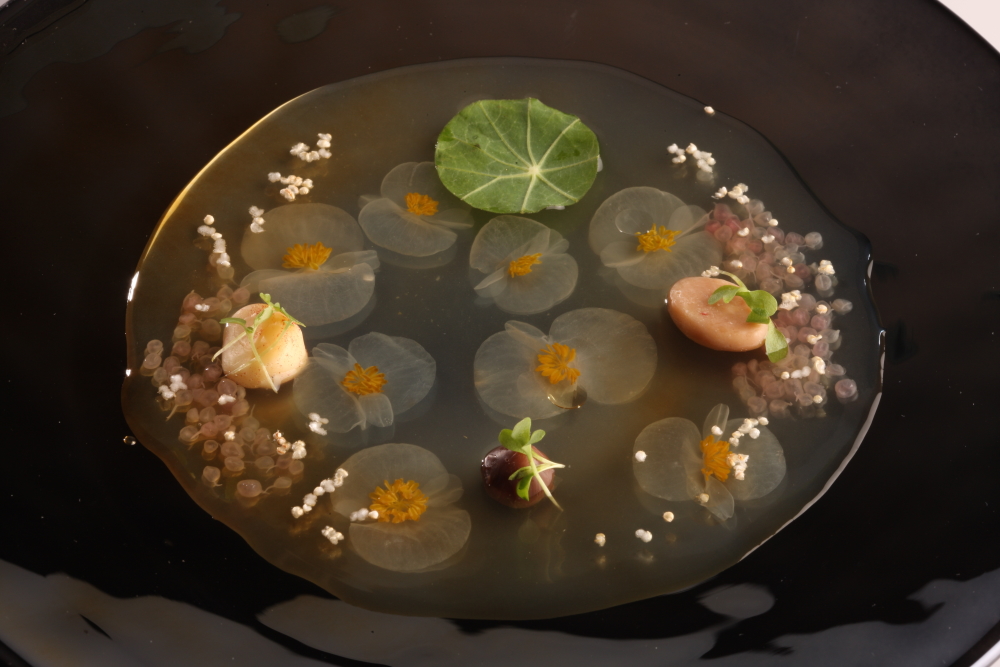
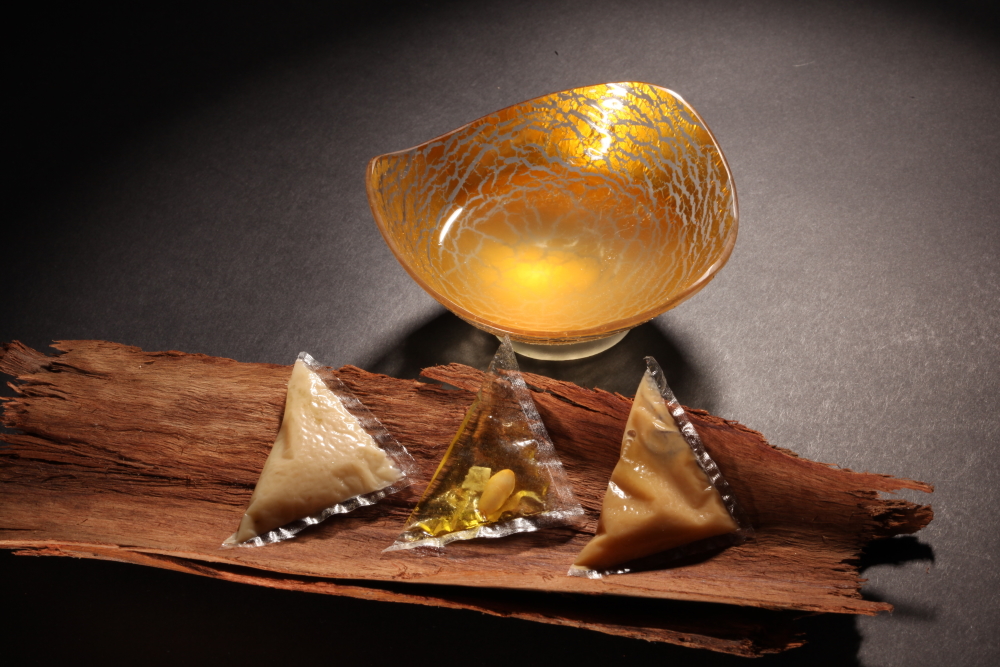
One of the most iconic innovations associated with Adrià is spherification—a technique that encapsulates a liquid within a delicate gel membrane. Using sodium alginate and calcium ions, chefs can create spheres that burst in the mouth, releasing intense flavor without traditional form.
But spherification was not merely about novelty. It redefined the relationship between flavor and consumption. By separating form from essence, Adrià invited diners to reconsider how texture mediates perception, how memory is triggered by flavor independent of shape.
B. Deconstruction and Recontextualization
Adrià’s deconstruction approach involved dismantling a dish into its elemental flavors and then reassembling them in ways that evoke the original dish while revealing new sensory layers. For example, a traditional dish such as an olive could be transformed into an olive sphere that carries the scent, flavor, and memory of the olive—yet disrupts expectations of texture and form.
Deconstruction is not destruction; it is recontextualization—a way of engaging memory, identity, and perception. It challenges the assumption that form defines a dish and instead confirms that experience is the essence of culinary meaning.
C. Foams, Airs, and Emulsions
The use of foams and light emulsions—textures that appear ethereal yet concentrated in flavor—expanded the sensory palette of contemporary cuisine. Created through stabilizing agents like lecithin, these foams embody Adrià’s interest in texture as a sensory dimension on par with taste and aroma.
D. Gelification and Controlled Transformation
Gelling agents such as agar, carrageenan, and gelatin allowed chefs to craft textures with precision—soft, firm, elastic, or delicate. Control over temperature, timing, and hydrocolloid behavior enabled Adrià’s kitchen to explore a spectrum of textures that could be tuned to underscore conceptual intent.
E. Tools as Extensions of Inquiry
Adrià embraced tools that supported precision and experimentation—thermometers, immersion circulators (sous‑vide), centrifuges, and vacuum chambers. These tools did not define his cuisine; they enabled deeper exploration of technique and experience.
Throughout, the emphasis remained on intentionality: innovation that serves expressive and sensory objectives rather than spectacle for its own sake.
V. Iconic Creations and Their Significance
Several dishes from Adrià’s repertoire illustrate the depth of his inquiry and its impact on gastronomy.
A. Olive Spheres
Perhaps the most iconic of Adrià’s creations, the olive spheres exemplify his deconstructive ethos. By capturing the essence of an olive in a delicate gel membrane, the dish evokes memory, scent, and flavor without the familiar form. The diner confronts the sensory idea of olive—its recognition triggered by taste and aroma rather than shape.
This dish crystallizes the philosophical core of Adrià’s work: flavor is memory, and perception is the site of experience.
B. Liquid Pea “Ravioli”
Using spherification, Adrià transformed pea purée into a sphere that resembled ravioli—a textural surprise that reframed a humble ingredient. This dish underscored how expectation and discovery can be orchestrated through technique.
C. Airs and Texture Play
Adrià’s light foams—flavored airs that hovered over plates—introduced a new textural dimension. These airs held intense taste with minimal density, challenging assumptions about richness and body in sauces and accompaniments.
D. Multisensory Sequences
Beyond individual dishes, Adrià curated tasting menus that engaged sequence and contrast—temperature shifts, textural interplay, aroma transitions, and narrative flow. Courses were not isolated experiences but parts of an orchestrated sensory journey.
These creations demonstrate that Adrià’s work was never about novelty alone; it was about sensory coherence, memory engagement, and conceptual resonance.
VI. Critique, Debate, and Reappraisal
Ferran Adrià’s work, while widely celebrated, has also been subject to critique and debate within culinary and public discourse.
A. Molecular Gastronomy Misinterpretation
One persistent critique is the mislabeling of his cuisine as molecular gastronomy. This misunderstanding often reduces Adrià’s work to scientific gimmicks, obscuring its philosophical depth. Adrià himself resisted the term, emphasizing that culinary creativity cannot be reduced to molecules and technique.
B. Accessibility and Elitism
Some critics argued that Adrià’s cuisine was elitist or inaccesible—designed for a rarefied audience with months‑long reservations and high cost. While these dynamics reflect the broader realities of fine dining economics and scarcity, they should not obscure the broader influence of his work. Techniques and conceptual frameworks developed at elBulli have diffused throughout global kitchens, from street food to fine dining, influencing how chefs think about flavor, texture, and presentation.
C. Sustainability and Practicality
Questions of sustainability and practicality have also surfaced. Some of Adrià’s techniques, particularly in their early iterations, demanded specialized equipment or resources that were not universally accessible. However, the core principles—attention to ingredient behavior, sensory engagement, and thoughtful innovation—transcend specific tools and can be applied in diverse culinary contexts.
These debates underscore that Adrià’s contributions are not static artefacts but living dialogues within culinary thought.
VII. Legacy and Influence
Ferran Adrià’s influence on contemporary gastronomy is vast and multifaceted.
A. Generations of Chefs Inspired
Countless chefs worldwide have drawn inspiration from Adrià’s work—students, collaborators, and admirers who have taken elements of his methodology and adapted them to their own cultural and culinary contexts. His emphasis on process, documentation, and conceptual inquiry continues to shape professional culinary education and innovation.
B. elBullifoundation and Beyond
After closing elBulli in 2011 at the height of its acclaim, Adrià shifted focus toward research, documentation, and education through the elBullifoundation. This initiative seeks to preserve knowledge, stimulate creative thinking, and support discourse on culinary innovation. By codifying method and philosophy, Adrià ensured that elBulli’s intellectual legacy would extend beyond the physical restaurant.
C. Redefining Fine Dining
Perhaps Adrià’s most enduring legacy is the redefinition of fine dining—not merely as a site of refined technique, but as a space for intellectual engagement, emotional resonance, and sensory exploration. His work expanded the possibilities of what cuisine can communicate and how diners participate in meaning‑making.
VIII. Tradition, Innovation, and the Future of Gastronomy
Ferran Adrià’s work sits at the intersection of tradition and innovation. While rooted in technical mastery and an understanding of culinary heritage, his approach was fundamentally future‑oriented—questioning, reimagining, and expanding what food can be.
A. Culinary Creativity as Inquiry
Adrià modelled creative inquiry as a discipline in its own right. He revealed that cuisine can be both a craft and a field of intellectual exploration—where questions are as important as answers and where uncertainty is a site of possibility.
B. Integrating Technology and Sensory Science
The integration of technology and sensory science in Adrià’s work has opened pathways for future innovation. Contemporary chefs continue to explore fermentation, precision cooking, data‑informed menu design, and multisensory experience—building on the foundations Adrià helped establish.
C. Sustainability and Local Contexts
While Adrià’s focus was often on sensory invention, contemporary gastronomy increasingly integrates sustainability, locality, and ethical sourcing alongside innovation. The challenge for future generations is to balance creative exploration with environmental responsibility and cultural rootedness—an evolution of the principles Adrià espoused.
IX. Conclusion: A Visionary of Culinary Thought
Ferran Adrià stands as a towering figure in the history of modern gastronomy. Though frequently associated with the popular label molecular gastronomy, his work cannot be encapsulated by any single term or technique. Adrià’s true contribution lies in his reimagining of cuisine as a realm of sensory discovery, intellectual curiosity, and expressive depth.
Through disciplined creativity, scientific engagement, conceptual rigor, and emotional resonance, Adrià expanded what food can communicate. He invited chefs and diners alike to ask provocative questions about taste, texture, memory, and meaning. His legacy is not a style or series of techniques, but a way of thinking—one that continues to inspire, challenge, and shape the evolving frontier of gastronomy.
In celebrating Ferran Adrià, we honor not just a chef, but a thinker, an innovator, and a catalyst for the ongoing conversation about what food can be in the twenty‑first century and beyond.