






Introduction
High-temperature deep frying is one of the most transformative cooking techniques, capable of turning simple ingredients into crispy, golden, and flavorful dishes. However, achieving perfection in frying is far more than just submerging food in hot oil. Temperature control is the cornerstone of successful deep frying, influencing texture, flavor, appearance, and food safety.
This article explores the science, techniques, equipment, and culinary strategies behind precise temperature control in high-heat frying, offering both professional chefs and home cooks an in-depth, actionable guide for mastering this essential cooking method.
1. The Science of Deep Frying
1.1 Heat Transfer Principles
- Deep frying relies on convection, where hot oil surrounds the food, rapidly transferring heat.
- The Maillard reaction occurs at temperatures typically between 140–165°C (285–330°F), creating golden color and complex flavor.
- Proper temperature ensures even cooking, prevents soggy exteriors, and locks moisture inside.
1.2 The Role of Oil Temperature
- Oil temperature affects:
- Texture: Proper heat creates a crispy crust.
- Flavor: Maillard browning enhances aroma.
- Safety: Oil that is too hot can ignite; too cold results in greasy, undercooked food.
- Temperature fluctuations can lead to inconsistent results and excessive oil absorption.
1.3 Chemical Reactions
- Maillard reaction: amino acids + reducing sugars → browning and flavor.
- Caramelization: sugars break down at high heat → sweet, nutty notes.
- Oxidation: prolonged overheating creates off-flavors and harmful compounds; precise temperature prevents this.
2. Understanding the Ideal Frying Temperature
2.1 Standard Temperature Ranges
- Frying vegetables: 160–175°C (320–350°F)
- Frying proteins (chicken, fish): 175–190°C (350–375°F)
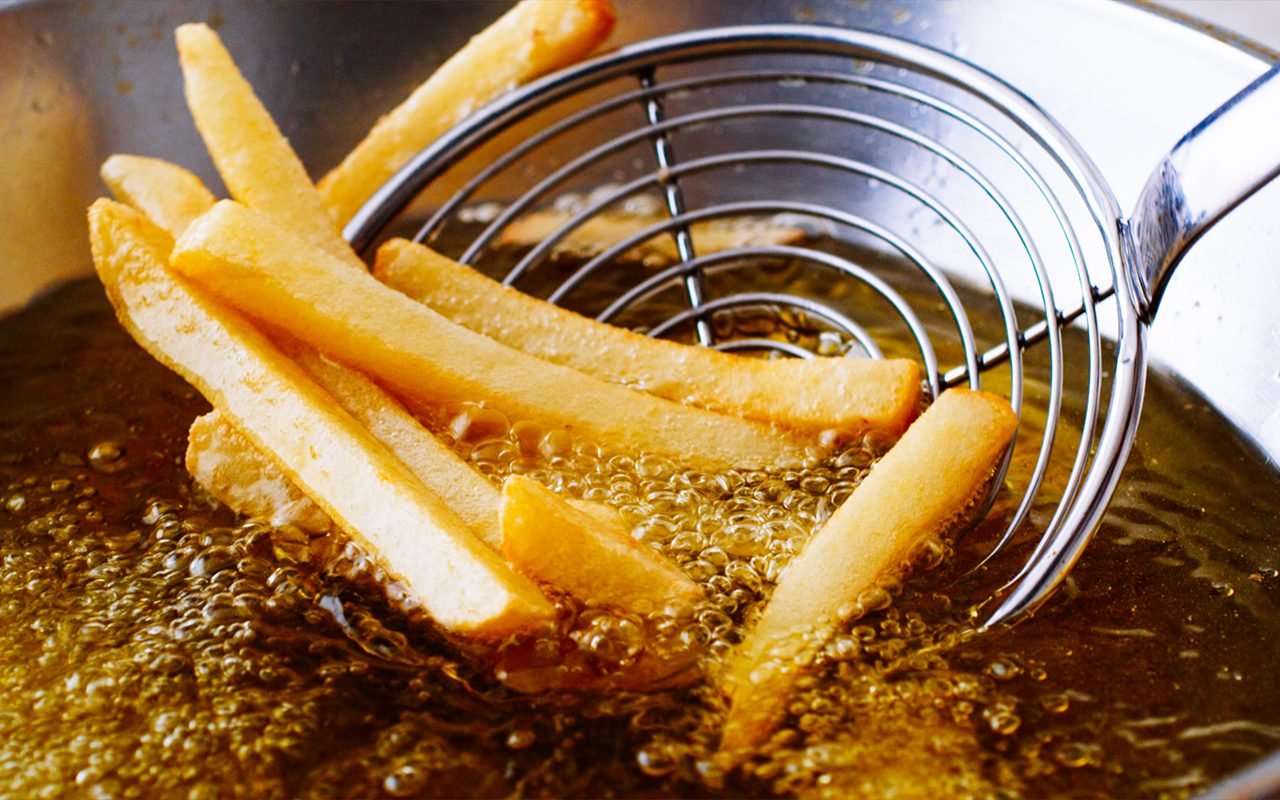
- Frying thin items (fries, chips): 180–190°C (355–375°F)
2.2 Temperature Variability
- Thicker cuts require slightly lower temperatures to cook through.
- Smaller items need higher temperatures for quick crisping.
- Frozen or moist foods may cause temperature drop; pre-heating and oil adjustment are critical.
2.3 Maintaining Consistency
- Use a reliable thermometer to monitor oil.
- Avoid overcrowding, which drastically reduces temperature.
- Re-adjust heat after adding food to maintain consistent frying conditions.
3. Selecting the Right Oil
3.1 Smoke Point Considerations
- Choose oils with high smoke points for safety and flavor integrity:
- Peanut oil: ~232°C (450°F)
- Sunflower oil: ~225°C (437°F)
- Canola oil: ~204°C (400°F)
- Smoke indicates oil breakdown, off-flavors, and harmful compounds.
3.2 Oil Flavor Profiles
- Neutral oils are ideal for delicate foods.
- Flavorful oils like sesame can enhance Asian-inspired dishes but require careful temperature control.
3.3 Oil Maintenance
- Filter oil regularly to remove debris.
- Avoid repeated overheating to maintain quality, clarity, and safety.
- Monitor oil degradation using color, aroma, and smoke point.
4. Equipment for Temperature Control
4.1 Thermometers
- Deep-fry or candy thermometers provide precise readings.
- Digital thermometers offer rapid response and accuracy.
4.2 Fryers
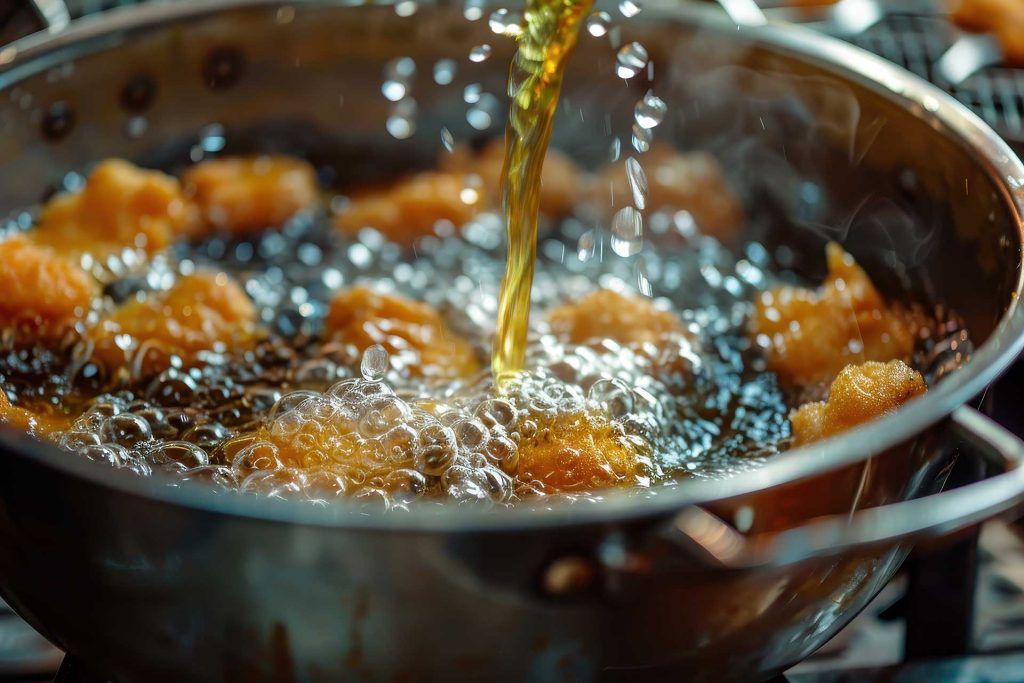
- Commercial fryers with thermostatic controls maintain consistent heat.
- Home fryers may require manual adjustment; monitoring is key.
4.3 Alternative Methods
- Infrared thermometers allow surface measurement.
- Oil immersion probes provide continuous readings without opening the fryer.
5. Techniques for Optimal Frying
5.1 Preheating and Staging
- Preheat oil to desired temperature before introducing food.
- Consider staging items by size for uniform frying.
5.2 Breading and Coating
- Coatings influence heat transfer and crust formation.
- Wet batter requires slightly lower temperature to ensure internal cooking.
- Dry breading cooks faster and crisps efficiently at higher temperatures.
5.3 Portion Control and Frying Time
- Fry similar-sized portions to maintain consistent oil temperature.
- Avoid overcrowding, which causes temperature drop and uneven cooking.
- Adjust frying time based on food density, thickness, and moisture content.
5.4 Oil Recovery
- Allow oil to return to target temperature before subsequent batches.
- Continuous frying without monitoring leads to greasy, uneven, or burnt outcomes.
6. Frying and Food Safety
6.1 Internal Temperature Requirements
- Poultry: ≥ 74°C (165°F)
- Fish: ≥ 63°C (145°F)
- Vegetables: adequately tender, typically 3–5 minutes depending on size
6.2 Oil Contamination
- Food particles accelerate oil degradation and off-flavors.
- Filter oil between batches to maintain quality and safety.
6.3 Health Considerations
- Avoid excessive oil breakdown to minimize trans fats and acrylamide formation.
- Use high-quality oils and temperature control to reduce harmful compounds.
7. Mastering Texture and Color
7.1 Crispy Exterior
- Achieved by high initial oil temperature, creating instant crust formation.
- Coating or batter traps moisture inside while surface crisps.
7.2 Golden-Brown Color
- Maillard reaction produces aromatic compounds and caramelized notes.
- Balanced sugar and protein in batter enhances color without burning.
7.3 Moist Interior
- Correct temperature ensures rapid crust formation, sealing juices.
- Low temperature → greasy, soggy texture; high temperature → burnt exterior, raw interior.
8. Frying Different Categories of Food
8.1 Potatoes
- Blanching at lower temperatures, then finishing at high temperatures for crispy fries.
- Salt after frying prevents premature moisture loss.
8.2 Proteins
- Chicken, fish, and shrimp require coating, consistent oil temperature, and proper timing.
- Brining or marinating enhances moisture retention.
8.3 Doughs and Pastries
- Beignets, churros, and doughnuts require careful monitoring of sugar content in dough and oil temperature to prevent burning.
9. Advanced Techniques
9.1 Double Frying
- Fry first at lower temperature to cook through, then at higher temperature to crisp exterior.
- Common in French fries, fried chicken, and tempura.
9.2 Infused Oils
- Use herbs, spices, or aromatics at controlled temperatures to add subtle flavor without burning.
9.3 Modernist Approaches
- Vacuum-frying and controlled frying chambers allow precise texture and moisture retention.
- Cryogenic pre-treatment combined with frying achieves unique textures in high-end cuisine.
10. Troubleshooting Common Issues
| Problem | Cause | Solution |
|---|---|---|
| Greasy food | Oil too cool, overcrowding | Increase temperature, fry smaller batches |
| Burnt exterior, raw interior | Oil too hot, thick food | Lower temperature, monitor cooking time |
| Uneven browning | Temperature fluctuations, poor coating | Maintain consistent heat, even coating |
| Oil smoke | Overheated, low smoke point | Reduce temperature, switch oil, avoid repeated use |
11. Sustainability Considerations
- Use oil filtration systems to prolong lifespan.
- Choose oils with low environmental impact, such as canola or sunflower.
- Recover and reuse oil responsibly, reducing waste and environmental footprint.
12. Training and Education
- Culinary schools emphasize thermodynamics, Maillard chemistry, and practical frying techniques.
- Hands-on training ensures chefs can adapt to different ingredients, oil types, and equipment.
- Continuous education promotes innovation, safety, and efficiency in frying operations.
13. Case Studies
13.1 Tempura in Japan
- Light batter fried at 170–180°C to maintain crispness and delicate texture.
- Precise temperature control prevents oil absorption and batter collapse.
13.2 Southern Fried Chicken, USA
- Double frying and careful oil management ensure juicy interior and crispy crust.
13.3 Modern Fast-Casual Frying
- Chains use thermostatic fryers for consistency, flavor, and safety.
14. Conclusion
High-heat frying is both an art and science, demanding precision, knowledge, and attention to detail. Temperature control is the key determinant of texture, flavor, color, and safety. By mastering heat management, choosing the right oil, and employing thoughtful techniques, chefs can consistently produce fried foods that are crispy, flavorful, and visually appealing.
Key Takeaways:
- Monitor and maintain oil temperature rigorously.
- Match temperature to food type, size, and coating.
- Prevent overheating to avoid smoke, off-flavors, and health hazards.
- Combine technique, science, and practice for perfect, repeatable results.
High-temperature deep frying, when executed correctly, transforms simple ingredients into culinary masterpieces, demonstrating that precision in the kitchen is as important as creativity.