






Thai cuisine is celebrated worldwide for its vibrant flavors, intricate balance of taste, and rich culinary traditions. Combining sweet, sour, salty, bitter, and umami elements in harmonious ways, Thai food reflects the country’s geography, culture, history, and abundance of natural resources. From street food stalls in Bangkok to fine dining restaurants in Chiang Mai, Thai cuisine is known for its fresh ingredients, aromatic herbs, and bold flavor profiles.
This article explores the diverse aspects of Thai cuisine, including its historical development, core ingredients, regional variations, culinary techniques, and contemporary adaptations. It emphasizes the interplay of flavors, the cultural significance of food, and how Thai culinary traditions continue to evolve and influence global gastronomy.
1. Historical and Cultural Foundations
Thai cuisine has been shaped by centuries of cultural exchange, trade, and migration. Its distinctive flavors and techniques are the result of a complex history that integrates local innovations with influences from neighboring countries, colonial traders, and global connections.
Early Influences
- Indigenous traditions: Thailand’s fertile land and tropical climate provided a wealth of fruits, vegetables, herbs, and fish. Early diets emphasized rice, freshwater fish, and seasonal vegetables.
- Indian influence: Indian traders introduced spices such as turmeric, cumin, coriander, and cardamom, which became integral to curry pastes and sauces.
- Chinese influence: Chinese immigrants introduced stir-frying, noodles, soy products, and dumplings, contributing to dishes like pad Thai and various noodle soups.
- European influence: Portuguese and Dutch traders brought ingredients like chilies, sugar, and certain fruits, which transformed flavor profiles and led to sweeter, spicier, and more aromatic dishes.
Cultural Significance
- Food in Thailand is not just sustenance; it is deeply embedded in social, religious, and ceremonial practices.
- Meals are communal, emphasizing sharing and balance. A typical Thai meal integrates multiple dishes, combining complementary flavors, textures, and colors.
- Festivals and rituals, such as Songkran (Thai New Year) and Loy Krathong, showcase traditional foods prepared according to historical and regional practices.
2. Core Ingredients of Thai Cuisine
Thai cuisine’s complexity arises from the careful combination of a relatively small but diverse set of fresh ingredients.
2.1 Staples
- Rice: Jasmine rice is the most common, prized for its fragrance and slightly sticky texture. Sticky rice is popular in northern and northeastern Thailand.
- Noodles: Rice noodles in various thicknesses are used in stir-fries, soups, and salads.
2.2 Proteins
- Seafood: Fish, shrimp, squid, and crab dominate coastal regions.
- Pork, chicken, and beef: Used in stir-fries, curries, and grilled dishes.
- Tofu and legumes: Increasingly incorporated in vegetarian and vegan adaptations.
2.3 Herbs and Aromatics
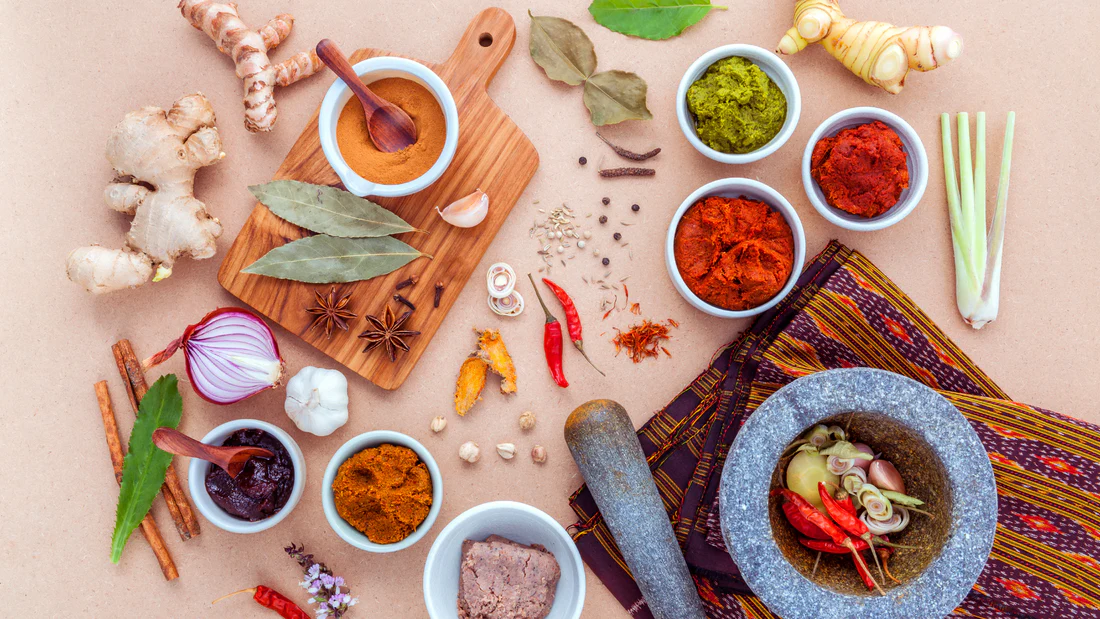
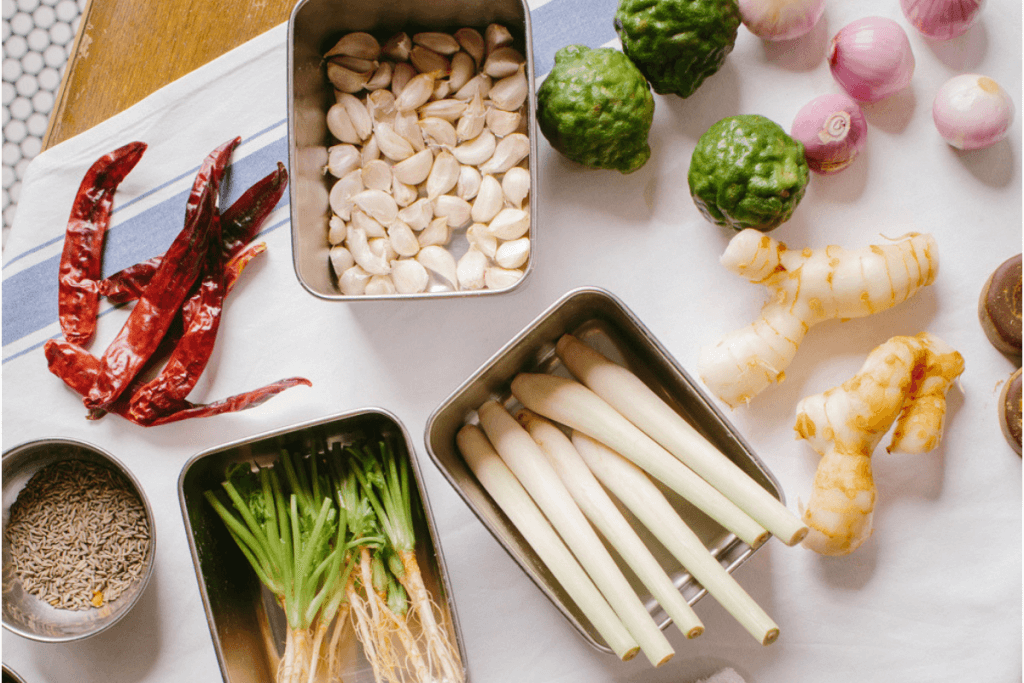
- Lemongrass, kaffir lime leaves, galangal, and Thai basil: Provide signature fragrances.
- Garlic, shallots, and fresh chilies: Enhance flavor depth and heat.
- Cilantro, coriander root, and mint: Add freshness and complexity.
2.4 Flavor Enhancers
- Fish sauce (nam pla): Provides umami and saltiness.
- Oyster sauce and soy sauce: Common in stir-fries and marinades.
- Tamarind and lime juice: Contribute sourness and acidity.
- Palm sugar: Adds sweetness and balances other tastes.
2.5 Spices and Pastes
- Red, green, and yellow curry pastes: Blend chilies, garlic, shallots, lemongrass, galangal, shrimp paste, and spices.
- Chili paste (nam prik): Used as dipping sauces or flavor bases.
- Turmeric and cumin: Enhance color and aromatic complexity.
3. Flavor Principles and Balance
A defining characteristic of Thai cuisine is the balance of five fundamental flavors: sweet, sour, salty, bitter, and umami.
- Sweetness: Palm sugar, coconut milk, and sweet sauces counterbalance sour and salty elements.
- Sourness: Tamarind, lime juice, and green mangoes provide brightness and acidity.
- Saltiness: Fish sauce, soy sauce, and fermented pastes contribute umami-rich saltiness.
- Bitterness: Bitter melon, certain herbs, and kaffir lime leaves create depth.
- Umami: Seafood, fermented pastes, and mushrooms enhance savoriness.
The culinary goal is not to highlight one flavor but to create harmony. This results in dishes that are layered, dynamic, and deeply satisfying.
4. Regional Variations
Thailand’s diverse geography and cultural influences have produced distinct regional cuisines:
4.1 Northern Thailand (Lanna Cuisine)
- Staples: Sticky rice, fresh herbs, and local vegetables.
- Flavors: Less sweet, more herbal, moderate spiciness.
- Signature dishes:
- Khao soi: Curry noodle soup with coconut milk and pickled mustard greens.
- Sai ua: Northern-style spicy sausage flavored with lemongrass and kaffir lime.
4.2 Northeastern Thailand (Isaan Cuisine)
- Staples: Sticky rice, freshwater fish, and fermented ingredients.
- Flavors: Spicy, sour, and salty dominate.
- Signature dishes:
- Som tam: Spicy green papaya salad with lime, chili, and fish sauce.
- Larb: Minced meat salad with toasted rice powder, herbs, and lime.
- Nam tok: Grilled meat salad with herbs and chili.
4.3 Central Thailand
- Staples: Jasmine rice, coconut milk, and a mix of fresh and preserved ingredients.
- Flavors: Balanced sweet, sour, salty, and spicy.
- Signature dishes:
- Tom yum goong: Spicy and sour shrimp soup with lemongrass and lime.
- Pad Thai: Stir-fried rice noodles with tamarind, eggs, shrimp, and peanuts.
- Massaman curry: A mildly spiced curry with coconut milk, peanuts, and potatoes influenced by Indian flavors.
4.4 Southern Thailand
- Staples: Coconut, seafood, and fresh chilies.
- Flavors: Rich, spicy, and aromatic.
- Signature dishes:
- Gaeng tai pla: Fish entrail curry with pungent flavors.
- Kua kling: Dry, intensely spiced minced meat dish.
- Coconut-based curries: Creamy, aromatic, and often paired with seafood.
5. Street Food and Everyday Eating
Street food is an essential part of Thai culinary culture:
- Vibrant stalls offer quick, affordable, and flavorful meals.
- Common street foods include satay skewers, noodle soups, fried rice, and fresh fruit.
- Eating patterns emphasize communal sharing, portion flexibility, and a combination of hot and cold dishes.
- Street food culture has helped preserve traditional recipes while introducing adaptations for convenience and global tastes.
6. Contemporary Trends in Thai Cuisine
Thai cuisine has evolved while maintaining its core principles:
- Fusion and international influence: Thai flavors are incorporated into Western, Japanese, and global dishes.
- Health-conscious adaptations: Increasing use of fresh vegetables, lean proteins, and plant-based alternatives.
- Gastronomic innovation: High-end restaurants experiment with modern presentations, molecular gastronomy, and refined flavor layering.
- Export of culinary techniques: Thai chefs and cookbooks worldwide have popularized traditional methods like curry paste preparation and balance of flavors.
7. Nutritional and Cultural Significance
- Thai cuisine emphasizes fresh ingredients, vegetables, and herbs, which contribute to a nutrient-rich diet.
- Spices and aromatics provide antioxidant, antimicrobial, and digestive benefits.
- Meals are culturally expressive, reflecting family, hospitality, religion, and seasonal cycles.
- The combination of complex flavors encourages mindful eating, appreciation of texture, and sensory engagement.
Conclusion
Thai cuisine is celebrated for its intricate balance of flavors, regional diversity, and dynamic culinary heritage. Its use of fresh ingredients, aromatic herbs, and skillful flavor layering reflects centuries of cultural exchange, agricultural abundance, and innovative cooking techniques.
From the fiery dishes of Isaan to the creamy curries of the south, and from bustling street food stalls to sophisticated restaurants, Thai cuisine demonstrates a mastery of taste, texture, and presentation. Its influence extends globally, inspiring chefs and home cooks alike while preserving a rich cultural legacy rooted in the harmony of flavors and the communal joy of eating.
Thai cuisine exemplifies how food can be both a daily necessity and a profound cultural expression, balancing tradition, innovation, and sensory delight in every dish. Its global popularity attests to the enduring appeal of its rich flavors and layered complexity, making it one of the world’s most celebrated culinary traditions.