




Introduction: A Revolutionary Approach to Cooking
Ferran Adrià, one of the most influential chefs in modern culinary history, redefined the boundaries of traditional cooking with his groundbreaking approach known as molecular gastronomy. Through his work at El Bulli, Adrià fused science and culinary art, challenging the conventional understanding of food and its role in gastronomy. By utilizing the principles of chemistry and physics, he created dishes that not only tantalized the taste buds but also engaged the senses of sight, smell, and touch.
Adrià’s approach was more than just an innovative technique; it was a philosophical shift in how food could be experienced. His experimental methods transformed ordinary dishes into interactive culinary experiences, where diners became participants in a multi-sensory journey. As a result, Adrià not only revolutionized the way food is prepared but also altered how people engage with food, turning it into an immersive art form.
This article will delve into the origins of molecular gastronomy, how Ferran Adrià played a pivotal role in its evolution, the impact of his work on the culinary world, and the sensory innovations that make his creations so extraordinary.
Part 1: The Origins of Molecular Gastronomy
1.1 The Science Behind the Art
Molecular gastronomy is a discipline that seeks to understand and apply the physical and chemical transformations of ingredients during cooking. While many chefs use scientific techniques in their kitchens, molecular gastronomy is more structured in its approach, emphasizing the use of specialized equipment, precise measurements, and experimental methods to manipulate food textures, flavors, and presentation.
The term “molecular gastronomy” was coined in the late 1980s by Hervé This, a French chemist, and Nicholas Kurti, a Hungarian physicist, who began exploring the relationship between science and cooking. They sought to explain the chemical reactions that occur during cooking, ultimately bringing a scientific perspective to the art of gastronomy.
Molecular gastronomy involves various techniques, including foaming, spherification, gelification, and vacuum cooking, all of which are designed to alter the sensory experience of food. These techniques focus not just on flavor, but also on the textures and presentation of food, encouraging chefs to think beyond traditional boundaries and explore new sensory possibilities.
1.2 Ferran Adrià’s Role in the Evolution of Molecular Gastronomy
Ferran Adrià’s involvement with molecular gastronomy began in the 1990s, when he was working at El Bulli, the legendary restaurant located in Roses, Spain. Adrià was introduced to the principles of molecular gastronomy by scientists and fellow chefs, and quickly became one of its most enthusiastic and inventive practitioners.
Under Adrià’s leadership, El Bulli became a testing ground for molecular gastronomy techniques. He embraced these methods not merely as tools for cooking but as ways to redefine the dining experience. At El Bulli, Adrià and his team pushed the boundaries of culinary creativity, incorporating new scientific concepts into the restaurant’s philosophy. The result was a menu filled with avant-garde dishes that blurred the line between food and art.
Adrià’s exploration of molecular gastronomy went beyond just creating unusual dishes. He used science as a lens through which to view the fundamental aspects of cooking, constantly questioning traditional culinary techniques and reshaping the possibilities of what food could be. His work at El Bulli is widely regarded as a catalyst for the modern culinary revolution, where food is no longer just sustenance, but an art form that engages the full spectrum of human senses.
Part 2: Key Techniques in Molecular Gastronomy
2.1 Spherification: The Art of Liquid Capsules
One of Ferran Adrià’s most famous innovations is the technique of spherification. This involves creating small, edible spheres filled with liquid, often resembling caviar. The technique was inspired by the work of Hervé This, who explored how liquids could be encapsulated in gelatinous membranes.
Spherification allows chefs to present a liquid inside a solid structure, creating a surprising and interactive dining experience. When the spheres are bitten into, they burst, releasing the liquid inside, providing a dramatic contrast between the texture of the membrane and the burst of flavor. This technique has been used in a wide variety of dishes, from liquid olives to cocktail spheres.
Adrià’s spherified creations revolutionized the way food could be eaten. By altering the textures and presentations of liquids and solids, Adrià challenged diners to engage with food in a more playful and imaginative way.
2.2 Foaming: The Creation of Airy Flavors
Another signature technique of molecular gastronomy is foaming, which Adrià utilized to great effect at El Bulli. Foams are created by introducing air or gas into a liquid, transforming it into a light, airy texture. This is typically achieved using a syphon or a blender, and the resulting foam can be made from almost any liquid, including broths, juices, and even wine.
Foaming allows chefs to amplify the intensity of flavors while offering a delicate, ethereal texture. For example, Adrià created a famous dish of hot and cold foam, where hot soup was served with cold foam on top. This contrast in temperature added an additional layer of complexity to the dish, engaging both the taste buds and the sense of touch.
Foams can also be visually striking, adding an element of surprise and wonder to a dish. By playing with textures, Adrià opened up new possibilities for chefs to experiment with familiar ingredients and turn them into entirely new forms.
2.3 Gelification: Turning Liquids into Gels
Gelification is the process of turning liquids into gels using agents like agar-agar or gelatin. This technique allows chefs to create food that appears solid but behaves like a liquid, such as gelified broths or liquid jellies. By manipulating the viscosity of liquids, chefs can create dishes with entirely new textures that enhance the sensory experience.
Adrià used gelification to produce gels that could be sliced or molded into specific shapes, opening up a whole new world of culinary possibilities. For example, he created gelified fruit purees, which could be served in bites or used as garnishes, offering a unique way to deliver flavor while playing with texture and appearance.
Gelification is one of the techniques that best demonstrates how molecular gastronomy combines science and creativity to transform familiar ingredients into entirely new experiences.
2.4 Cryogenics: Freezing Food with Liquid Nitrogen
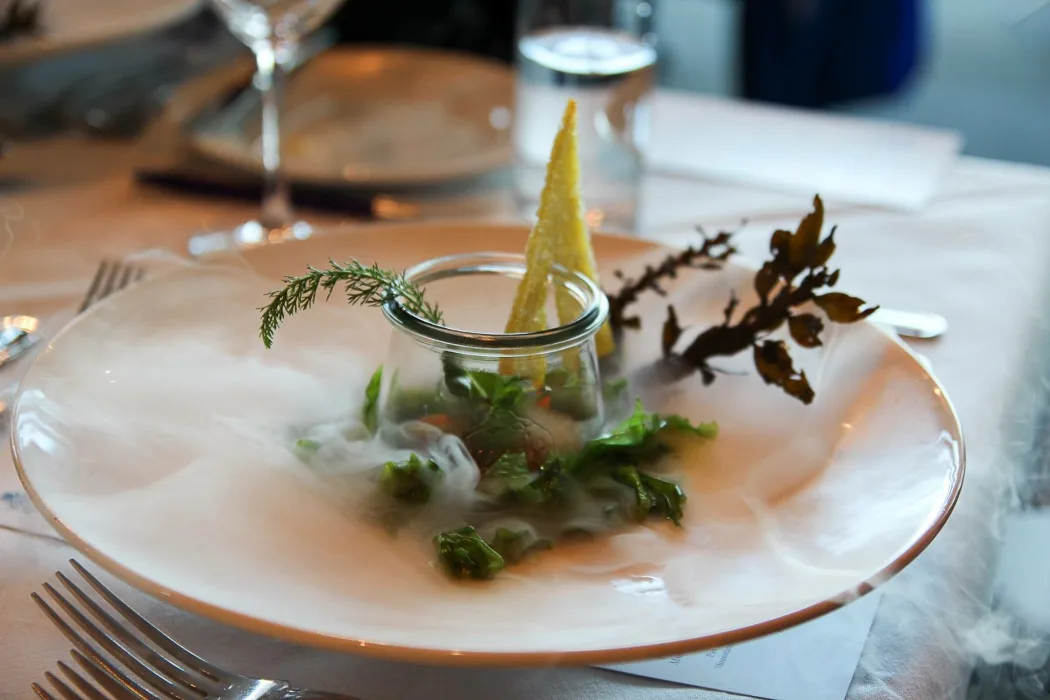
One of the most visually striking techniques used in molecular gastronomy is cryogenics, specifically the use of liquid nitrogen to freeze food at extremely low temperatures. This technique creates dramatic smoke effects as the nitrogen vaporizes upon contact with air, adding a sensory element to the dining experience.
Liquid nitrogen allows chefs to freeze foods instantly, creating textures that would be impossible to achieve through traditional methods. Adrià used cryogenics to freeze fruits, ice creams, and even cocktails, providing diners with a surprising sensory experience as the frozen elements dissolved in the mouth, revealing intense flavors and smooth textures.
Cryogenics also enables the creation of visually stunning effects, with the freezing process often producing smoke or fog that heightens the sense of anticipation and excitement.
Part 3: The Impact of Adrià’s Work on the Culinary World
3.1 Challenging the Perception of Food
Ferran Adrià’s work at El Bulli forever changed how we think about food. Through the innovative techniques of molecular gastronomy, Adrià pushed the boundaries of taste, texture, and presentation, challenging both diners and chefs to rethink their approach to food. His work elevated cooking from a functional practice to an artistic expression, where each dish told a story and invited interaction.
Adrià’s influence extended far beyond the walls of El Bulli. Many of his techniques have been adopted by top chefs around the world, and molecular gastronomy has become a global movement that emphasizes the role of science and innovation in cooking. Today, molecular gastronomy is a key area of study in culinary schools and a popular method used by chefs who aim to transform and reinvent food.
3.2 El Bulli: A Culinary Laboratory
El Bulli, which operated as a restaurant until its closure in 2011, became a culinary laboratory where Adrià and his team experimented with new flavors, techniques, and concepts. The restaurant was not just a place to eat, but an experience where guests were part of an evolving, interactive food journey.
El Bulli’s influence on the culinary world cannot be overstated. Many chefs, including those in fine dining establishments across Europe, North America, and beyond, have cited Adrià as a major inspiration in their careers. His focus on innovation, creativity, and playfulness has inspired chefs to push the boundaries of their craft and embrace new ways of thinking about food.
Conclusion: The Legacy of Ferran Adrià and Molecular Gastronomy
Ferran Adrià’s contributions to molecular gastronomy have forever altered the landscape of modern cuisine. Through his pioneering techniques, he bridged the gap between science and art, turning cooking into a multisensory experience that goes beyond taste. Adrià has shown that food is not only about nourishment—it can be a medium for creativity, innovation, and expression.
As molecular gastronomy continues to evolve, Adrià’s legacy will live on, inspiring future generations of chefs to continue experimenting, exploring, and challenging the traditional boundaries of food. Through his work, Adrià has not only changed how we cook and eat but also how we experience food as an art form that engages all of the senses.