





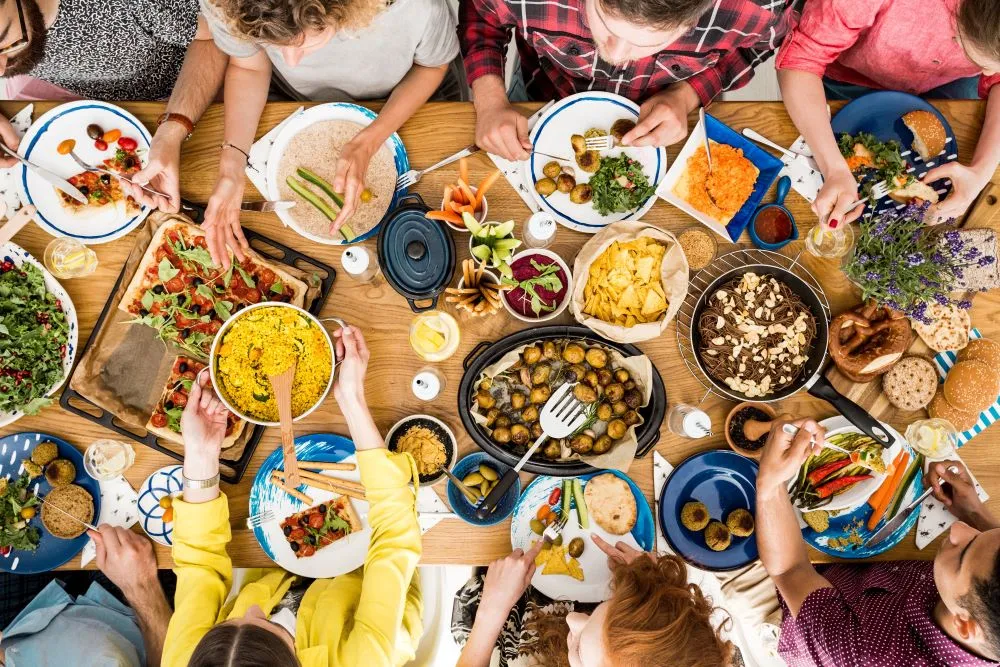

Introduction: Food as a Medium for Connection
Food is often celebrated for its flavor, aroma, and aesthetic appeal, yet its true charm extends far beyond taste. Across cultures and throughout history, food has served as a powerful medium for human connection, social bonding, and cultural exchange. Sharing a meal is more than a biological necessity; it is a ritual that fosters communication, empathy, and community cohesion.
In both intimate family settings and public dining experiences, food enables people to express identity, celebrate tradition, and convey care. Modern gastronomy increasingly recognizes that the impact of food is as much social and emotional as it is sensory. From casual street food gatherings to fine-dining experiences, the design, preparation, and sharing of food reveal underlying social structures, cultural values, and philosophical perspectives.
This essay explores the multifaceted role of food in human connection and social interaction. It examines how meals shape relationships, convey cultural narratives, foster empathy, and influence society. By analyzing historical contexts, cross-cultural practices, and modern innovations, we illuminate the profound ways in which food bridges individuals and communities.
I. Food and Human Connection: A Social Perspective
1. Meals as Rituals of Bonding
Sharing food has been a central human ritual since prehistoric times. Anthropologists observe that communal eating strengthens trust, cooperation, and social cohesion. Meals act as structured opportunities for:
- Family bonding: Daily shared meals promote dialogue, emotional support, and intergenerational learning.
- Community engagement: Festivals, markets, and public feasts cultivate a sense of belonging and collective identity.
- Conflict resolution: Breaking bread together has historically been used as a gesture of peace and reconciliation.
These patterns underscore that food functions as a social adhesive, fostering relationships that extend beyond individual sustenance.
2. Psychological and Emotional Dimensions
Sharing food activates emotional and neurological responses that strengthen interpersonal bonds. Research in social psychology suggests that communal meals:
- Increase feelings of empathy and cooperation.
- Promote happiness and reduce stress through shared enjoyment.
- Reinforce group identity and social trust.
Thus, the charm of food is inseparable from its capacity to nurture human connections and emotional well-being.
II. Cultural Narratives and Food
1. Food as a Carrier of Tradition
Every culture uses food to transmit values, beliefs, and heritage. Recipes, ingredients, and dining practices are imbued with meaning that conveys identity across generations. Examples include:
- Thanksgiving in the United States: A ritualized meal that celebrates family, gratitude, and national history.
- Japanese Kaiseki: A multi-course meal emphasizing seasonal ingredients, aesthetics, and the philosophy of mindfulness.
- Indian Thali: A shared platter that embodies regional flavors, communal eating, and spiritual symbolism.
Through these practices, food becomes a medium for storytelling and cultural continuity, reinforcing both individual and collective identity.
2. Cross-Cultural Exchange
Globalization and migration have amplified food’s role as a cultural bridge. International cuisine allows people to experience unfamiliar cultures through taste, preparation techniques, and dining etiquette. Examples:
- Street food in Southeast Asia introducing local customs to tourists.
- Fusion cuisine blending culinary traditions from multiple countries.
- Cooking classes and cultural festivals as educational platforms for global understanding.
Food, therefore, is not only about sustenance—it is a language of culture, enabling dialogue and shared experience across borders.

III. The Dynamics of Sharing Food
1. Communal Dining Practices
Sharing food emphasizes cooperation, generosity, and reciprocity. Across different settings, communal meals manifest in varied forms:
- Family-style servings: Encouraging conversation and shared choice.
- Potlucks: Where each participant contributes, reflecting inclusivity and collective effort.
- Tasting menus: Designed for multi-person exploration and shared appreciation.
These practices reinforce the principle that food is most meaningful when experienced together, highlighting social and psychological interdependence.
2. Symbolic Significance
Sharing food conveys messages of care, respect, and hospitality. Anthropologists note that:
- Offering food symbolizes trust and goodwill.
- Participating in communal meals signals acceptance and inclusion.
- Celebratory feasts reinforce social hierarchies and communal bonds.
This dual role of food—practical and symbolic—demonstrates its deep integration into human social structures.
IV. Food, Memory, and Identity
1. Nostalgia and Emotional Connection
Food evokes memories and emotions, often tied to family, childhood, and culture. A single dish can trigger stories of:
- Childhood experiences and traditions.
- Celebrations and communal gatherings.
- Personal and collective milestones.
These connections demonstrate how food is intertwined with memory, facilitating conversations and shared reflections that strengthen relationships.
2. Identity Formation
Through the foods we prepare, consume, and share, we express personal and cultural identity. For example:
- Regional ingredients and cooking methods signal cultural belonging.
- Dietary choices communicate ethical and environmental values.
- Shared culinary practices strengthen social affiliation within communities.
Food, therefore, operates as a vehicle of self-expression and communal identity.
V. Modern Perspectives: Food as Experience
1. Fine Dining and Storytelling
Contemporary chefs increasingly view meals as immersive experiences that extend beyond flavor to narrative and social engagement. Innovations include:
- Multi-sensory tasting menus that encourage conversation and exploration.
- Interactive dining where guests participate in preparation or plating.
- Concept-driven restaurants that integrate history, art, or philosophy into the meal.
These approaches highlight the modern understanding that food’s charm is enhanced by social and emotional dimensions.
2. Technology and Social Sharing
Social media has transformed food into a platform for connection and cultural exchange. Sharing photos, recipes, and experiences online fosters:
- Global culinary dialogue.
- Awareness of diverse cultural practices.
- Community formation around shared interests in gastronomy.
Digital platforms extend the social role of food, allowing virtual communal experiences that complement physical gatherings.
VI. Ethical and Sustainable Dimensions
1. Community-Based Food Practices
Sharing food also carries ethical significance. Practices such as community gardens, co-ops, and farm-to-table initiatives reflect values of sustainability, equity, and social responsibility.
2. Environmental and Cultural Responsibility
Philosophy-driven dining emphasizes that food should not only connect people but also respect ecosystems, support local producers, and preserve culinary heritage. Sharing becomes a conduit for collective responsibility, linking social and environmental awareness.
VII. Case Studies: Food as Connection
1. Joan Roca and Family Philosophy
At El Celler de Can Roca, Joan Roca integrates family and communal principles into every dish. The menu and presentation are designed for sharing, interaction, and cultural storytelling, demonstrating the tangible impact of philosophy on social experience.
2. Community Kitchens
In urban centers worldwide, community kitchens provide spaces where food bridges socio-economic divides, fostering dialogue, education, and cooperation among diverse groups.
3. Food Festivals
Events like Oktoberfest in Germany or La Tomatina in Spain demonstrate how food can transform cultural celebration into large-scale social bonding, emphasizing collective joy and participation.
VIII. Challenges in Social Food Practices
- Balancing individual preferences with communal sharing in multi-cultural contexts.
- Addressing food scarcity and inequality while promoting communal meals.
- Ensuring inclusivity, so social dining experiences are accessible across socio-economic and cultural backgrounds.
Despite these challenges, initiatives that prioritize connection, sharing, and cultural respect continue to demonstrate the social power of food.
IX. Future Directions: Enhancing Social Connection Through Food
- Designing urban spaces and restaurants to encourage communal dining and conversation.
- Integrating food education into schools and communities to foster empathy and cultural understanding.
- Leveraging digital technologies to create hybrid experiences that combine in-person and virtual food sharing.
The future of food emphasizes its role as a medium of connection, alongside taste and nutrition.
X. Conclusion: The Enduring Charm of Food
Food’s true charm lies not only in flavor but in its capacity to connect people, convey culture, and foster shared experience. Across history and cultures, meals have acted as rituals of bonding, platforms for storytelling, and expressions of empathy.
From family dinners to fine-dining experiences, from community kitchens to social media sharing, the act of eating together cultivates relationships, understanding, and emotional resonance. Chefs, home cooks, and communities alike recognize that the value of food is measured as much by social connection as by taste.
In a world increasingly driven by technology and individualism, the ability of food to bring people together remains an enduring testament to its power. Every shared meal is an opportunity for dialogue, celebration, and unity—an experience where taste, emotion, and human connection converge.
Through these perspectives, we see that food’s charm is inseparable from the relationships it nurtures and the stories it conveys, making every shared plate a microcosm of culture, memory, and social cohesion.