





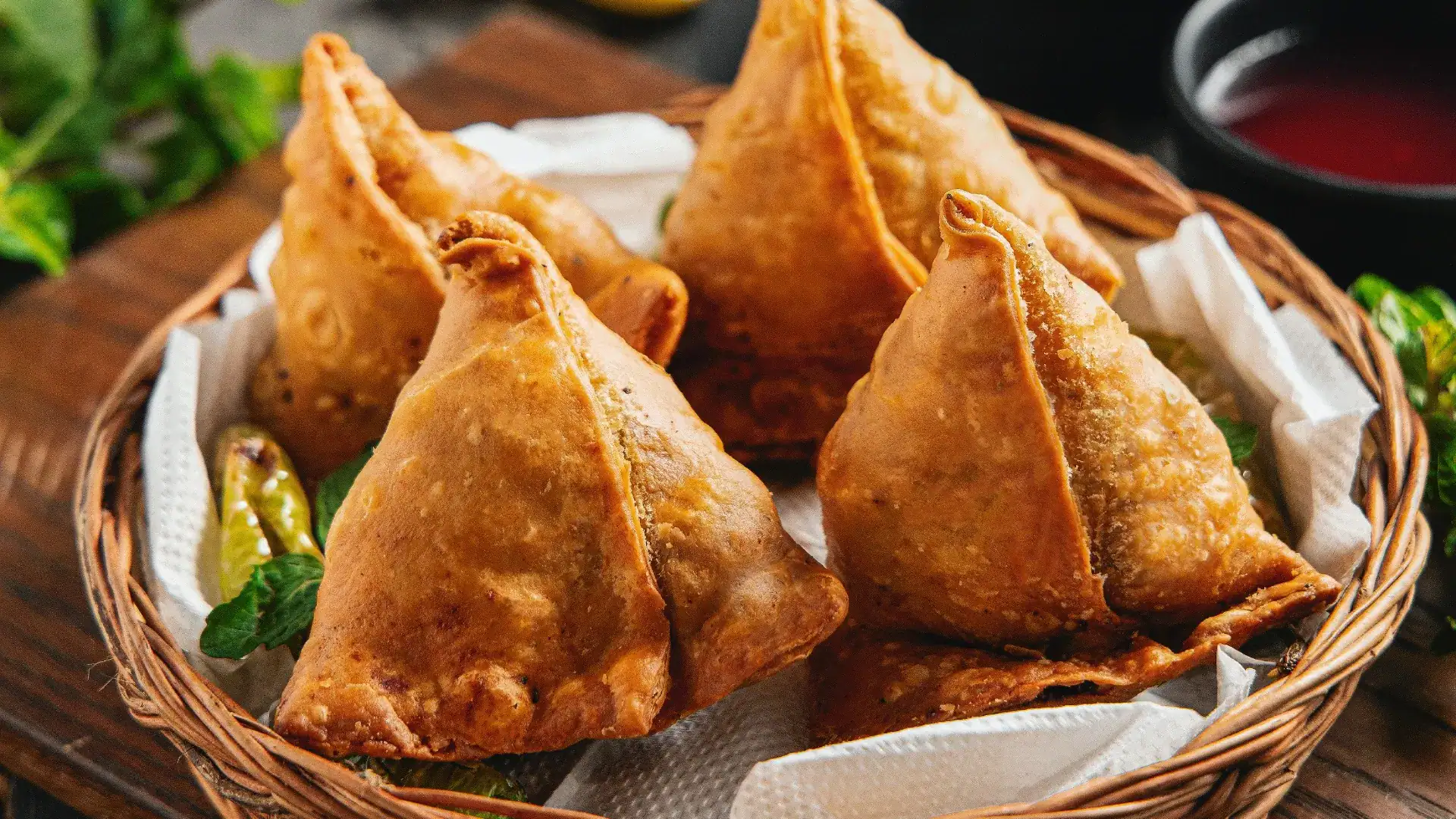

Samosa, also spelled “samosa” or “sambusa”, is one of the most iconic and beloved snacks of Indian cuisine. Known for its crispy, golden-brown exterior and flavorful, spiced filling, the samosa has transcended its South Asian origins to become a globally recognized street food. This triangular pastry, whether stuffed with potatoes, peas, lentils, or meats, represents a blend of history, culture, culinary technique, and innovation.
In this article, we will explore the history, ingredients, regional variations, preparation techniques, nutritional aspects, cultural significance, modern adaptations, and global influence of the samosa, providing a comprehensive understanding of this culinary treasure.
Historical Origins of Samosa
The samosa has a rich and complex history:
- Middle Eastern Roots: The concept of triangular stuffed pastries is believed to have originated from the Middle East around the 10th century, where it was called “sambusak”, often filled with meat and nuts.
- Arrival in India: Traders and travelers from Persia and Central Asia brought sambusak to the Indian subcontinent, where it evolved to incorporate local ingredients and spices.
- Regional Indian Adaptation: Over time, samosas in India transformed into vegetarian delights, often stuffed with potatoes, peas, and aromatic spices, reflecting local preferences and dietary habits.
- Street Food Tradition: By the colonial era, samosas had become an essential part of street food culture in cities like Delhi, Mumbai, and Kolkata, widely sold at markets, railway stations, and festivals.
Samosas exemplify how cultural exchange and adaptation create enduring culinary traditions.
Key Ingredients of Traditional Indian Samosa
The taste and texture of a samosa depend on the quality of its ingredients and the balance of spices.
Outer Pastry (Dough)
- Flour: All-purpose wheat flour is commonly used; some variations include semolina for extra crispiness.
- Fat: Ghee, clarified butter, or oil incorporated into the dough provides flakiness and structure.
- Salt and Water: Adjusted to achieve a firm, pliable dough that holds the filling without cracking.
Filling
- Vegetables: Boiled potatoes, green peas, carrots, or onions are common.
- Legumes: Lentils or chickpeas may be used for protein-rich variations.
- Meats: In non-vegetarian versions, minced lamb, chicken, or beef is spiced and cooked before stuffing.
- Spices: Cumin, coriander, turmeric, garam masala, chili powder, and amchur (dried mango powder) impart aroma, heat, and depth.
- Herbs: Fresh cilantro, green chilies, and mint add freshness and complexity.
Accompaniments
- Chutneys: Tamarind, mint, or coriander chutneys complement the savory flavors.
- Yogurt: In some regions, a yogurt dip softens the spices and adds creaminess.
Regional Variations in India
India’s diversity is reflected in distinct samosa styles across states:
North India
- Potato-Peas Samosa: The most popular variant, lightly spiced with garam masala and cumin seeds.
- Street Food Staples: Commonly paired with tangy tamarind chutney or spicy green chutney.
South India
- Smaller Samosas: Often crispier and spicier; coconut-based chutneys accompany the snack.
- Fusion Fillings: Some incorporate lentils or grated coconut for a unique flavor.
West India
- Maharashtra: Samosas sometimes include green peas, onions, and a hint of jaggery for sweetness.
- Gujarat: Kachchi samosa with a semi-sweet filling balances spices with sugar.
East India
- Bengal: Samosas may contain cabbage, carrots, or fish fillings for local taste preferences.
These regional adaptations reflect cultural, agricultural, and culinary influences.
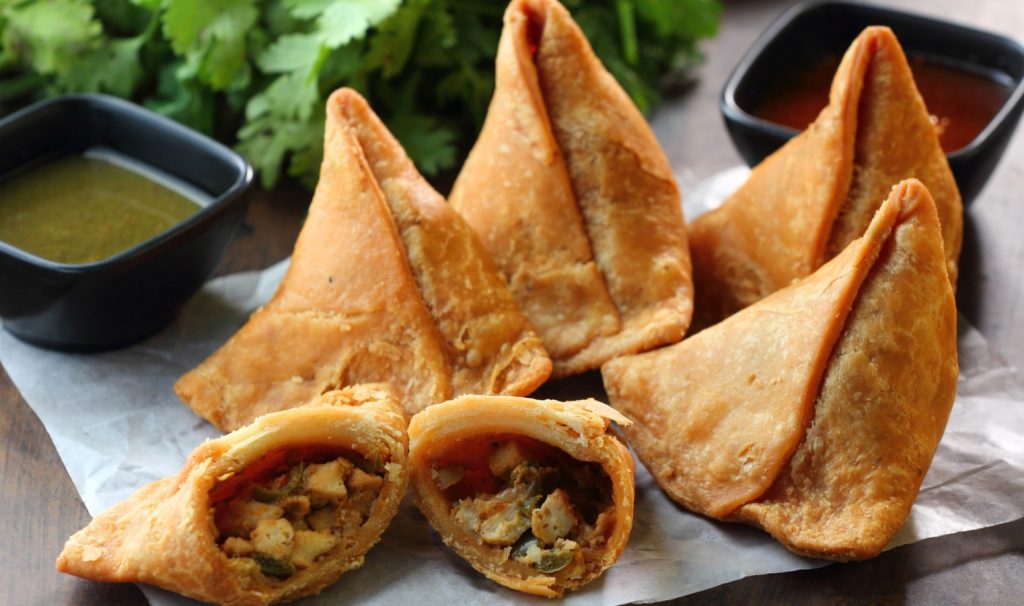
Preparation Techniques
Dough Preparation
- Combine flour, salt, and fat.
- Gradually add water to form a firm dough.
- Knead thoroughly for elasticity.
- Rest the dough for 20–30 minutes to enhance pliability.
Filling Preparation
- Boil or steam potatoes and peas.
- Sauté spices in oil to release aroma.
- Mix vegetables and spices evenly, ensuring consistent flavor.
- Cool the filling to prevent dough from becoming soggy.
Assembly
- Roll dough into small discs or rectangles.
- Shape into triangles or cones, sealing edges with water or flour paste.
- Fill with prepared stuffing and fold tightly.
Cooking Methods
- Deep-Frying: Produces a golden, crisp exterior; traditional method.
- Baking: Healthier alternative, slightly less crispy.
- Air-Frying: Modern approach using minimal oil.
Flavor and Texture Dynamics
The perfect samosa balances crispy pastry with flavorful filling:
- Crispness: Achieved through proper frying temperature and dough composition.
- Moisture: Filling should be soft but not watery.
- Spice Harmony: Aromatic spices provide depth without overwhelming the palate.
- Temperature: Samosas are best enjoyed hot, when aroma and texture are at their peak.
Nutritional Considerations
While indulgent, samosas can be part of a balanced diet:
- Carbohydrates: Provided by the wheat flour shell.
- Protein: Present in lentils, peas, or meat fillings.
- Vitamins and Minerals: Vegetables contribute micronutrients.
- Fats: Oil or ghee contributes calories and flavor; moderation is key.
- Modern Adjustments: Baking or air-frying reduces fat content while retaining flavor.
Cultural Significance
Samosas are more than a snack—they reflect social and cultural practices:
- Festivals: Popular during Ramadan, Diwali, and other celebrations.
- Street Food Culture: Vendors selling hot samosas are integral to markets and urban life.
- Hospitality: Served during gatherings as a gesture of welcome.
- Global Symbol: Represents Indian cuisine internationally, found in restaurants and fusion menus worldwide.
Modern Innovations and Global Influence
Samosas have evolved globally:
- Fusion Fillings: Cheese, spinach, paneer, or international flavors like Mexican chili or Thai curry.
- Miniature Versions: Bite-sized samosas for appetizers or catering.
- Frozen Retail Products: Available in supermarkets for convenience.
- Presentation Enhancements: Gourmet plating, dipping sauces, and creative shapes.
This evolution highlights the samosa’s adaptability and enduring appeal.
Pairing and Serving
- Traditional Accompaniments: Tamarind chutney, coriander-mint chutney, or spicy yogurt dip.
- Beverage Pairings: Chai, lassi, or light beer complement fried or spicy samosas.
- Street Food Pairing: Often served with pakoras, bhajis, or bhel puri in Indian markets.
Proper pairing enhances both flavor complexity and cultural authenticity.
Tips for Perfect Homemade Samosas
- Use fresh, high-quality ingredients for the filling and dough.
- Ensure frying oil is at optimal temperature (around 180°C/350°F) to achieve crispiness.
- Avoid overfilling to prevent breaking during cooking.
- Rest dough before rolling to improve elasticity.
- Experiment with spices to achieve personalized flavor balance.
These techniques ensure restaurant-quality results at home.
Samosa as a Global Culinary Ambassador
The samosa has transcended Indian borders:
- United Kingdom: Popular in pubs and Indian restaurants; adapted to local tastes.
- United States: Found in street food trucks and fusion menus.
- Middle East: Known as sambusak, often with meat, cheese, or nut fillings.
- Southeast Asia: Local variations incorporate seafood and tropical spices.
Through these adaptations, the samosa continues to bridge cultures and cuisines, maintaining its identity while embracing innovation.
Conclusion
The Indian samosa is a culinary marvel—simple in concept but rich in flavor, history, and cultural significance. Its crispy pastry, spiced filling, and versatility make it a beloved snack across generations and continents.
From traditional street vendors in Delhi to gourmet fusion chefs in New York, the samosa embodies creativity, adaptability, and the essence of Indian cuisine. It is more than food; it is a symbol of heritage, community, and global culinary influence.
Understanding its history, ingredients, preparation, and cultural context allows anyone to appreciate and recreate this iconic snack, celebrating one of the most cherished contributions of India to the world’s gastronomy.
The samosa is not just a snack—it is a culinary story, a cultural artifact, and a global ambassador for Indian flavors.